
APPLICATION FIT
Identify metal speciation before defining reaction and membrane separation
The heavy metals removal solution does not use a tubular membrane to retain every dissolved metal ion directly. Engineering starts by identifying metal species, valence, complexation, and water-quality boundaries, then converting target metals into precipitates or particles that the membrane section can separate reliably.
Suitable for initial assessment
Further confirmation required
- Whether target metals are dissolved, particulate, colloidal, or present in multiple valence and coprecipitation relationships
- Whether EDTA, ammonia, cyanide, other complexing agents, surfactants, or organics affect the reaction
- Variation in pH, ORP, acidity/alkalinity, salinity, sulfate, chloride, hardness, silica, and suspended solids
- Discharge or reuse limits, sampling and analytical methods, sludge classification, dewatering filtrate, and resource-recovery destination
- Metal speciation
- Elements, valence, total and dissolved/particulate fractions, and complexation
- Reaction conditions
- Flow, pH, ORP, temperature, acidity/alkalinity, reagents, and residence-time window
- Downstream objective
- Discharge polishing, reuse, NF/RO, ZLD, or metal recovery
- Sludge boundary
- Concentration, dewatering, filtrate return, hazardous-waste classification, off-site handling, or recovery conditions
PROCESS ROUTE
Close the loop across speciation conversion, solids separation, and downstream destinations
This is the base engineering logic. Redox, decomplexation, precipitants, reaction pH, membrane circulation, polishing, and sludge route require detailed design against metal speciation, sample testing, and the project endpoint.
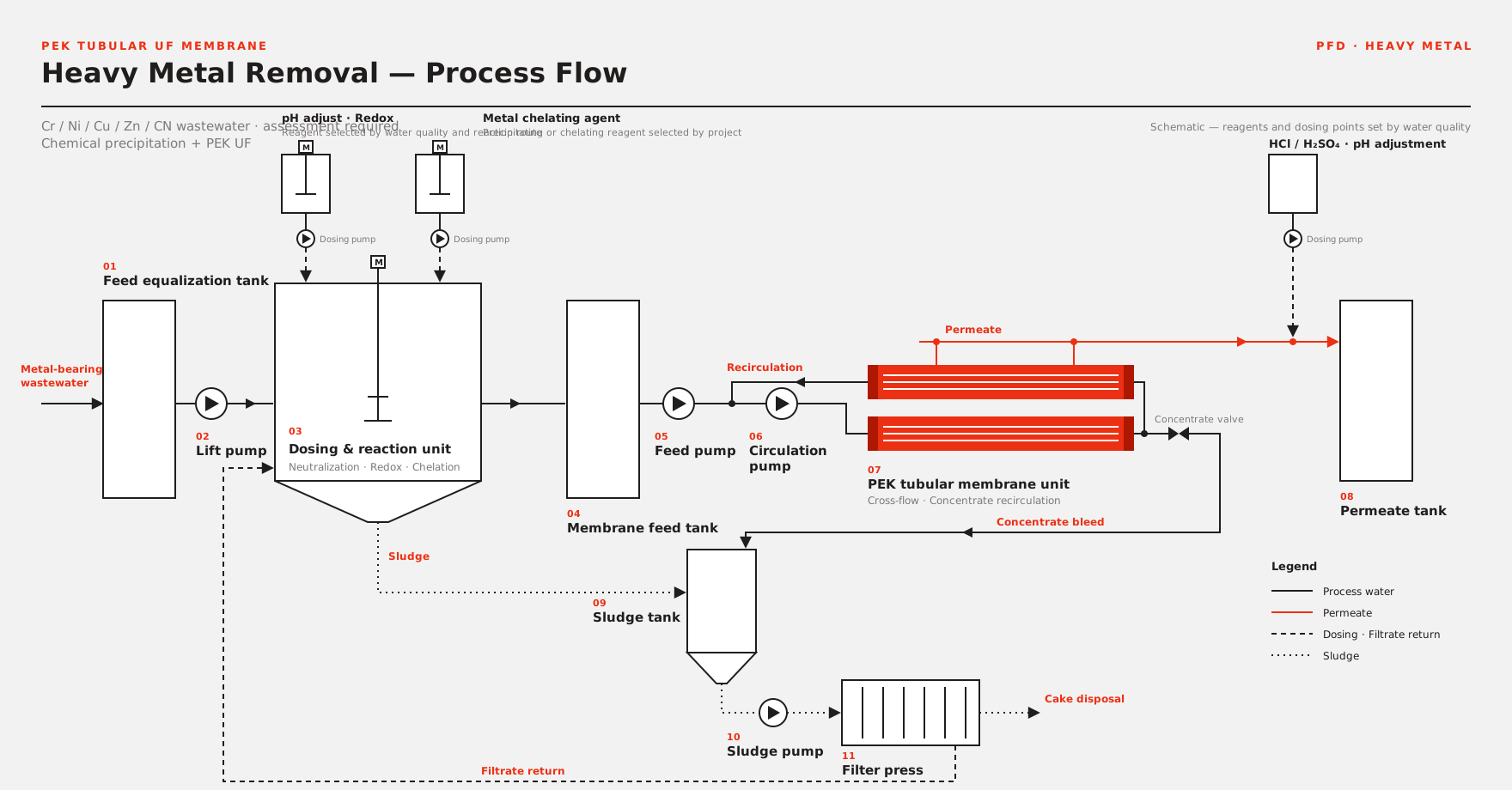
View the crawlable text process route
- 01 – Segregated collection and equalization – Segregate by metal type, acidity/alkalinity, complexing agents, and concentrated mother liquors; buffer flow and concentration variation to avoid interference.
- 02 – Speciation adjustment and reaction – Apply redox, decomplexation, and pH adjustment as required to convert target metals into precipitable or coprecipitable forms.
- 03 – Precipitate formation and conditioning – Select matching reagents, residence time, and mixing to form particles or flocs suitable for tubular membrane separation.
- 04 – Tubular membrane solids separation – The PEK tubular membrane retains reaction products and colloids by cross-flow. Permeate enters downstream conditioning, reuse, or polishing.
- 05 – Sludge and permeate destinations – Route concentrate to dewatering, metal recovery, or compliant disposal. Confirm filtrate recycle and NF/RO or ZLD interfaces by mass balance.
Core engineering principle:Upstream reaction determines whether metals can be converted; the tubular membrane determines whether reaction products can be separated reliably. Without both boundaries, final heavy-metal values cannot be inferred from membrane equipment alone.

REACTION & SEPARATION DUTIES
Tubular membranes separate reaction products; they do not directly remove every dissolved ion
Chemical reaction and membrane separation responsibilities must be stated separately. The tubular membrane can provide stable solids separation only after target metals are converted into retainable solids.
- Speciation conversion
- Different metals and valence states require different redox, decomplexation, pH, or precipitation conditions. One reagent and set point cannot cover every wastewater.
- Reaction window
- The source example mentions pH 9–11, but this is not a universal design range. Coexisting ions, complexing agents, and target limits change the optimum window.
- Membrane-section responsibility
- The tubular membrane retains metal hydroxides, coprecipitated particles, and colloids and maintains continuous solids separation through cross-flow operation.
- Permeate and sludge
- Residual dissolved metals, salts, and COD may require polishing. Concentrated sludge requires dewatering, recovery, or compliant disposal according to its classification.
For Cr(VI), stable metal complexes, cyanide-bearing wastewater, or selective multi-metal recovery, confirm dedicated reaction and safety boundaries first and use sample testing where required.
ENGINEERING BOUNDARY
Separate brochure references, project records, and new-project guarantees
Brochure parameters support route screening; project data describes only the corresponding water chemistry and process combination. New-project reaction conditions, membrane flux, permeate values, and sludge boundaries require separate technical approval.
| Engineering item | Current public reference | Project-specific confirmation |
|---|---|---|
| Target metals | Public material covers Fe, Cu, Ni, Pb, Zn, Cd, Cr³⁺, Al, and related directions | Distinguish total, dissolved, particulate, valence, complexed, and coexisting ions; total heavy metals alone is insufficient |
| Reaction pH | Source example route: pH 9–11 | Illustrates one hydroxide-precipitation route only; set the actual window from metal solubility, complexing agents, coprecipitation, pH readjustment, and testing |
| Membrane flux | Public brochure reference: 150–500 LMH | Project records are mainly 150–300 LMH or 200–300 LMH; set new-project values from solids properties, viscosity, temperature, circulation, and cleaning |
| Heavy metals in permeate | Brochure reference below 0.1 mg/L in applicable designs | Define each metal, limit, sampling point, analytical method, stable operating period, and whether downstream polishing is included |
| System recovery | No universal guarantee | Affected by reaction dosing, sludge discharge, dewatering-filtrate return, CIP, downstream NF/RO, and plant-wide mass balance |
| Sludge and resource recovery | Define dewatering, off-site handling, or recovery by project | Review metal value, impurities, hazardous-waste classification, filtrate quality, reagent addition, and local compliance |
Formal technical documents must list design influent, reaction conditions, design values, guarantee values, analytical methods, sampling locations, continuous operating conditions, sludge boundaries, and exclusions separately.
PROCESS ROUTE SELECTION
Metal speciation and project endpoint determine the route together
Heavy metals removal may be single-stage reaction clarification, segregated recovery, or ZLD pretreatment. Routes can be combined, but reaction responsibility, membrane boundary, and guaranteed endpoint must be defined separately.
Reaction precipitation + tubular membrane
- Applicable feed
- Target metals can be converted into retainable solids through redox, pH adjustment, or precipitation.
- Core responsibility
- The reaction section converts speciation; the PEK tubular membrane provides continuous solids separation.
- Downstream interface
- Permeate enters reuse, polishing, or discharge routing; concentrated sludge enters dewatering or disposal.
Complexed and multivalent metals
- Applicable feed
- EDTA, ammonia, cyanide, strong complexing agents, Cr(VI), or other multivalent and safety boundaries are present.
- Core responsibility
- Define decomplexation, reduction, oxidation, or selective-precipitation conditions before assessing the membrane section.
- Decision basis
- Use complete water chemistry, reagent tests, sludge properties, and residual dissolved metals.
Reuse, resource recovery, and ZLD
- Applicable feed
- Pickling, PCB, new-energy, or saline systems require water reuse, metal recovery, or salt resource recovery.
- Core responsibility
- Tubular UF protects NF/RO, continuous concentration, evaporation/crystallization, or dedicated metal-recovery units.
- Decision basis
- Assess segregation conditions, recovery value, salt chemistry, concentrate destination, and whole-process economics.
When one wastewater contains heavy metals, hardness, silica, oil, complexing agents, or high COD, organize an integrated route by contaminant form and section objective rather than assigning every task to one membrane section.
SOLUTION SCOPE
Define reaction, membrane circulation, and sludge destination separately
The following supports preliminary assessment and detailed design. It does not mean every project automatically includes all reagent systems, civil works, dewatering, polishing, recovery equipment, or plant-wide discharge responsibility.
Core reaction and membrane section
- Equalization, pH/ORP adjustment, reagent dosing, and reaction-unit design interfaces
- PEK tubular membrane modules, racks, feed, and cross-flow circulation pump sets
- Permeate, concentrate, CIP, pressure, flow, temperature, and level controls
Optional engineering scope
- Decomplexation, redox, mixing/conditioning, and standby reagent systems
- Sludge thickening/dewatering, filtrate return, metal recovery, and hazardous-waste temporary-storage interfaces
- Permeate neutralization, NF/RO, GTRO, evaporation/crystallization, or other polishing
Owner / EPC interfaces
- Segregated collection, civil tanks, buildings, site piping, and utilities
- Feed and permeate analysis, reagent supply, sludge classification, and final destination
- Installation and commissioning conditions, plant-wide interlocks, reuse standards, and local compliance requirements
Final scope, reagent responsibility, membrane-separation guarantee, permeate endpoint, sludge boundary, design responsibilities, and interface conditions follow mutually approved technical and commercial documents.
APPLICATION ROUTES
Define applications around metal source, speciation, and downstream objective
The applications below can enter preliminary assessment, but cannot share one reaction pH, reagent program, membrane flux, permeate specification, sludge route, or recovery scheme.
Electroplating and PCB wastewater
For copper, nickel, zinc, and complex particles, assess segregation and reaction first, then connect to tubular UF, reuse, or metal recovery.
Steel and metal pickling wastewater
Treat high acidity, iron, and concentration variation through oxidation, alkali precipitation, membrane clarification, and downstream fractionation or ZLD.
New-energy-material wash water
Control iron, colloids, and suspended solids in iron-phosphate and battery-material wash water before NF/RO and production reuse.
Mining, metallurgy, and mineral-processing wastewater
Assess precipitation, membrane separation, and sludge-disposal boundaries against coexisting metals, solids loading, acidity/alkalinity, and return-water objectives.
Aluminum and nonferrous-metal processing
Define acidification, hydrolysis, and flocculation for high-alkalinity or aluminum-bearing wastewater before tubular membrane clarification.
Chemical, catalyst, and pigment wastewater
Review complexing agents, organics, salinity, and metal speciation and use sample testing to confirm prereaction and polishing routes where required.
PROJECT EVIDENCE
Support route screening with three real water types and full-process project records
Customer names remain anonymous. Reactions, influent/effluent values, membrane flux, and downstream membrane combinations apply only to the corresponding projects and do not establish new-project design or guarantee values.
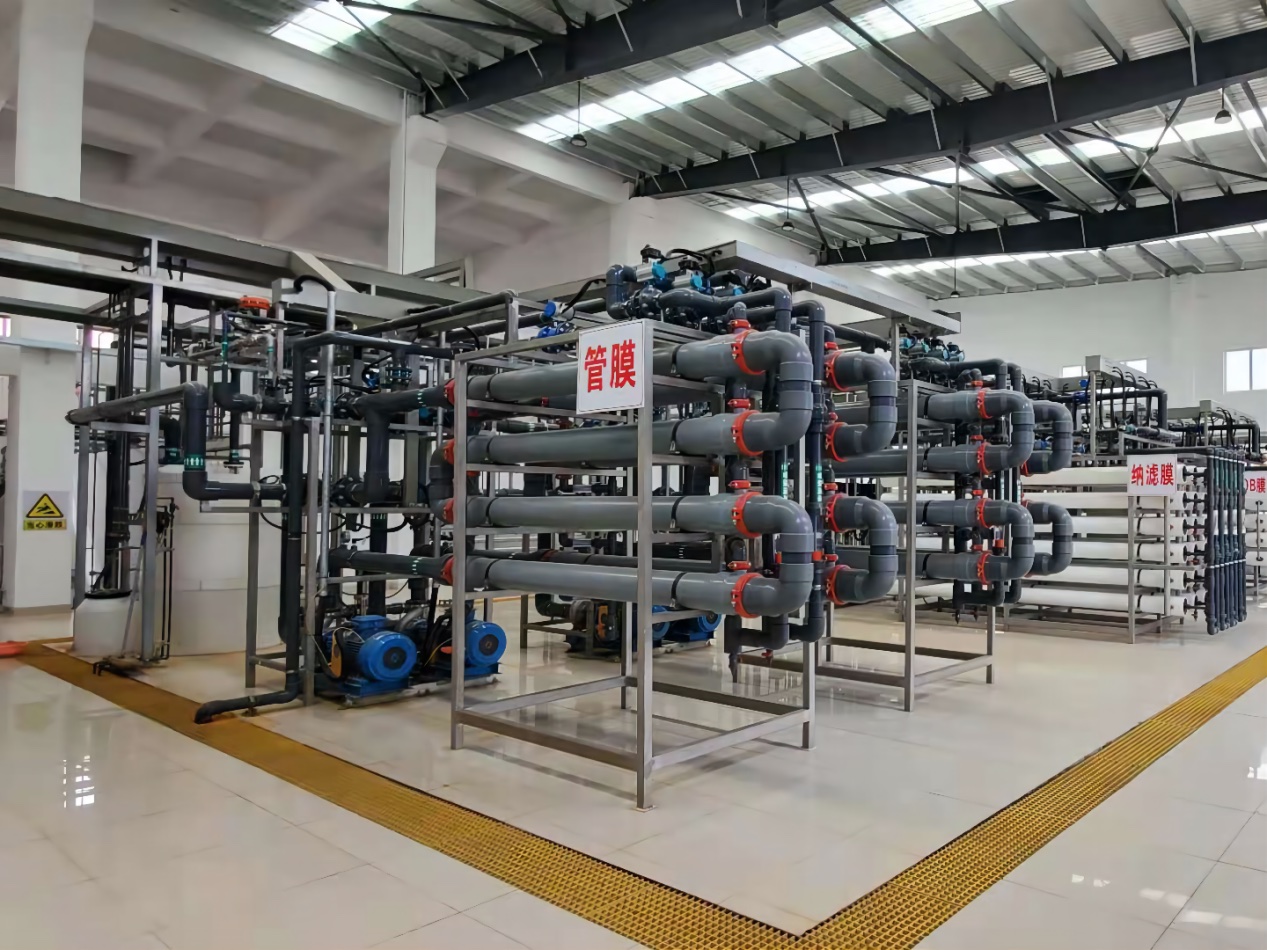
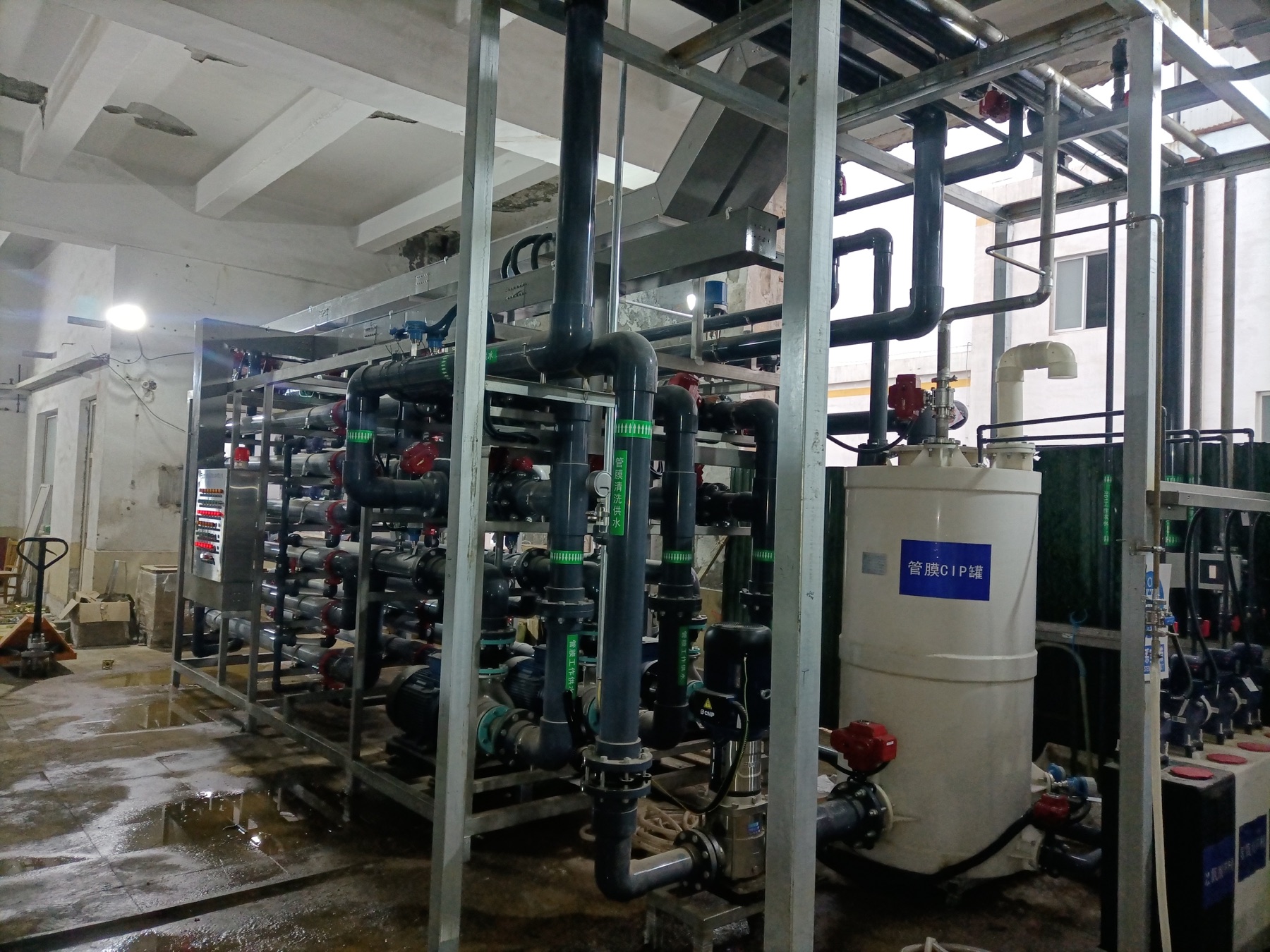
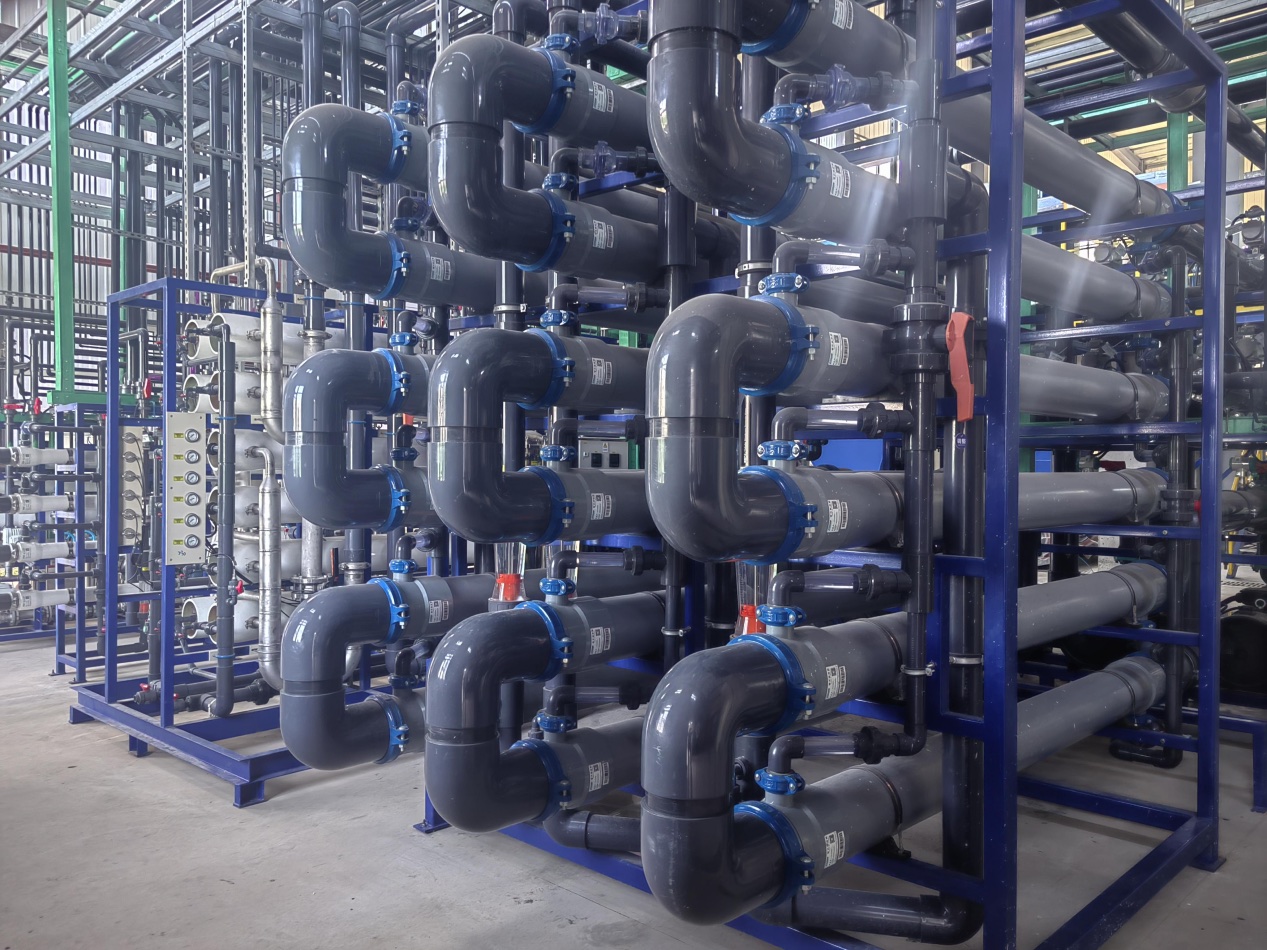
HYDROCHLORIC-ACID PICKLING WASTEWATER · PUBLIC PROJECT RECORD
1,350 m³/d heavy-metals and hardness removal project at an anonymous Shandong steel plant
- Influent
- Fe 500–1,000 mg/L
- Permeate
- Fe ≤0.5 mg/L, reused within this project
- Process
- Pretreatment + tubular UF + NF + GTRO + evaporation/crystallization
- Reference flux
- 150–300 LMH; this project record only

IRON-PHOSPHATE PRODUCTION WASH WATER · PUBLIC PROJECT RECORD
50 m³/h clarification and heavy-metals removal project at an anonymous Hebei new-energy company
- Influent
- Fe 1,000–3,000 mg/L
- Permeate
- Fe ≤0.5 mg/L, reused for washing or makeup in this project
- Process
- Pretreatment + PEK tubular membrane + NF + RO
- Reference flux
- 150–300 LMH; this project record only
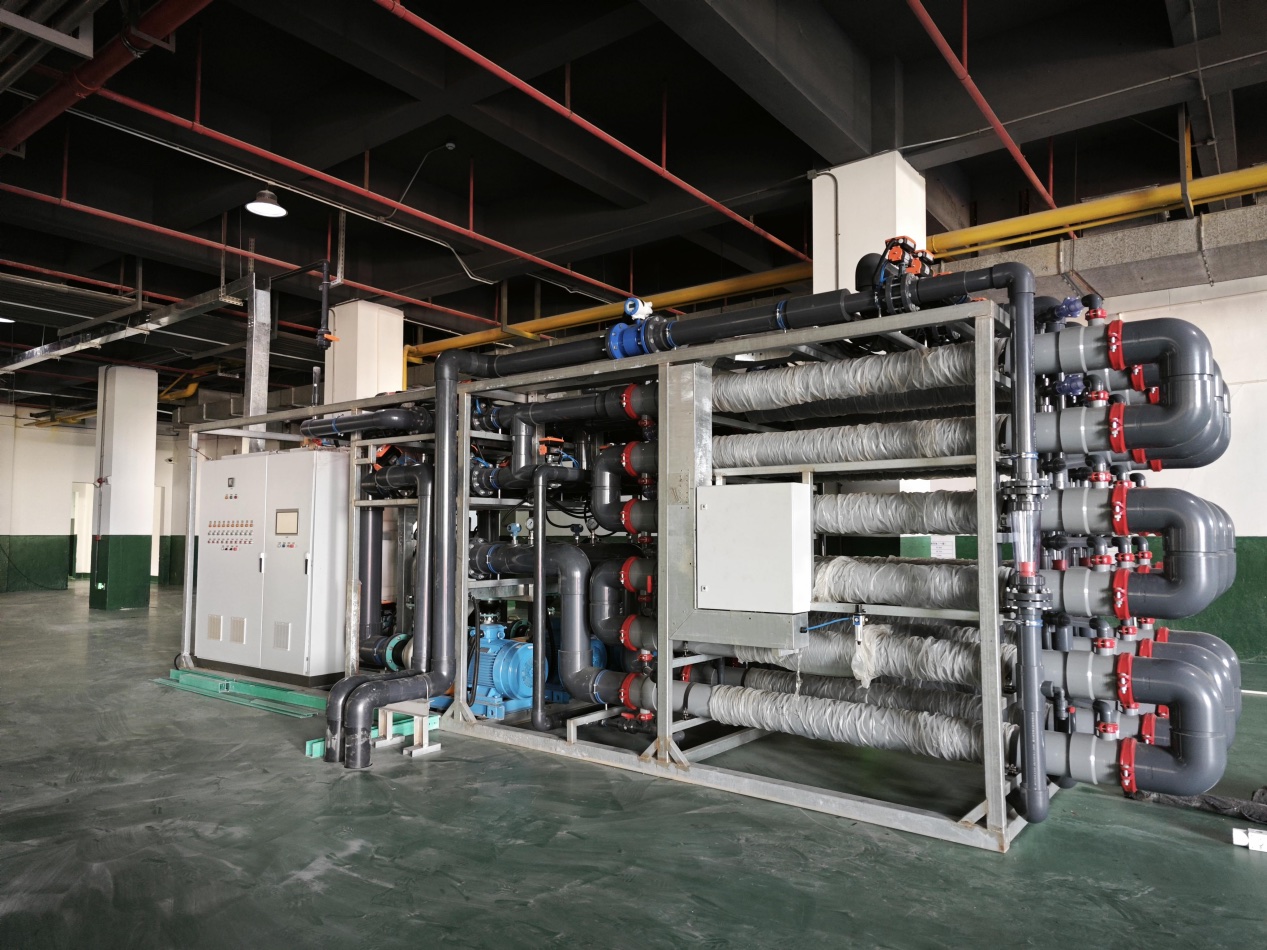
PCB COPPER- AND NICKEL-BEARING WASTEWATER · PUBLIC PROJECT RECORD
3,600 m³/d membrane treatment and metal-recovery project at an anonymous PCB company
- Influent
- SS 500–2,000 mg/L; heavy metals 200–300 mg/L
- Permeate
- SS ≤1 mg/L; heavy metals ≤0.5 mg/L; this project record only
- Process
- Pretreatment + PEK tubular membrane + RO + metal recovery
- Reference flux
- 200–300 LMH; this project record only
Project data comes from existing public material. Image-to-reference matching, complete process boundaries, sampling and analytical methods, anonymization, image rights, and all quantitative values require review before formal publication.
RESOURCES
Selection resources and next steps
ProductPEK tubular membrane details
Public resourceTubular membrane brochure
Project preparationProject evaluation worksheet
TECHNICAL FAQ
Heavy metals removal frequently asked questions
Can a PEK tubular membrane directly remove dissolved heavy metals?
Not as a general statement. The tubular membrane mainly retains metal precipitates, coprecipitated particles, and colloids formed after reaction. Dissolved metals require redox, decomplexation, pH adjustment, or other conversion first, and residual dissolved metals may require polishing.
Can every heavy metal be precipitated at pH 9–11?
No. pH 9–11 is only an example route in source material. Different metals, valence states, complexing agents, coexisting ions, and target limits require different reaction windows. Excessive or insufficient pH can also cause redissolution or increase downstream readjustment.
How is wastewater containing EDTA, ammonia, cyanide, or Cr(VI) treated?
Confirm complexation and valence first, then define decomplexation, reduction, oxidation, or selective-reaction conditions with safety, off-gas, reagent, and sludge boundaries. Complete water chemistry and sample testing are recommended; conventional hydroxide precipitation cannot be applied directly.
Can 150–500 LMH and heavy metals below 0.1 mg/L be used directly as guarantees?
No. Both are public brochure screening references, and below 0.1 mg/L is explicitly limited to applicable designs. Formal guarantees require each target metal, reaction condition, membrane section, downstream polishing, sampling and analytical method, and stable operating condition to be defined.
How is concentrated sludge handled, and can metals be recovered?
Assess metal type and value, impurities, reagent addition, sludge moisture, and local hazardous-waste rules. Some segregated streams can be assessed for metal recovery; mixed sludge may require dewatering and compliant disposal. Filtrate recycle also requires separate calculation.
What data is required for preliminary assessment?
Provide at least flow and operating hours, total and dissolved values for each metal, valence, pH, ORP, acidity/alkalinity, SS, COD, salinity, complexing agents, existing reagent process, target limits, downstream use, sludge destination, and available cleaning conditions. Complex systems should provide samples.
HEAVY METALS PROJECT EVALUATION
Submit metal speciation and the treatment endpoint for preliminary route assessment
Upload complete water analysis, metal speciation or valence data, existing dosing process, target limits, and sludge destination where possible. The engineering team will assess the reaction route, tubular membrane responsibility, validation need, and how reuse, recovery, or ZLD connects.
Submitted information is used only for preliminary project assessment. Final reagents, membrane specification, membrane area, flux, recovery, permeate values, sludge route, scope, and guarantee conditions are defined in the formal technical documents.