Spray Robot Cleaning Waste All Classified as Hazardous? This Membrane Process Achieves Closed-Loop Reuse
When automotive spray robots run batch production or change colors, they use water-based cleaning agents to flush the spray heads, bell cups and lines. Traditionally, the resulting cleaning waste liquid has been shipped out entirely as hazardous waste, at high cost. Plum Membrane’s PEK® tubular membrane + nanofiltration separation process returns more than 80% of […]
When automotive spray robots run batch production or change colors, they use water-based cleaning agents to flush the spray heads, bell cups and lines. Traditionally, the resulting cleaning waste liquid has been shipped out entirely as hazardous waste, at high cost. Plum Membrane’s PEK® tubular membrane + nanofiltration separation process returns more than 80% of the cleaning liquid to spray-head cleaning after treatment, cutting the hazardous waste disposal volume to about 20%; the main process runs fully automatically, and the project’s equipment payback period is under one year.
1. The Pain Point: Why Cleaning Waste Becomes Costly Hazardous Waste
In an automotive paint shop, spray robots must use water-based cleaning agents to flush the spray heads, bell cups and lines during batch production or when switching paint colors, so that residual paint does not affect coating quality. The resulting paint-laden waste liquid contains paint, resin and colloidal impurities, and in the past it was 100% shipped out as hazardous waste.
This creates a double burden: companies must bear the high cost of temporary storage, transport and disposal of hazardous waste, while also continuing to buy fresh water-based cleaning agent. Reducing disposal pressure and achieving closed-loop reuse of the cleaning agent has become an urgent, practical problem for paint shops.
2. The Process: PEK Tubular Membrane + Nanofiltration for Closed-Loop Reuse
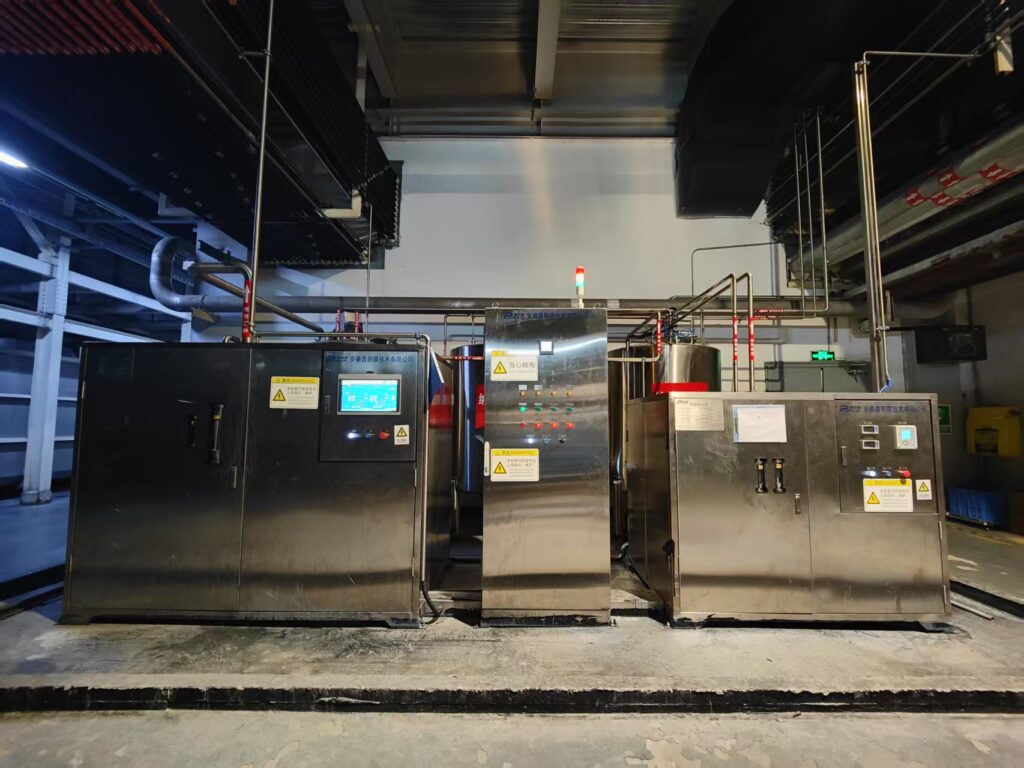
The project uses a water-based waste solvent recovery system. The process path is as follows:
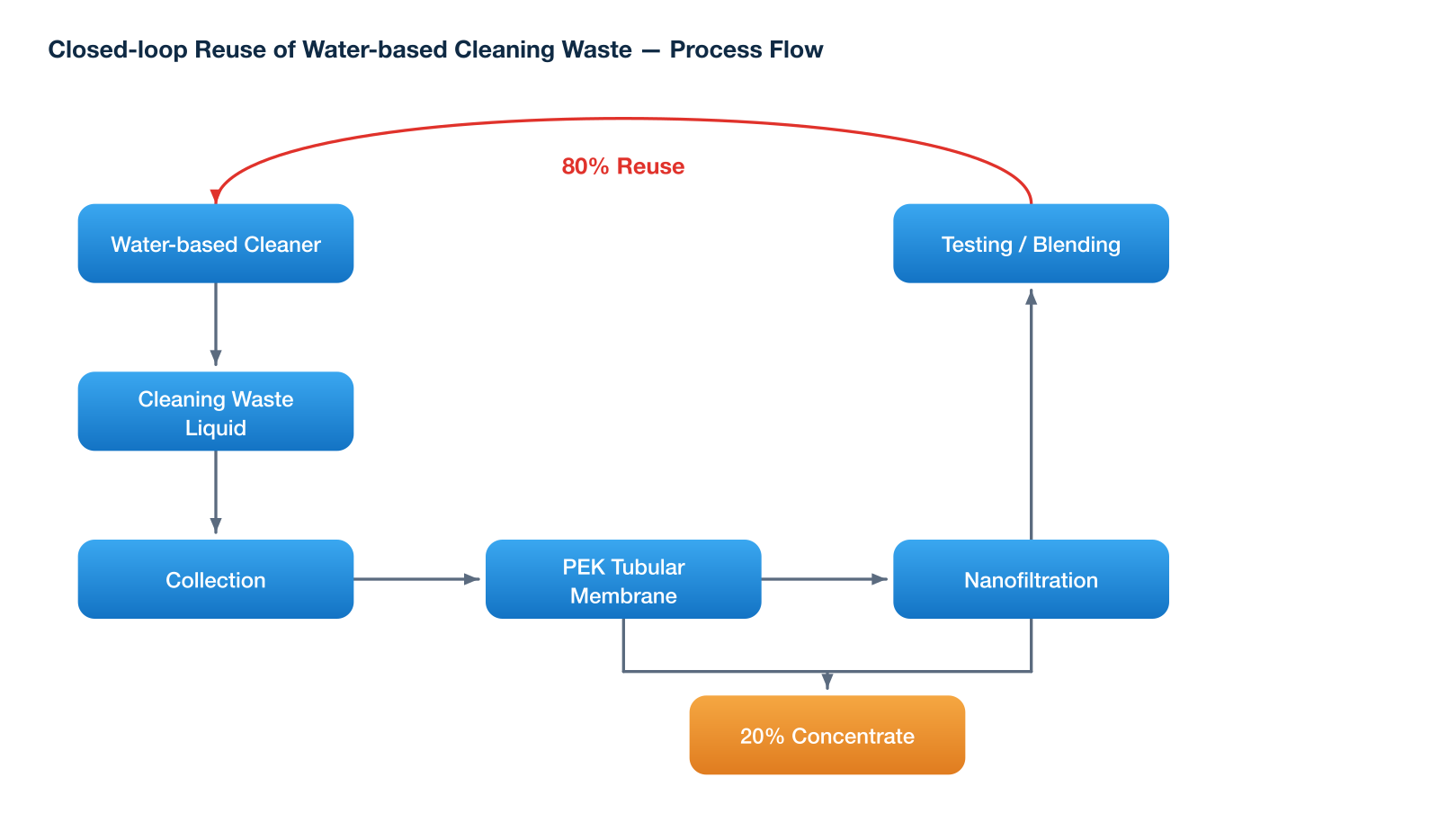
- Production waste solvent from the workshop is fed to the tubular ultrafiltration membrane feed tank;
- After pressurization by the circulation pump, it is filtered through the PEK® tubular membrane and the clear liquid is sent to the nanofiltration feed tank, with only about 20% concentrate handled as hazardous waste;
- The ultrafiltration clear liquid is then finely filtered by the nanofiltration membrane system and collected in the nanofiltration permeate tank; the permeate solvent can be used for blending;
- In the secondary blending tank, the nanofiltration permeate is blended with the original cleaning solvent at a set ratio according to production requirements;
- The blended mixture is returned to the production workshop for reuse.
This system enables repeated recycling of the solvent, genuinely reducing both the hazardous waste volume from gun-washing water in the basecoat and topcoat lines and the consumption of fresh cleaning solvent.Closed-loop Reuse of Water-based Cleaning Waste — Process Flow80% ReuseWater-based CleanerCleaning WasteLiquidCollectionPEK TubularMembraneNanofiltrationTesting / Blending20% ConcentrateFigure 1 Closed-loop reuse process flow of water-based cleaning waste
3. Project Advantages
3.1 Hazardous waste greatly reduced, disposal pressure significantly eased
The system recovers more than 80% of the water-based cleaning waste liquid, and only about 20% concentrate requires off-site disposal, greatly reducing hazardous waste disposal, transport and on-site management costs.
From 100% hazardous waste disposal to 80% waste reduction:
- Conventional mode: all waste liquid disposed off-site, 100% hazardous waste;
- Closed-loop mode: recovered liquid reused for the same purpose, hazardous waste about 20%;
- Overall path: waste collection → membrane separation → recovered liquid reuse / concentrate disposal.
3.2 Cost savings on both sides, short payback period
The cleaning liquid returns to the original production process, reducing purchases of fresh cleaning agent; combined with lower hazardous waste disposal fees, this delivers cost savings on both sides. As measured on site, the equipment payback period is less than one year, turning environmental equipment from a cost into a source of benefit.
- Lower cleaning agent purchases: recovered liquid returns to the original production process;
- Lower hazardous waste disposal costs: waste reduction cuts fees;
- Payback period under 1 year: environmental equipment turns from a cost into a benefit;
- Cleaning liquid reuse + hazardous waste reduction = cost savings on both sides.
3.3 Fully automatic PLC operation, minimal manual intervention
The system uses fully automatic PLC logic control, automatically executing the four core steps — working, rinsing, transfer and flushing — while continuously monitoring key process parameters such as flow, pressure and level. The whole process is controllable and traceable, the equipment runs stably, and process repeatability and consistency are excellent.
4. Acceptance: 45 Days of Stable Operation, All Indicators Met
Installation began on site in early August 2024. During the work, the construction schedule was optimized to match the owner’s shutdown adjustments and newly added blending process requirements; all equipment installation and wiring was completed on October 25, and the first feed commissioning started on October 27. The team continued to iterate the process and optimize operating parameters, gradually aligning equipment performance with the owner’s production standards.
According to the project technical agreement, acceptance requires 45 days of stable operation, compliance with design requirements, and a failure rate below 2%. The acceptance application was submitted on February 20, 2025; after 45 days of stable-operation verification, all indicators were met, and overall acceptance was completed successfully by the end of March 2025.
Conclusion
Given the high cost of disposing of water-based paint-shop cleaning waste as hazardous waste, closed-loop reuse can greatly reduce hazardous waste and cut costs. To learn more about project investment or process suitability assessment, contact us for a tailored technical solution.