HFCS MEMBRANE PURIFICATION
HFCS Continuous Membrane Separation & Purification
For high-fructose corn syrup (HFCS) conversion liquor, combine upstream clarification, staged nanofiltration, stream mass balance, and real-feed validation to address proteins, colloids, color, ash, and sugar-component relationships and to connect the membrane section with blending, evaporation, or other refining operations.
This page does not represent a complete HFCS production line. Real feed, a closed mass balance, and target specifications must define membrane selection, interstage recycle, stream identity, and product interfaces.
Distinguish hydrolysate, fructose-conversion liquor, and the finished syrup product.
Assess passage, retention, and recycle relationships for UF and every NF stage.
Place the membrane section within the complete blending, decolorization, ion-exchange, evaporation, and refining route.
DEFINE THE PROCESS STREAM
First distinguish hydrolysate, conversion liquor, and product syrup
These streams occupy different process positions and require different separation duties. This page focuses on fructose-conversion-liquor purification and does not combine upstream starch-sugar clarification or final product blending into one membrane process.
Starch-sugar hydrolysate
Control proteins, dextrins, colloids, and solids to establish stable feed for downstream refining and isomerization. Assess this duty on the starch-sugar clarification route page.
→
Fructose-conversion liquor
Validate upstream clarification, protein and colloid control, NF fractionation, interstage recycle, and stream mass balance.
→
F42 / F55 / F90 and related syrups
These are product or process objectives, not guaranteed outputs from one membrane stage. The complete refining and blending route must confirm final composition and quality.
FEED & PRODUCT SCREENING
Six information groups define membrane selection, stage count, and validation scope
Preliminary assessment starts with target-sugar composition, the impurity profile, and downstream interfaces rather than a preset membrane or fixed two-stage route.
Sugar composition & analysis
Fructose, glucose, and other sugar ratios, analytical methods, target ranges, and allowable loss boundaries.
Proteins, colloids & fine particles
Effects of residual proteins, colloids, polysaccharides, turbidity, and solids on upstream clarification and downstream NF.
Color, ash & impurities
Measured color bodies, ash, major ions, HMF, other priority components, and downstream limits.
Brix & physical-property window
Brix, viscosity, temperature, pH, osmotic pressure, and batch variation jointly define separation and concentration boundaries.
Product & downstream objectives
Define the target syrup, blending method, and interface requirements for decolorization, ion exchange, evaporation, crystallization, or filling.
CIP & contact boundaries
Permitted cleaning agents, cleaning temperature, contact materials, changeover logic, and project quality responsibilities require separate confirmation.
MODULAR MEMBRANE ROUTE
Combine clarification, first-stage NF, and second-stage NF by separation duty
The route below is an engineering discussion framework; it does not mean every project requires all membrane sections. Sample testing and mass balance define the actual stage count, recycle, bypasses, and downstream interfaces.
- 01Upstream refining & isomerization interfaceConfirm conversion-liquor origin, sugar composition, pretreatment status, and continuous-feed conditions
- 02Temperature adjustment & pretreatment as requiredEstablish a stable feed window for clarification and downstream fractionation stages
- 03Tubular membrane / UF clarificationControl proteins, colloids, fine particles, and compatible macromolecular impurities
- 04First-stage NF fractionationUse membrane screening to define retention and passage of target sugars, salts, and organic impurities
- 05Second-stage NF recovery or refiningAssess recovery, further fractionation, blending, or side-stream endpoints from first-stage stream composition
- 06Downstream product interfaceConnect blending, decolorization, ion exchange, evaporation, crystallization, or another refining operation
UF primarily provides clarification and macromolecular-impurity control. A membrane name alone cannot define the sugar and impurity fractionation duty of NF. Analytical results and stream mass balance must demonstrate the role of every stage.
STAGED STREAM RELATIONSHIPS
The purpose of two NF stages is stream configuration, not simply adding another stage
No permeate or concentrate is predefined as the product. Sugar profile, impurities, recycle value, and downstream use at each stage jointly define product, recovery, and side streams.
Clarification & protein control
- Clarified stream
- Use protein, colloid, turbidity, and sugar-loss results to determine whether this stream enters NF fractionation.
- Retentate
- Define recycle, recovery, or endpoint from target-sugar carryover, recovery value, and handling conditions.
First fractionation decision
- Permeate
- Review sugar composition, ash, color, and whether the stream enters second-stage NF, blending, or another interface.
- Concentrate
- Review enrichment of target sugars and impurities before defining recovery, further treatment, or a side-stream endpoint.
Recovery, refining & product interface
- Permeate / concentrate
- Use the second-stage sugar profile and quality analysis to define blending, the main product route, further refining, or disposal.
- Cleaning & discharge side streams
- Include CIP, rinse, and non-product side streams in the complete mass balance rather than excluding them from the main product accounting.
F42, F55, and F90 describe products or production objectives. A membrane system may provide clarification, fractionation, recovery, or refining duties, but final composition still requires confirmation through isomerization, blending, ion exchange, evaporation, and the complete quality-control system.
SAMPLE TESTING & PILOT VALIDATION
Confirm sugar profiles and interstage mass balance before continuous scale-up
Real fructose-conversion liquor is required to confirm candidate membranes, stage-by-stage stream identities, fouling behavior, and cleaning recovery. Membranes and results from another syrup project cannot be applied directly.
- 01Information reviewConfirm conversion-liquor origin, target product, current process, and sample conditions
- 02Sugar-profile & impurity analysisEstablish baselines for sugar composition, proteins, color, ash, and physical properties
- 03Membrane & stage-configuration screeningCompare candidate clarification, first-stage NF, and second-stage NF configurations
- 04Bench-scale mass balanceVerify sugar profiles, impurities, quality, and recycle value for every stream
- 05Continuous pilot validationObserve the operating window, interstage accumulation, fouling, and CIP recovery
- 06Engineering scale-upDevelop design inputs for membrane area, interstage recycle, controls, CIP, and interfaces
DESIGN INPUTS
Provide feed, product, and interstage data for preliminary assessment
Data that represents continuous operating conditions improves assessment of the clarification duty, NF stage configuration, stream identities, and scale-up boundary.
- Feed origin
- Isomerization or conversion position, upstream refining route, and batch or continuous mode
- Sugar composition
- Fructose, glucose, and other sugar ratios, analytical methods, and target ranges
- Proteins & colloids
- Proteins, polysaccharides, colloids, turbidity, solids, and particle-size information
- Color & ash
- Color bodies, ash, conductivity, major ions, HMF, and other priority impurities
- Physical properties
- Brix, viscosity, temperature, pH, density, osmotic pressure, and batch variation
- Product & downstream process
- Target syrup, blending method, and interfaces with decolorization, ion exchange, evaporation, crystallization, or related operations
- CIP & contact requirements
- Permitted cleaning agents, cleaning temperature, contact materials, and project product standards
- Validation conditions
- Available sample volume, storage and transport, SDS, test schedule, and continuous-pilot conditions
Historical projects demonstrate implementation experience with the relevant membrane processes only. They do not replace validation of sugar profiles, stream quality, operating window, energy use, cost, or product quality for a new project.
PROJECT EVIDENCE
Confirmed fructose-conversion-liquor membrane project records
The capacities below document engineering experience in fructose-conversion-liquor clarification and NF purification. They do not automatically become design values or product guarantees for a new project.
Recorded fructose-conversion-liquor capacity
Membrane sections
Tubular UF clarification + NF purification
Public information is limited to capacity, feed type, and relevant membrane sections. Customer, year, stream quality, energy use, and cost are not disclosed.
Recorded fructose-conversion-liquor capacity
Membrane sections
Tubular UF clarification + NF purification
This capacity belongs to a separate historical record. A new project still requires membrane screening, interstage mass balance, and operating-boundary confirmation.
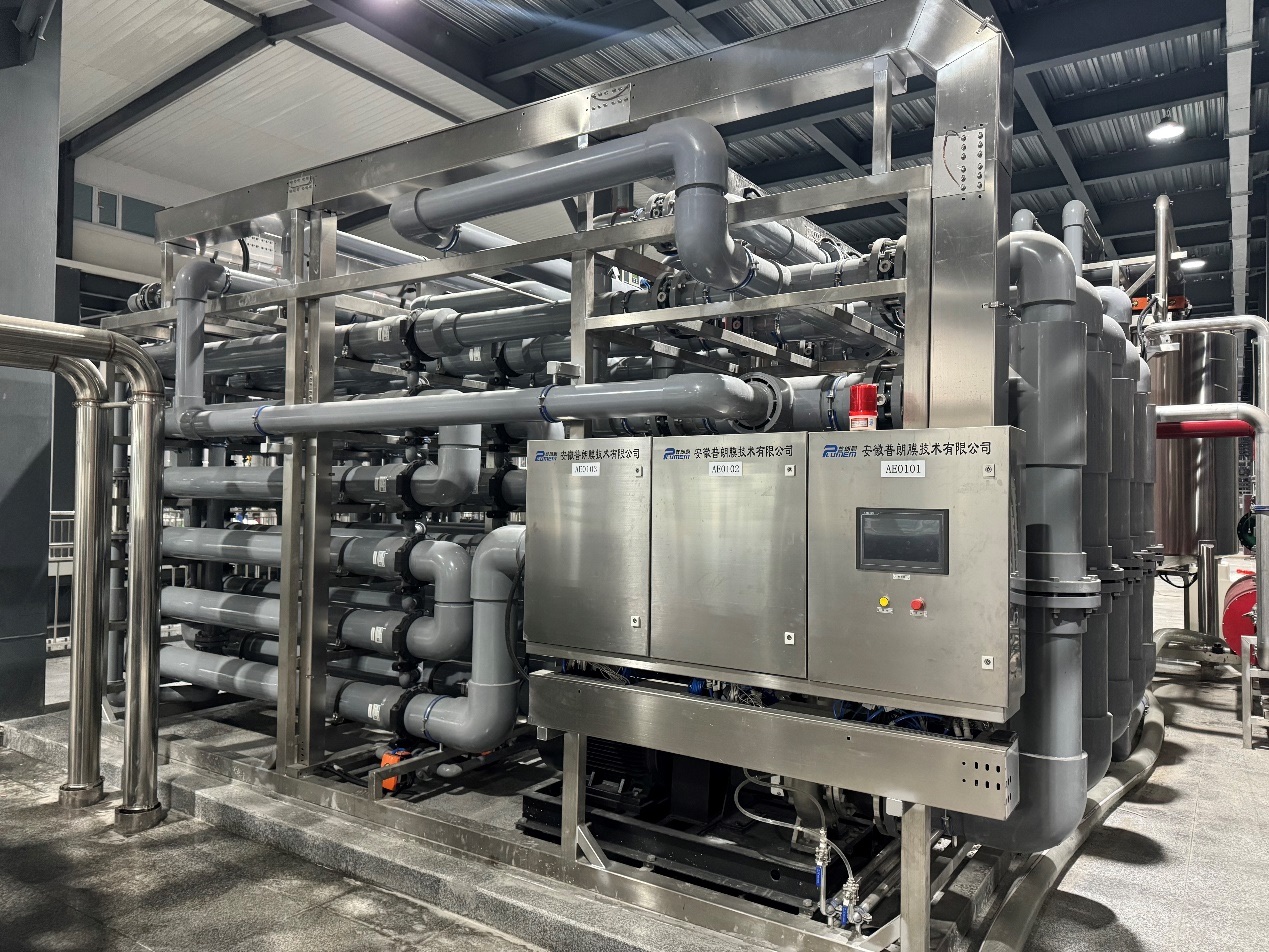
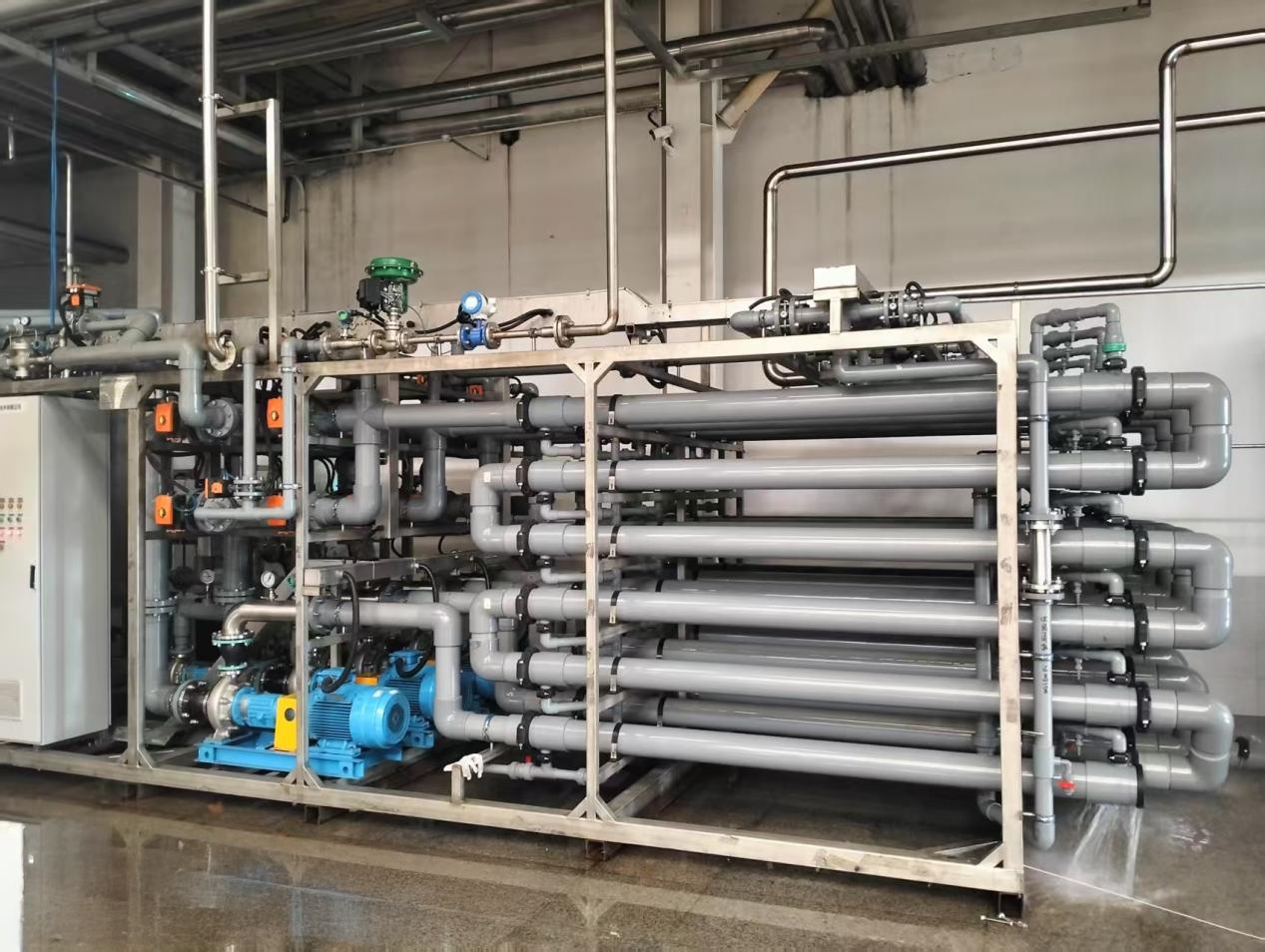
System photographs illustrate an installed functional-sugar membrane setting. They are not attributed to a customer site until image-to-project provenance is approved.
ENGINEERING BOUNDARY
Confirm membrane-section duties within the complete syrup process
Plum supports membrane screening, experimental validation, membrane systems, and engineering interfaces. Isomerization, blending, product quality, and other non-membrane responsibilities are allocated project by project.
PLUM CAN SUPPORT
- Preliminary review of conversion liquor, target sugars, and impurity profile
- Tubular membrane, UF, and multistage NF membrane screening
- Sample testing, continuous pilot validation, and mass balance
- Membrane sections, CIP, instrumentation, controls, and integrated systems
- Commissioning, training, and engineering scale-up support
CONFIRM PROJECT BY PROJECT
- Upstream saccharification, isomerization, and enzyme responsibilities
- Decolorization, ion exchange, blending, evaporation, and crystallization
- F42/F55/F90 product specifications and analytical responsibilities
- Contact materials, regulatory compliance, and validation responsibilities
- Non-membrane side streams, utilities, and overall plant performance
RELATED RESOURCES
Continue reviewing upstream clarification and fractionation conditions
Business overviewProcess Fluid Membrane Separation
Upstream routeStarch-sugar hydrolysate tubular membrane clarification
Related functional sugarAllulose membrane separation & purification
ENGINEERING FAQ
HFCS continuous membrane separation FAQ
How does this page differ from starch-sugar hydrolysate clarification?
The starch-sugar clarification page addresses proteins, dextrins, colloids, and solids in upstream liquefaction liquor or hydrolysate. This page focuses on fructose-conversion-liquor clarification, NF fractionation, interstage recycle, and downstream product interfaces.
Do all HFCS projects require two NF stages?
No. NF stage count depends on sugar and impurity profiles, the target product, the value of each stream, and downstream operations. A project may use one stage, two stages, or another configuration, which must be confirmed by testing.
What products are the first- and second-stage NF permeates?
They cannot be predefined. Sugar and impurity retention and passage vary with membrane and feed conditions. Stage-by-stage sugar-profile analysis and mass balance must define each stream.
Can the membrane system directly produce F42, F55, or F90?
A product designation cannot be equated with one membrane-stage output. Membranes may perform clarification, fractionation, recovery, or refining duties, but isomerization, blending, and the complete refining route must confirm final composition.
Can membranes replace decolorization, ion exchange, or evaporation?
There is no universal answer. A membrane section may change the load on some operations, but product objectives, impurity profile, and validation results determine whether other operations remain, change, or are removed.
Why is real fructose-conversion-liquor testing required?
Sugar composition, proteins, color bodies, ash, HMF, salts, Brix, and upstream residues jointly affect membrane selectivity, fouling, and CIP. Data from another functional-sugar project cannot replace real-feed testing.
Can the 960 and 1,680 m³/d records guarantee a new project?
No. The two figures are capacities from anonymous historical projects only. Membrane selection, interstage streams, operating window, and system capacity for a new project require fresh validation and confirmation in the technical agreement.
What information and samples are required for preliminary assessment?
Provide the conversion-liquor origin, complete sugar profile, proteins, colloids, color, ash and major ions, HMF, Brix, viscosity, temperature, pH, current process, target product, CIP conditions, SDS, and available sample volume.
REQUEST HFCS VALIDATION
Submit conversion-liquor composition & product objectivesRequest sample testing & pilot validation
Provide a complete sugar profile, proteins and colloids, color and ash, HMF, Brix and physical properties, current process, target syrup, and available sample volume where possible. Plum will review the information before defining clarification membranes, NF stage configuration, and whether pilot validation is required.
Submitted information is used only for preliminary project assessment. It does not constitute a commitment on test scheduling, stream quality, product specifications, engineering performance, regulatory compliance, or scope of supply.