MATURE MATERIAL PORTFOLIO
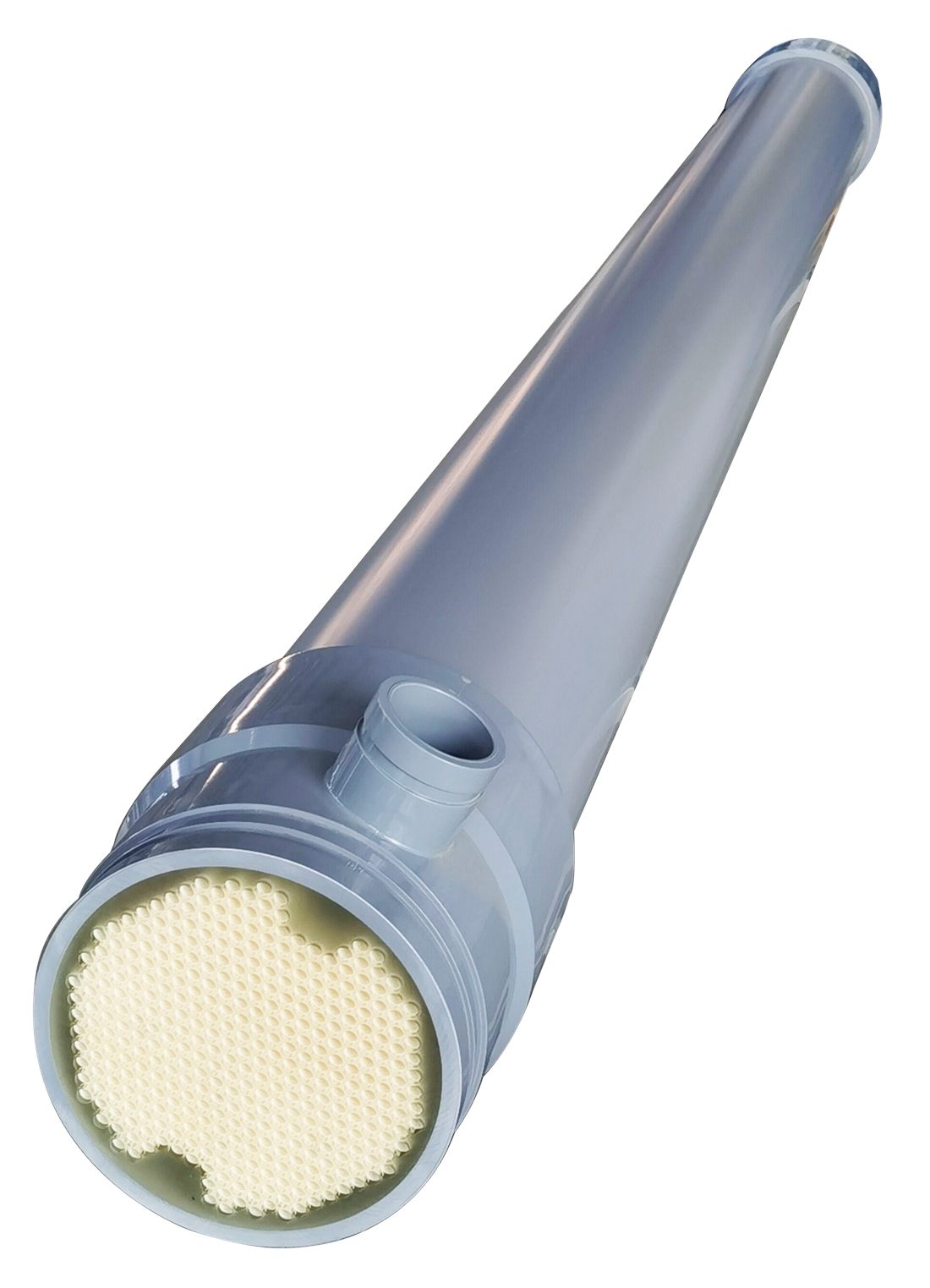
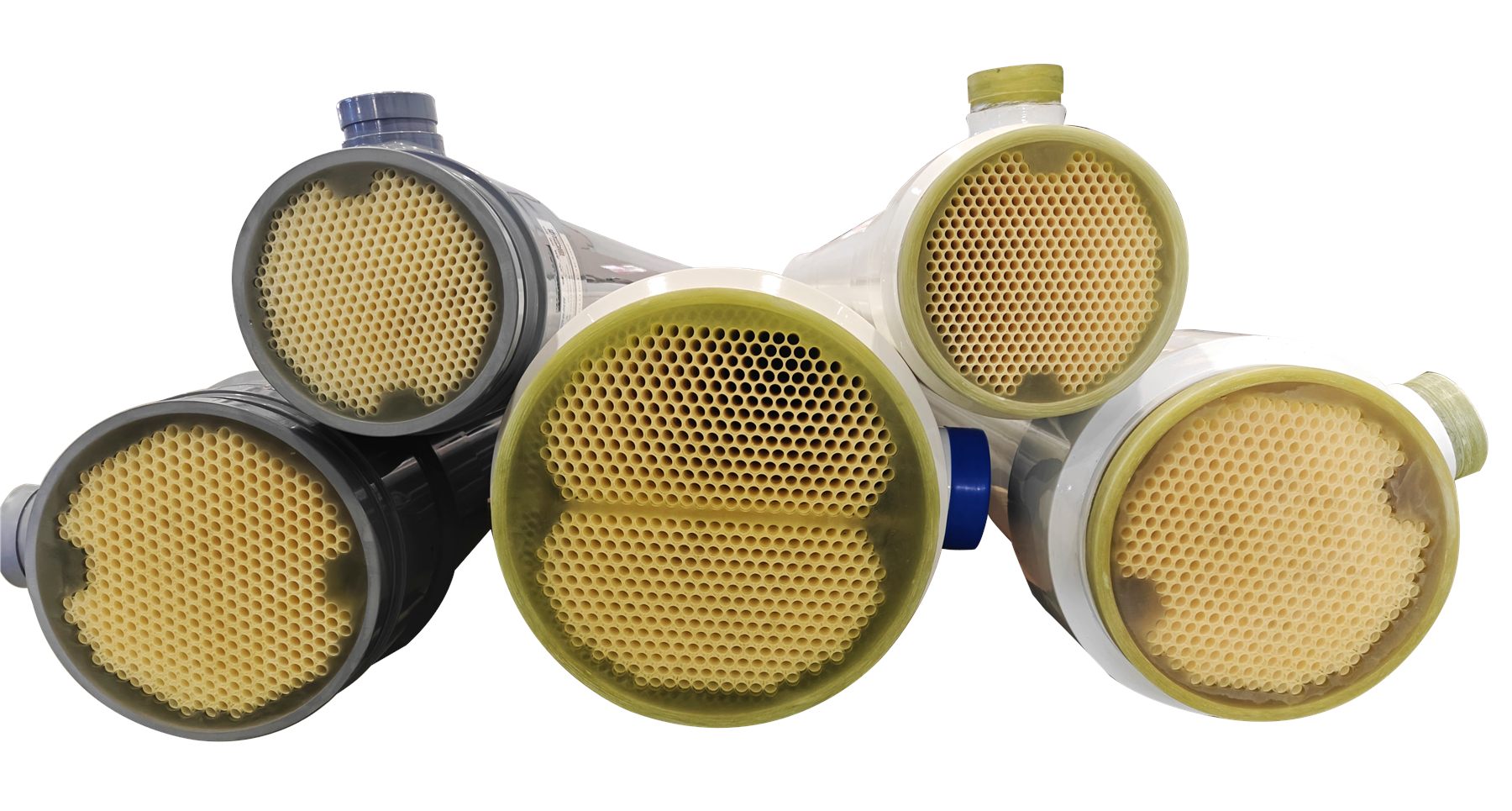
Plum supplies both PVDF and PEK tubular membranes
PVDF is a mature, widely used membrane material. PEK is Plum’s proprietary, mature series with an established engineering-selection basis. They are not an old product and its replacement, but two duty-specific routes for different feed risks, operating windows, and cleaning conditions.
Mature conventional material
PVDF tubular membrane
For conventional tubular membrane duties where chemical compatibility, temperature, and cleaning windows are suitable. It is also a familiar route with broad engineering use.
- Published separation grade
- 30 nm
- Pure-water flux
- 900 LMH/100kPa
- Published module range
- -50 to 800 kPa · up to 60°C · pH 2 to 10
- Chlorine tolerance
- 250000 ppm·h
Plum’s proprietary mature series
PEK tubular membrane
For high suspended solids, oily or highly fouling feeds, corrosive fluids, or intensive cleaning requirements. It can be integrated with MBR, NF/RO, reuse, ZLD, and process-fluid clarification routes.
- Published separation grade
- 0.2 μm / 50 nm / 10 nm
- Pure-water flux
- 2000 / 1200 / 300 LMH/100kPa
- Published module range
- -100 to 1000 kPa · up to 60°C · pH 0 to 12.5
- Chlorine tolerance
- 300000 ppm·h
How to select: Review feed composition, fouling load, pH, temperature, and cleaning conditions before the separation objective, channel, and module configuration. PEK does not replace PVDF in every duty, and PVDF should not be treated as a universal solution without checking product boundaries.
Data boundary: These are standard product data from Plum’s public literature. Pure-water flux is provided for product comparison and does not represent design flux, recovery, treatment performance, or service-life guarantees for an actual feed.
APPLICATION FIT
Screen the duty before selecting a PEK tubular membrane
A PEK tubular membrane is not a universal cartridge selected by pore size alone. Engineering selection must consider feed composition, solids and oil loading, temperature, pH, cleaning method, downstream objectives, and acceptable operating boundaries together.
High suspended solids
Open channels and cross-flow circulation are candidates for feeds with high solids loading where conventional pretreatment may be constrained.
Oily and highly fouling feeds
For industrial wastewater with oil, severe plugging, or elevated organic-fouling risk; suitability must be confirmed against oil form and cleaning strategy.
Corrosive fluids
Check complete-module compatibility against the actual acid or alkali composition, temperature, contact time, and housing material.
Intensive cleaning
Where stronger acid, caustic, or oxidative cleaning is required, distinguish material capability from the operating boundary of the finished module.
Downstream membrane protection
Can serve as a solids-separation section ahead of NF, RO, reuse, or ZLD. The final route depends on feed chemistry and project objectives.
Parameter boundary: These are published module parameters, not commitments for project flux, treatment performance, or service life. The actual operating window must be confirmed from duty data, sample testing, or pilot results.
CROSS-FLOW FILTRATION
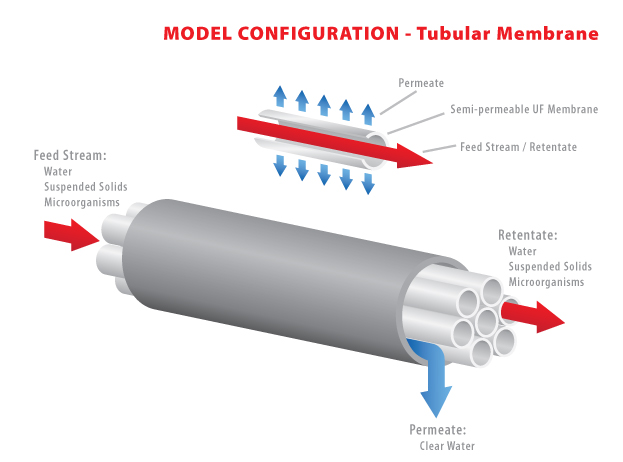
Feed flows along the membrane channel while permeate passes through the wall
Feed circulates through the tubular channels. Tangential flow helps control deposition; water or target small molecules pass through the membrane wall as permeate, while solids, oil, and retained components recirculate or leave with the concentrate.
- 01Feed enters the open channels
Feed is distributed across the tubular membrane channels.
- 02Cross-flow controls surface deposition
Circulation shear helps slow solids accumulation on the membrane surface.
- 03Permeate passes through the membrane wall
Passing components enter the permeate side while retained components remain in the circulation loop.
- 04Concentrate recirculates or is discharged
Configure concentration, recycle, sludge discharge, and cleaning logic according to the process objective.
MATERIAL AND ELEMENT BOUNDARY
Material properties, module data, and project conditions must be interpreted separately
PEK material data describes the material basis. Finished-module parameters support preliminary selection. Actual project conditions must additionally account for feed composition, pressure, temperature, cleaning chemicals, mechanical interfaces, and safety factors.
- Approximately 230°C
- PEK material glass-transition temperature reference
- 102 MPa
- PEK material tensile-strength reference
- 132 MPa
- PEK material flexural-strength reference
- 60°C
- Maximum published operating temperature for the finished module
The 230°C value is material-level data and does not mean that the membrane module can operate at 230°C. Formal projects must use technically approved module and system operating boundaries.
PRODUCT SELECTION
Select step by step by separation grade, channel, length, and housing
A model is not selected in isolation. Define the separation objective and feed risk first, then combine pore size or MWCO, channel size, membrane length, module diameter, and housing configuration.
Select according to the retention target and downstream process.
Select against solids, viscosity, circulation conditions, and pressure drop.
Select against equipment layout, membrane area, and hydraulic conditions.
Confirm against chemical compatibility, temperature, pressure, and site requirements.
PL-G identifies the tubular membrane module series. The middle positions identify channel diameter, membrane length, and module diameter; the suffix distinguishes housing configuration. The final model must also include the membrane material and separation grade.
View 12 common module models from the public brochure
| Model | Channel ID, mm | Length, mm | Module OD, in | Membrane area, m² | Housing |
|---|---|---|---|---|---|
| PL-G-6410-F | 6 | 4000 | 10 | 69 | FRP / CPVC |
| PL-G-8410-F | 8 | 4000 | 10 | 53 | FRP / CPVC |
| PL-G-6310-F | 6 | 3000 | 10 | 51 | FRP / CPVC |
| PL-G-8310-F | 8 | 3000 | 10 | 40 | FRP / CPVC |
| PL-G-648-F/P | 6 | 4000 | 8 | 47 | FRP / CPVC |
| PL-G-848-F/P | 8 | 4000 | 8 | 34 | FRP / CPVC |
| PL-G-638-F/P | 6 | 3000 | 8 | 33 | FRP / CPVC |
| PL-G-838-F/P | 8 | 3000 | 8 | 27 | FRP / CPVC |
| PL-G-636-F/P | 6 | 3000 | 6 | 18 | FRP / CPVC |
| PL-G-836-F/P | 8 | 3000 | 6 | 15 | FRP |
| PL-G-634-F | 6 | 3000 | 4 | 8.5 | FRP |
| PL-G-834-F | 8 | 3000 | 4 | 6.4 | FRP |
Membrane area and housing information in the table comes from the public tubular membrane brochure. Formal selection is subject to the latest datasheet and technical approval documents.
CONFIRMED ELEMENT DATA
Published module parameters for three separation grades
Pure-water flux is used for product comparison under standard conditions and is not the design flux for an actual feed. Project operating flux, recovery, cleaning cycle, and treatment performance must be confirmed separately.
| Parameter | PEK 0.2 μm | PEK 50 nm | PEK 10 nm |
|---|---|---|---|
| Pore size / separation grade | 0.2 μm | 50 nm | 10 nm |
| Pure-water flux, LMH/100 kPa | 2000 | 1200 | 300 |
| Operating pressure, kPa | -100 to 1000 | -100 to 1000 | -100 to 1000 |
| Maximum temperature | 60°C | 60°C | 60°C |
| pH range | 0 to 12.5 | 0 to 12.5 | 0 to 12.5 |
| Chlorine tolerance | 300000 ppm·h | 300000 ppm·h | 300000 ppm·h |
Source: current Plum tubular membrane literature. Design values, guarantee values, and cleaning conditions for any specific project require separate technical approval.
ENGINEERING COMPARISON
The purpose of comparison is to narrow the selection
The following comparison is qualitative engineering screening. It does not replace compatibility review, sample testing, or formal technical selection.
Select PVDF or PEK by feed risk and cleaning requirements
- Conventional industrial fluids
- Where feed compatibility, temperature, and cleaning windows fit the product boundaries, Plum’s mature PVDF tubular membrane can be assessed first.
- High solids, oil, and severe fouling
- PEK can be prioritized for assessment. PVDF suitability must still be checked against the specific product and actual duty.
- Acid, caustic, and oxidative cleaning
- Compare membrane material, support structure, housing, seals, and cleaning temperature together rather than relying on the material name alone.
- Final decision
- Base the decision on feed composition, temperature, pressure, cleaning plan, target life, and validation data. Do not assume one material covers every project.
Current commercial selection is based on the mature PEK series
- Mature PEK
- A mature product series available for current engineering selection in high-SS, oily, highly fouling, and corrosive-fluid duties.
- PEK-S under development
- Still in R&D validation and not commercially launched; it is not a purchasable alternative for current projects.
- Follow development
- Register for technical exchange when relevant extreme-duty requirements exist. Product parameters and commercial availability are subject to future formal release documents.
APPLICATION ROUTES
Move from the membrane module into the relevant process route
The same PEK module can require different pretreatment, circulation, cleaning, and downstream boundaries in different applications. Continue to the relevant detail page for screening.
Entries for cross-flow, air-lift, and anaerobic MBR.
02 Suspended solids removalSolids separation for high-solids industrial wastewater.
03 PEK softeningHardness, silica, and fluoride removal plus downstream membrane protection.
04 Heavy metals removalPost-reaction solids separation and connection to reuse.
05 Oil removalRoutes for oily wastewater, produced water, and machining fluids.
06 Process-fluid clarificationSeparation routes for fermentation broths, sugar streams, extracts, and related fluids.
PROJECT EVIDENCE
Support screening with public references from comparable duties
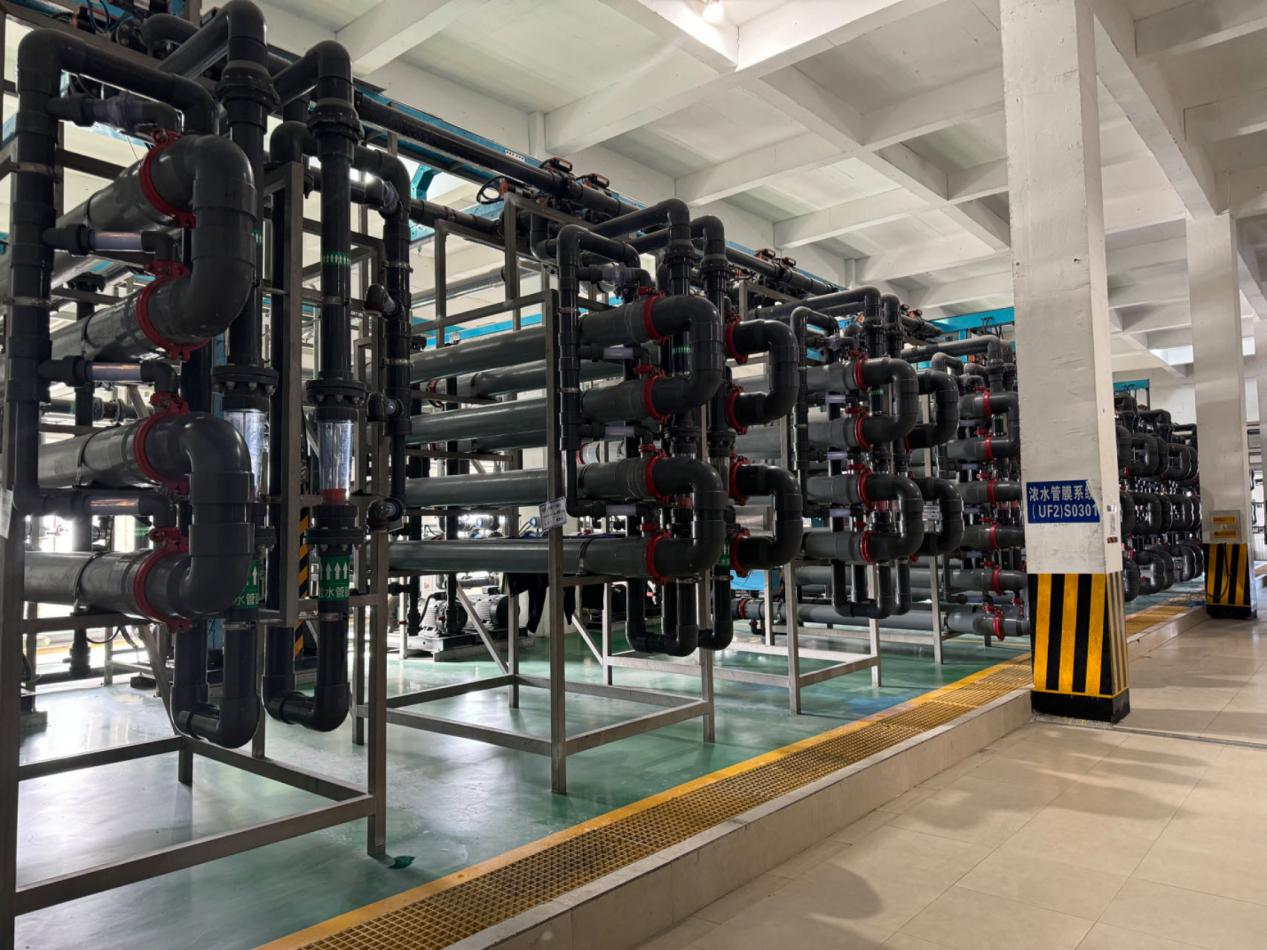
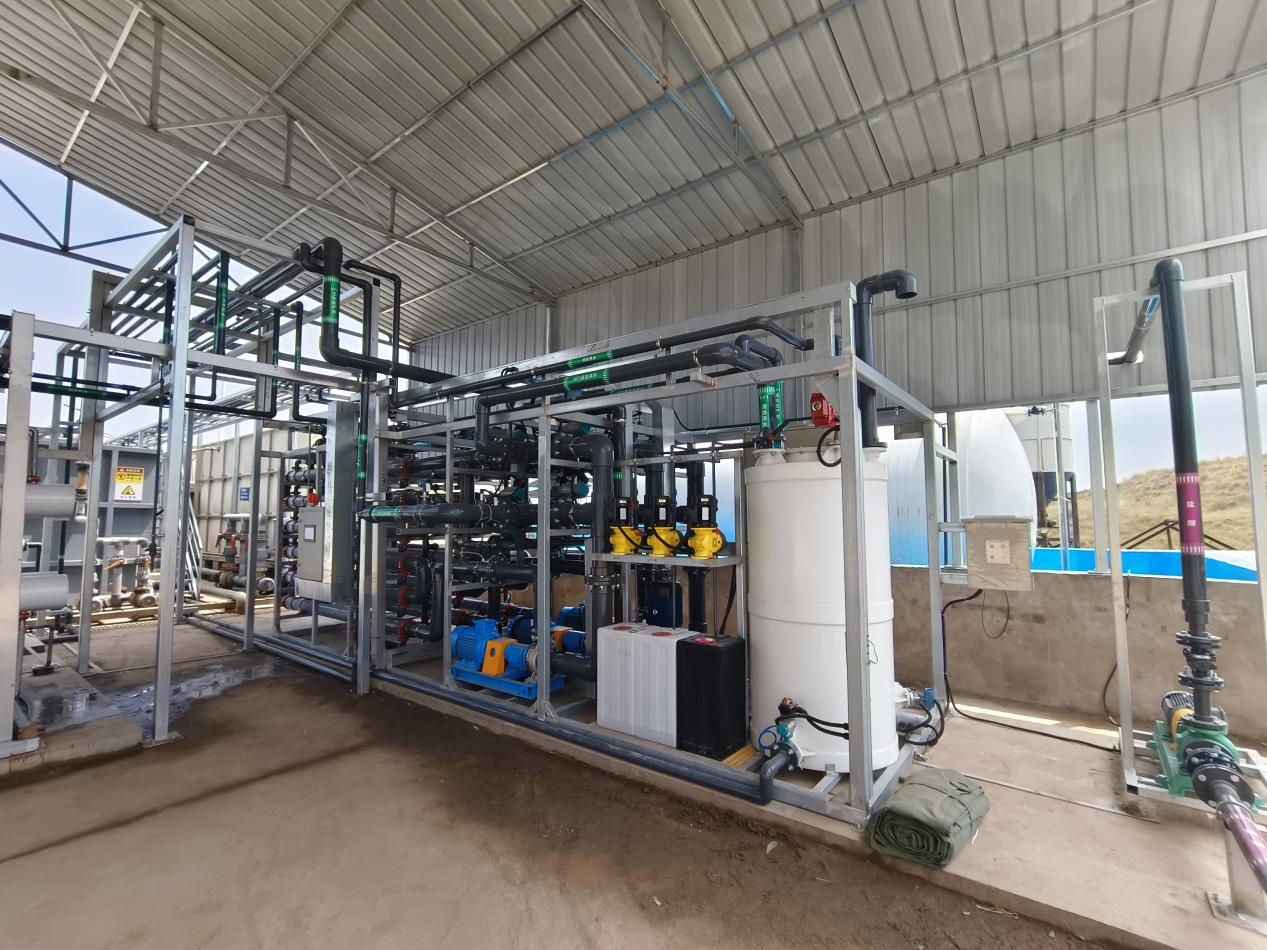
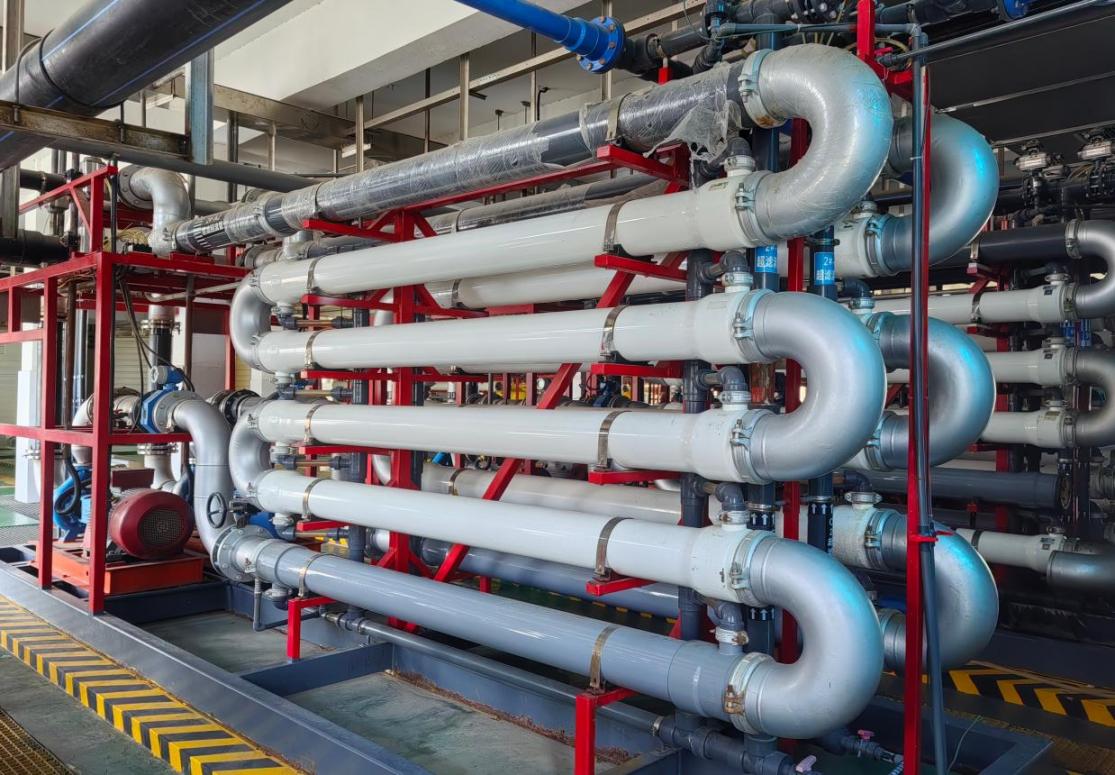
Only confirmed application directions and real site images are shown. Customer names, operating figures, and performance data are not sales commitments on this page unless separately approved.

PEK softening
RO-brine and reclaimed-water pretreatment
Oily wastewater
Separation where oil, solids, and fouling risks coexist
External tubular MBR
Membrane separation for high-load biological systems
RESOURCES
Selection resources and project preparation
Tubular membrane brochurePublic resource
TECHNICAL FAQ
PEK selection frequently asked questions
Does Plum also supply PVDF tubular membranes?
Yes. PVDF is a mature conventional tubular membrane supplied by Plum for duties where compatibility, temperature, and cleaning windows are suitable. PEK is Plum’s proprietary, mature series for more highly fouling, oily, corrosive, or intensive-cleaning duties. They are selected by duty rather than treated as direct substitutes.
Which duties should prioritize PEK tubular membrane assessment?
PEK assessment can be prioritized for industrial wastewater or process fluids with high suspended solids, oil, severe fouling, corrosivity, intensive cleaning needs, or a requirement to protect downstream NF, RO, reuse, or ZLD sections. Final suitability still depends on the complete duty.
Why do the materials show both pH 0 to 14 and pH 0 to 12.5?
The pH 0 to 14 statement describes PEK material and process capability, while the finished-module parameter table lists pH 0 to 12.5. Project selection must use the actual chemical composition, temperature, contact time, cleaning method, and complete-module compatibility.
Does a material Tg of about 230°C mean the module can operate at 230°C?
No. Approximately 230°C is a material-level glass-transition temperature reference for PEK. The current published finished PEK module table lists a maximum operating temperature of 60°C.
Can pure-water flux be used directly as project design flux?
No. Pure-water flux compares products under standard conditions. Actual operating flux is affected by temperature, viscosity, solids, oil, fouling, pressure, circulation velocity, and cleaning cycle, and must be established through engineering assessment or validation.
What information is required for preliminary PEK selection?
Provide the industry, flow, feed-water or process-fluid type, temperature, pH, suspended solids, oil, COD, relevant ions or product specifications, existing process, target use, cleaning conditions, and available analysis reports, process diagrams, and sample information.
How should PEK and PEK-S under development be distinguished?
PEK is a mature series for high-SS, oily, highly fouling, and corrosive fluids and can be assessed using the published specifications on this page. PEK-S remains in R&D validation, has not been commercially launched, and is not a purchasable alternative for current projects. Test-stage progress is available on the PEK-S R&D preview page.
PEK PROJECT EVALUATION
Submit the PEK duty for preliminary selection guidance
Provide actual water-quality or process-fluid information whenever possible. Uploading analysis reports, process diagrams, and product requirements helps determine separation grade, channel, module configuration, process route, and validation needs.
Submitted information is used only for preliminary project assessment. Final parameters, treatment performance, scope of supply, and guarantee conditions are defined only in the formal technical documents for the project.