
AGED LEACHATE · AMMONIA STRIPPING
Ammonia Stripping Route for Aged Landfill Leachate
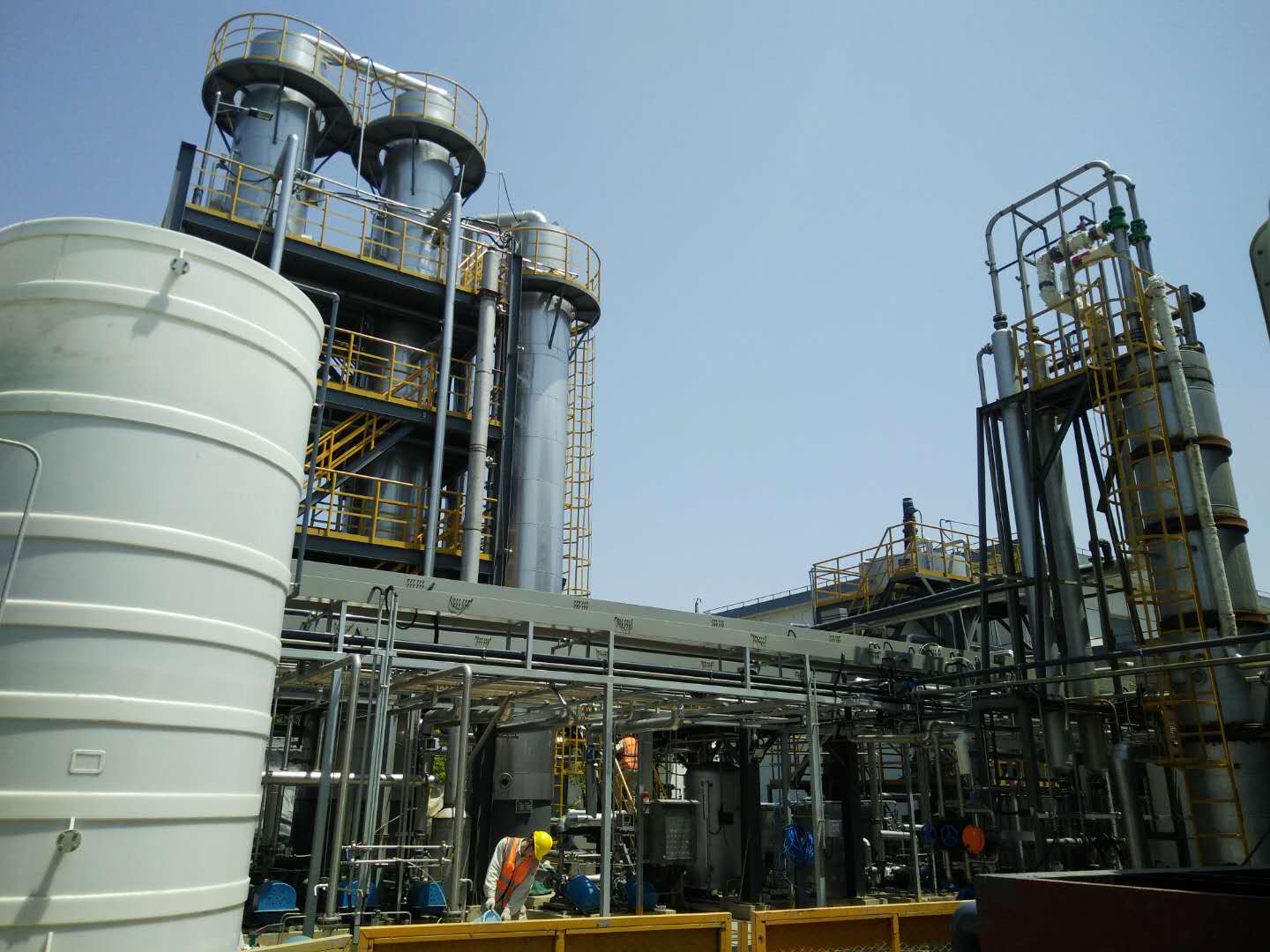
For aged landfill leachate with high ammonia and a carbon-to-nitrogen relationship that constrains downstream biological treatment, ammonia-speciation adjustment, heating and desorption, and gas-liquid mass transfer in the tower reduce the front-end nitrogen load. The same engineering route also covers downstream liquid treatment, ammonia absorption, off-gas, and utility boundaries.
Stripped liquid still enters project-defined biological or membrane treatment. Condensation, absorption, off-gas treatment, and gas-side by-product streams must also be confirmed item by item.
APPLICATION FIT
First determine whether ammonia load is constraining the downstream system
An ammonia-stripping route cannot be selected from one ammonia result alone. Leachate age, organic carbon, temperature, pH, salinity, and downstream biological conditions together determine whether front-end ammonia removal is appropriate.
Leachate age and source
Separate aged, fresh, and mixed leachate and review seasonal, landfill-cell, and flow variability.
Ammonia and organic carbon
Review NH3-N, TN, COD/BOD, and carbon available to downstream biological treatment rather than applying one fixed carbon-to-nitrogen ratio.
Reaction and operating conditions
Test pH, temperature, alkalinity, SS, salinity, sulfide, metals, and other factors that may affect mass transfer and equipment.
Downstream system and endpoints
Define which biological or membrane section receives the stripped liquid and the final responsibility for ammonia-absorption liquid and off-gas.
MASS TRANSFER PRINCIPLE
Change ammonia speciation before intensifying gas-liquid mass transfer
Heating, pH adjustment, and desorption conditions shift ammonia toward a transferable form. Gas-liquid contact in the stripping tower transfers free ammonia from the liquid phase to the gas phase. Actual temperature, pH, gas-to-liquid ratio, residence time, and tower internals are defined against water quality, scaling and corrosion risks, and validation results.
This principle does not establish a general removal rate and cannot replace project-specific mass balance, heat balance, or off-gas safety design.
LIQUID & GAS ROUTES
Design the liquid and gas phases as two complete routes
A diagram showing only the stripping tower while omitting condensation, absorption, off-gas, and the stripped-liquid destination leaves critical engineering boundaries undefined.
Liquid route: from high-ammonia feed to downstream treatment
Close the water, heat, chemical, and downstream biological-load balances along this route.
Gas route: from ammonia-bearing gas to absorption and the off-gas endpoint
Condensate, absorption liquid, by-product streams, and off-gas all require explicit destinations.
This process route explains the engineering logic. It does not mean every project uses the same tower type, heat source, absorption medium, or equipment count.
AMMONIA RECOVERY BOUNDARY
A historical project used CO₂ absorption, but a process name cannot define the product endpoint
A confirmed historical route used CO₂ absorption to form ammonium-bicarbonate-related material. This fact documents ammonia-recovery and system scale-up experience; it does not mean every project uses the same absorption route.
- Absorption route
- Confirm the absorption medium, reaction conditions, and handling of slurry or absorption liquid per project.
- Product quality
- Test separately, define the applicable standard, and confirm the receiving party. Product quality cannot be inferred automatically from the process.
- Use and regulatory responsibility
- Do not infer a commercial use from a historical process. Confirm compliance responsibility, receiving party, and final use separately.
ENGINEERING CONTROL
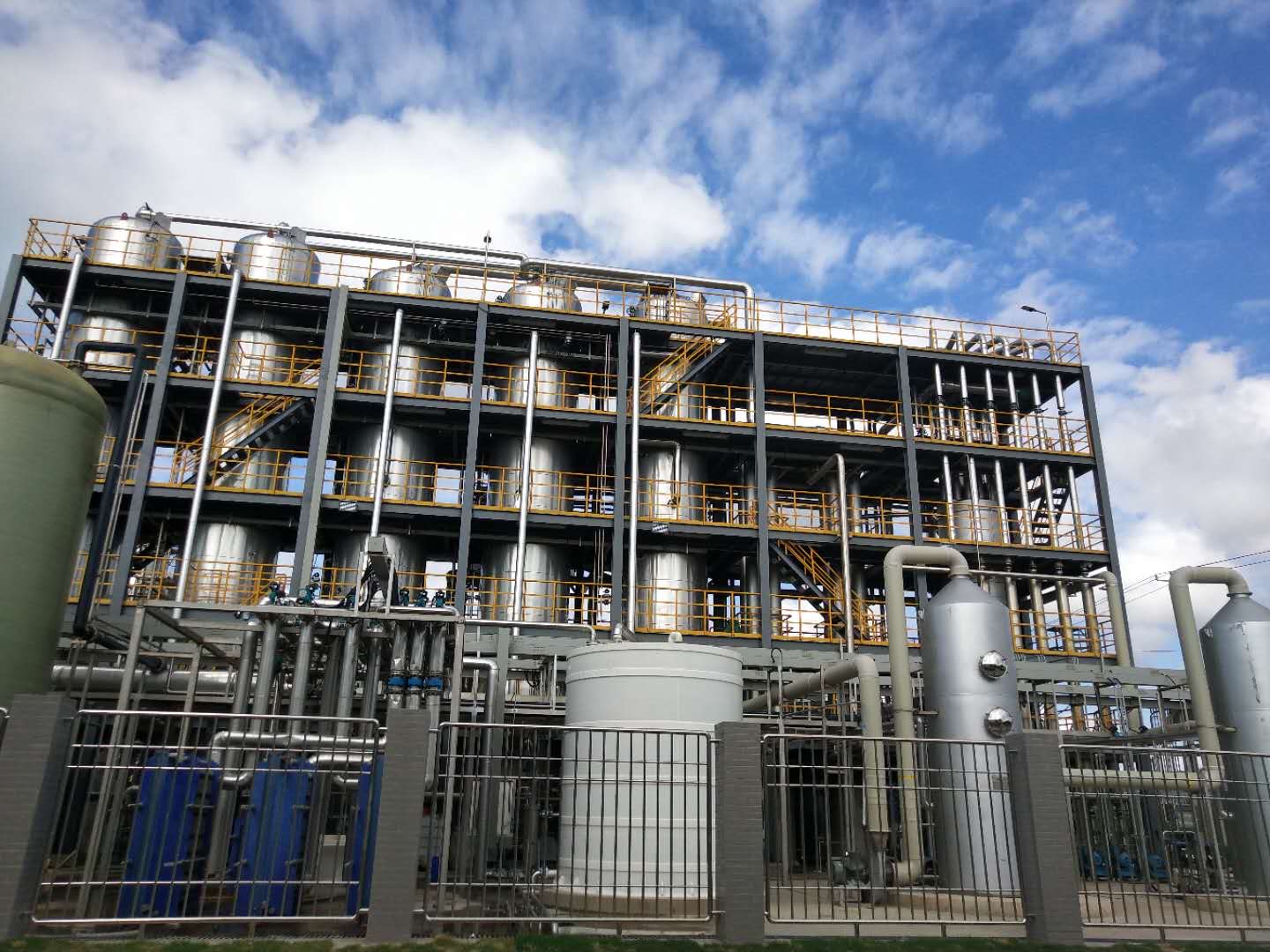
Stable operation depends on six controls beyond the tower
Pretreatment, tower internals, and cleaning strategy must address SS, hardness, and deposition risks.
Select liquid-contact and gas-phase materials against pH, salinity, sulfide, temperature, and gas composition.
Project calculations and validation determine mass-transfer arrangement, plugging resistance, maintenance, and pressure-drop boundaries.
Steam, heat exchange, condensation, and cooling conditions enter the complete heat balance and utility interfaces.
Maintain negative pressure, provide purification and monitoring, and define safe response logic for abnormal conditions.
Configure temperature, pH, pressure, level, flow, and gas monitoring against the risk level.
DESIGN INPUTS
Route screening requires water-quality, heat-balance, and downstream-system data
Manage project records, validation results, and new-project guarantees separately. Historical operating conditions cannot be applied directly.
Average and peak flow, continuous or intermittent operation, aged or mixed leachate source, and variability.
NH3-N, TN, COD, BOD, available carbon, and existing biological-treatment performance.
Temperature, pH, alkalinity, acid or alkali adjustment capacity, and chemicals that may affect equilibrium.
SS, TDS, hardness, sulfide, metals, oil, and other potentially interfering constituents.
Existing biological, MBR, and NF/RO systems and target feed conditions for the stripped liquid.
Steam, cooling, power, chemicals, off-gas requirements, and final destinations for absorption liquid and by-product streams.
PROJECT EVIDENCE
From validation project to continuous engineering scale-up
Only confirmed anonymous project capacities, routes, and project-specific records are shown below. Historical performance is not converted into a general design criterion.
PROJECT CASE
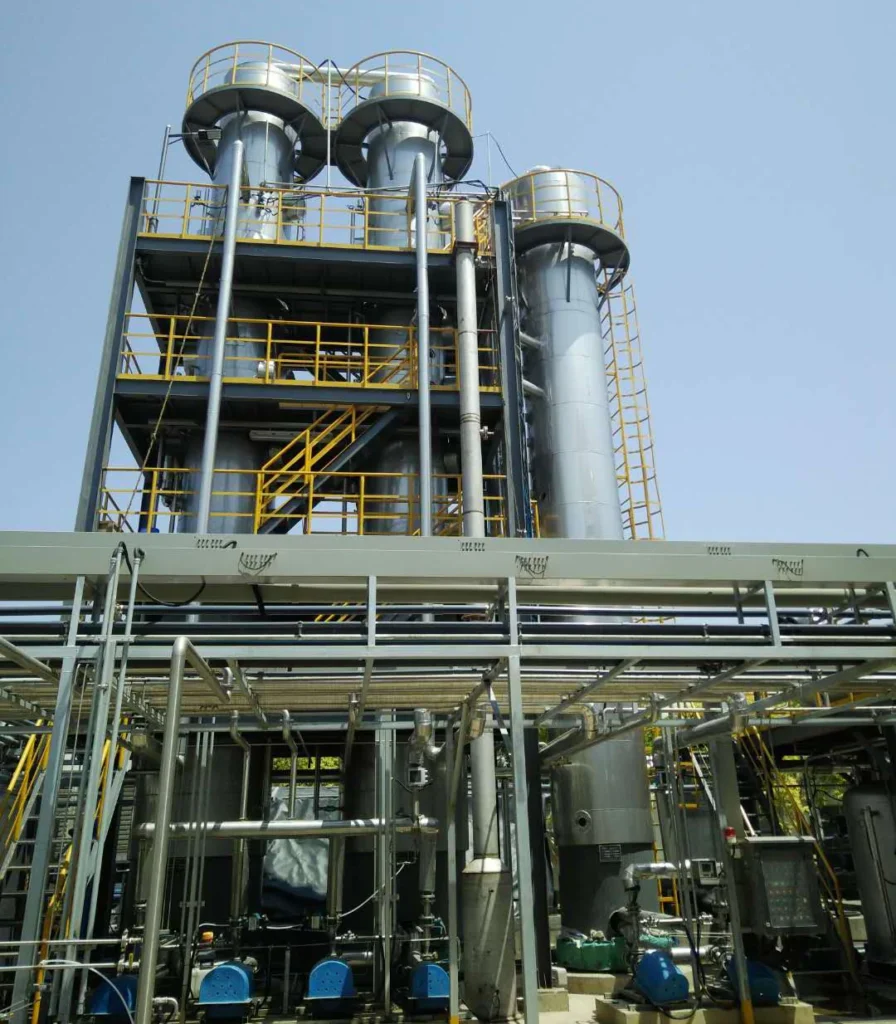
Aged-leachate stripping and CO₂-absorption validation
400 m³/d
PROJECT CASE
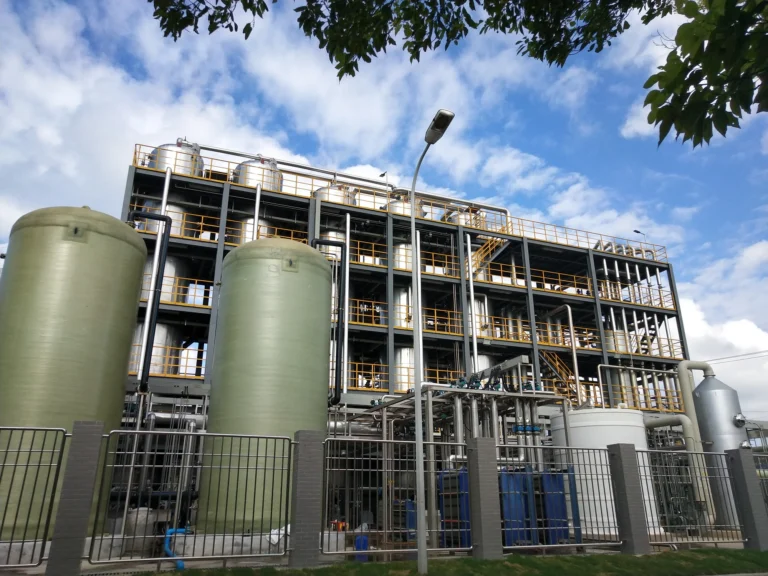
Engineering-scale expansion based on the validated route
2,000 m³/d
Re-establish temperature, pH, gas-to-liquid ratio, residence time, absorption route, effluent conditions, and guarantees for a new project from complete data, required validation, and the technical agreement.
ENGINEERING BOUNDARY
Confirm the stripping system, ammonia absorption, off-gas, and downstream biological treatment separately
A complete project must define the design responsibility, interface conditions, and performance boundary of every unit.
PLUM CAN SUPPORT
- Water-quality and ammonia-load analysis, route screening, and mass balance
- Stripping towers, heat exchange and condensation, instrumentation and controls, and packaged systems
- Project-specific interface design for ammonia absorption and off-gas sections
- Validation, commissioning, operating-window confirmation, and engineering scale-up support
CONFIRM PER PROJECT
- Front-end equalization and pretreatment plus downstream biological or membrane-system responsibility
- Steam, cooling water, power, chemicals, civil works, and utilities
- Absorbed-material quality, use, receiving party, and regulatory responsibility
- Off-gas discharge, plant-wide performance, operating cost, and total-system guarantees
PROJECT RESOURCES
Continue reviewing stripping and downstream treatment
Route overviewTwo specialist landfill-leachate routes
Related routeMultistage NF selective splitting
ENGINEERING FAQ
Ammonia-stripping route FAQ
FAQ answers are present directly in the page HTML so engineers, search engines, and AI systems can understand the process boundaries.
When should ammonia stripping be assessed for aged leachate?
Front-end stripping may be assessed when high ammonia load, insufficient available organic carbon, or nitrogen-removal pressure in the existing biological system becomes a primary constraint. Final selection still requires NH3-N, TN, COD/BOD, pH, temperature, alkalinity, salinity, and downstream-system data.
What roles do pH and temperature play in ammonia stripping?
They affect the ammonium-ion and free-ammonia equilibrium and subsequent gas-liquid mass transfer. Define the actual control window against water quality, scaling and corrosion, heat-source conditions, and safety boundaries rather than using one universal value.
Can stripped liquid be discharged directly?
Do not assume so. Stripping mainly reduces the front-end ammonia load. Stripped liquid still enters project-defined biological, membrane, or other downstream treatment and is accepted against the objectives of the complete system.
Does CO₂ absorption in a historical project mean the by-product can be sold directly?
No. Confirm the absorption route, material composition, product quality, use, receiving party, and regulatory requirements separately. This page makes no commitment regarding commercial use.
Can a historical project ammonia record be used directly as a guarantee for a new project?
No. A historical record applies only to its feed, equipment, operating window, and project boundaries. Re-establish design and guarantee conditions for a new project through data analysis, required validation, and the technical agreement.
What information is required for preliminary assessment?
Submit flow and leachate age, NH3-N, TN, COD/BOD, temperature, pH, alkalinity, SS, TDS, hardness, sulfide, metals, existing biological and membrane systems, steam and cooling conditions, off-gas requirements, absorption route, and by-product endpoint.
SUBMIT AMMONIA STRIPPING DUTY
Submit ammonia-load and downstream-system data for preliminary stripping-route assessment
Describe the leachate source, age, flow, nitrogen and organic parameters, existing biological or membrane system, and steam, cooling, ammonia-absorption, and off-gas conditions. Plum will use the information to assess data completeness, route fit, and boundaries requiring further validation.
Submitted information supports preliminary route assessment only. It does not commit to ammonia removal, effluent values, a carbon-to-nitrogen relationship, energy use, operating cost, by-product quality or use, regulatory compliance, or the supply scope of a complete project.