LITHIUM SEPARATION & PILOT VALIDATION
Lithium Extraction from Brine & Ore Leachate: Membrane Routes & Pilot Validation
Start with the actual composition of salt lake brine or ore leachate. Assess PEK tubular membrane clarification, adsorption and selective membrane separation where required, concentration interfaces, and the engineering scale-up basis developed through sample testing and continuous piloting.
- 01Feed sourceSalt lake brine or ore leachate
- 02Product objectiveTarget intermediate, lithium salt, or downstream interface
- 03Impurity profileMajor ions, solids, and residual chemicals
- 04Sample testingScreen separation duties and combined routes
- 05Continuous pilotValidate stability, fouling, and cleaning
- 06Engineering scale-upDevelop mass balance and design inputs
FEED CHEMISTRY FIRST
Lithium-bearing feeds do not begin with the same engineering questions
Salt lake brine assessment emphasizes complex ionic composition and selectivity. Ore leachate also requires review of acidity, leaching and conditioning methods, suspended solids, and residual chemicals. Use actual analyses for every characteristic.
Salt lake brine: establish the complete ionic profile first
Do not begin by selecting a membrane. First establish lithium within the complex salt system and identify which coexisting constituents require priority removal or permitted passage.
- Lithium and major ions
- Lithium concentration, Mg/Li ratio, sodium, potassium, calcium, and other major cations and anions
- Critical impurities
- Boron, metals, suspended solids, colloids, and constituents that may affect adsorption or membrane separation
- Feed conditions
- TDS, temperature, pH, density, viscosity, flow, and batch or seasonal variability
- Target endpoint
- Target intermediate, concentrate, downstream lithium-precipitation route, and mother-liquor destination
Ore leachate: include upstream leaching boundaries in the assessment
Leaching and conditioning determine the acids, salts, solids, and residual chemicals in the liquid phase. Assess front-end clarification and downstream membrane sections together with the existing production process.
- Mineral and leaching route
- Ore type, roasting or leaching method, chemical system, and existing solids separation
- Potential risks
- Acidity, sulfate, aluminum, fluoride, suspended solids, colloids, mixed salts, and residual chemicals
- Production conditions
- Flow, temperature, pH, solids content, continuous or batch operation, and cleaning conditions
- Target endpoint
- Impurity control, concentration, target lithium-salt feed, crystallization interface, and tail-liquor disposition
What must be retained? What must be removed? Which downstream step receives the target lithium stream?
Clarify the target component, impurity destinations, and downstream interfaces before deciding whether clarification, adsorption, NF, RO, ED, or another section should enter testing.
TWO FEEDS, TWO ROUTES
Validate the two feed routes separately before defining shared engineering sections
The following is a route framework for assessment, not a fixed process solution. Project objectives and test results determine adsorption, ED, salt fractionation, mother-liquor recycle, lithium precipitation, and crystallization.
SALT-LAKE BRINE ROUTE
Salt lake brine route
- 01Brine analysis and pretreatmentComplete ion profile, solids, and variability
- 02PEK tubular membrane clarificationRemove solids and colloids where required
- 03Adsorption / impurity control as requiredConfirm media and regeneration method separately
- 04Selective NF or another separation sectionUse testing to determine ion destinations
- 05RO / high-pressure concentrationAssess only at suitable osmotic pressure and feed quality
- 06Lithium precipitation, crystallization & mother-liquor interfaceConfirm the target product and endpoint separately
ORE LEACHATE ROUTE
Ore leachate route
- 01Leachate conditioning and clarificationInclude mineral, chemicals, and the existing route
- 02PEK tubular membraneSeparation of reaction solids and suspended solids
- 03Impurity controlDefined by target species and downstream limits
- 04NF / RO as requiredScreen separation and concentration duties
- 05Downstream purification interfaceAdsorption, resin, or another refining section
- 06Lithium precipitation, crystallization & tail-liquor interfaceConfirm product and disposition responsibility separately
Route principleNot every project requires every section. A membrane section enters formal design only when feed conditions, target components, test results, and upstream and downstream responsibility boundaries support it together.
TECHNOLOGY RESPONSIBILITIES
Separate clarification, selective separation, and product-preparation duties
Listing a process section does not mean that section can complete lithium extraction independently. This page states each section’s verifiable engineering duty and its limits.
PEK tubular membrane clarification
Separate suspended solids, reaction solids, colloids, and other retainable constituents to provide more stable feed to adsorption, NF, RO, and related downstream sections.
Adsorption and resin section
Feed and target-component testing must confirm whether adsorption is used, the media, regeneration method, chemical consumption, and service life.
Selective nanofiltration
Use sample testing to determine lithium and co-ion rejection, passage, and concentration relationships before selecting membrane type, stages, and recycle arrangement.
RO / HRCC concentration
Assess concentration and minimization only where osmotic pressure, scaling, fouling, and pretreatment conditions are suitable. This page does not promise one concentration factor.
Lithium precipitation, crystallization & product finishing
Target lithium salt, product quality, crystallization, drying, packaging, and mother-liquor disposition are downstream interfaces confirmed by project and responsible party.
The PEK tubular membrane provides front-end clarification and solids separation. It does not directly perform selective separation of dissolved lithium and other ions. Ion-level separation and concentration require compatible adsorption, NF, RO, ED, or other downstream sections.
SAMPLE & PILOT VALIDATION
Convert test results into scalable engineering inputs
The key is not finding one universal lithium-extraction flow diagram. Use traceable samples to resolve target-component behavior, impurity destinations, continuous stability, and mother-liquor accumulation step by step.
- 01Data reviewFeed source, target product, analytical methods, and safety information
- 02Sample analysisComplete ions, solids, organics, and feed properties
- 03Membrane / adsorption screeningValidate rejection, passage, impurity control, and the initial operating window
- 04Bench validationMass balance, fouling behavior, and cleaning recovery
- 05Continuous pilotStable operation, recycle, and mother-liquor accumulation limits
- 06Scale-up recommendationDevelop equipment selection, interfaces, and design inputs
Mass balance, target-component and impurity destinations, operating window, fouling and cleaning performance, concentration limits, mother-liquor risks, and engineering design inputs.
ENGINEERING BOUNDARY
Confirm membrane sections separately from mineral processing and product preparation
Plum focuses on feed analysis, membrane-route validation, testing and piloting, and membrane-system engineering. Define mining, upstream metallurgy, and final-product responsibilities item by item in the project interface schedule.
- Preliminary review of feed information, samples, and separation duties
- Screening and testing of PEK, NF, RO, and related membrane sections
- Continuous piloting, mass balance, and engineering scale-up recommendations
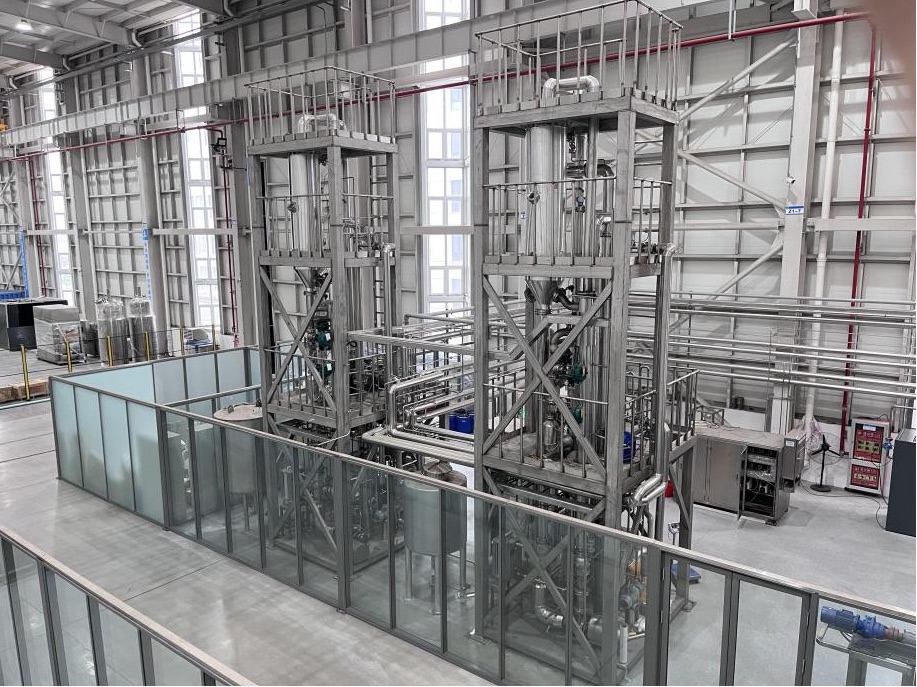
- Packaged membrane systems, circulation, CIP, instrumentation, and controls
- Commissioning, operating-window confirmation, and upstream or downstream interface support
- Mining, roasting, leaching, and upstream metallurgical processes
- Adsorption media, regeneration chemicals, and their complete responsibility
- Lithium precipitation, crystallization, drying, packaging, and product quality
- Tailings, mother liquor, by-product salts, and final environmental disposition
- Plant-wide recovery, energy use, production capacity, and turnkey boundaries
PILOT RECORD
A continuous pilot record from laboratory work toward industrial scale-up
The following facts document Plum pilot experience with the relevant feeds and combined membrane sections. Project capacity and route do not automatically become performance or supply guarantees for a new project.
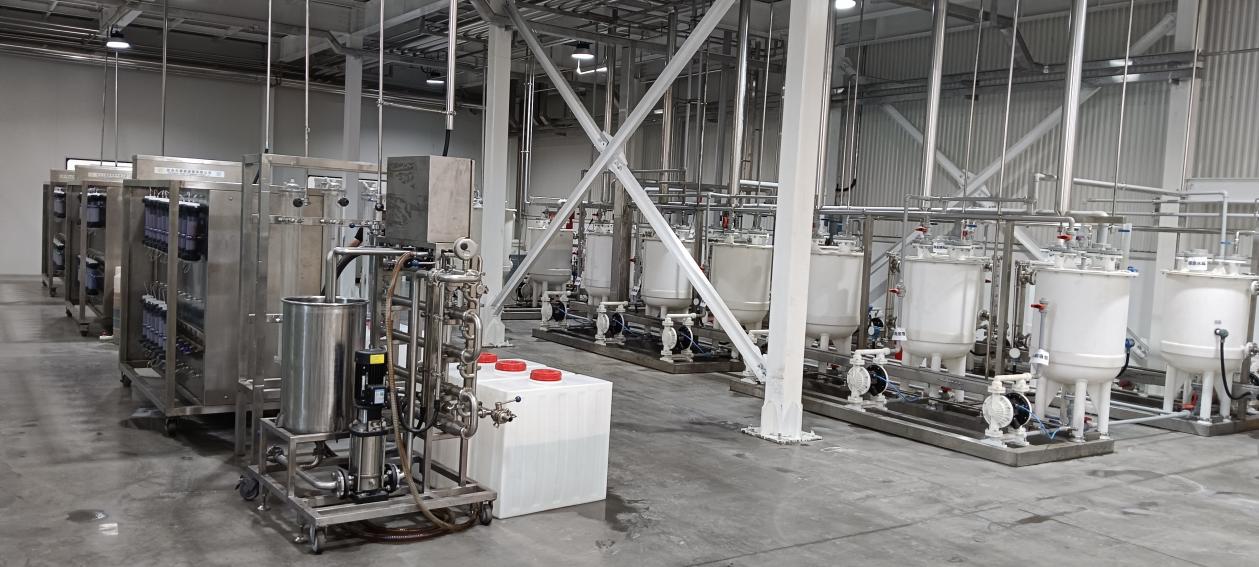
Anonymous public pilot project
Pilot validation for salt lake brine and spodumene extract
- Feeds
- Salt lake brine and spodumene extract
- Validated combination
- PEK tubular ultrafiltration + resin adsorption + NF + high-pressure RO
- Pilot duties
- Validation of continuous stability, the combined route, mass balance, and engineering scale-up data
This page does not publish or infer lithium recovery, product purity, energy use, Mg/Li separation performance, a general operating flux, or new-project guarantees.
PROJECT RESOURCES
Prepare samples and route information
Business entryIndustrial wastewater reuse, minimization & ZLD
Front-end clarificationPEK tubular membrane product & selection
Selective separationSelective nanofiltration technology
Concentration interfaceHRCC high-pressure concentration technology
ENGINEERING FAQ
Lithium membrane-route FAQ
Can salt lake brine and ore leachate use the same process route?
Do not assume so. The two feeds differ in origin, ionic composition, solids, and residual chemicals. Analyze and test them separately before deciding which equipment or membrane sections can be shared.
Can the PEK tubular membrane separate dissolved lithium directly?
No. The PEK tubular membrane mainly clarifies and separates suspended solids, reaction solids, colloids, and other retainable constituents. Selective separation of dissolved ions requires compatible adsorption, NF, RO, ED, or another section.
Why do lithium-extraction routes generally require sample testing?
Lithium and co-ion separation relationships, membrane fouling, adsorption compatibility, concentration limits, and mother-liquor accumulation all depend on the actual feed. Testing determines whether a route is viable and provides a traceable basis for piloting and scale-up.
Can sample quantity and test duration be fixed on the website?
No. Confirm sample quantity, analyses, bench-test duration, and whether continuous piloting is required after data review and safety assessment, based on the feed, objective, and test scope.
How are NF, RO, ED, or adsorption sections selected?
Compare target components, complete ion analysis, osmotic pressure, membrane selectivity, adsorption media, product route, and mother-liquor endpoint through testing. These sections are not a fixed standard configuration.
Can the pilot record guarantee recovery or product purity for a new project?
No. The existing pilot record documents validation experience with the relevant feeds and combined route only. Recovery, product quality, energy use, flux, and supply guarantees for a new project require new samples, formal design, and a technical agreement.
Does Plum provide a complete lithium-production line by default?
No. Plum can focus on membrane-process routes, testing and piloting, packaged membrane systems, and engineering interfaces. Confirm mining, roasting and leaching, adsorption-media responsibility, lithium precipitation and crystallization, product quality, and final disposition item by item.
What information is required for preliminary assessment?
Provide feed origin, capacity, lithium concentration, Mg/Li ratio, complete ion analysis, TDS, temperature, pH, solids content, density or viscosity, residual chemicals, existing route, target product, mother-liquor endpoint, and available sample volume.
REQUEST SAMPLE & PILOT VALIDATION
Submit lithium-bearing feed data and request sample testing & pilot validation
Provide the feed source, target lithium product, major ions, existing process, and available sample volume where possible. Plum will first complete data and safety review, then confirm the test scope, bench conditions, and whether continuous piloting is required.
This form supports preliminary route assessment. It does not commit to a test schedule, lithium recovery, product purity, equipment capacity, or supply scope.
After submission, the technical team will define the next step based on information completeness. Samples involving hazardous chemicals, strong acids or alkalis, or special transport conditions require prior safety confirmation.