COAL CHEMICAL WATER NETWORK
Coal Chemical Wastewater Reuse & ZLD Engineering Routes
Start with wastewater sources, upstream-treatment status, compound fouling and scaling risks, and the plant-wide water and salt balance. Then define separate endpoints for high-organic process wastewater, reclaimed water and RO brine, and mother-liquor or by-product streams.
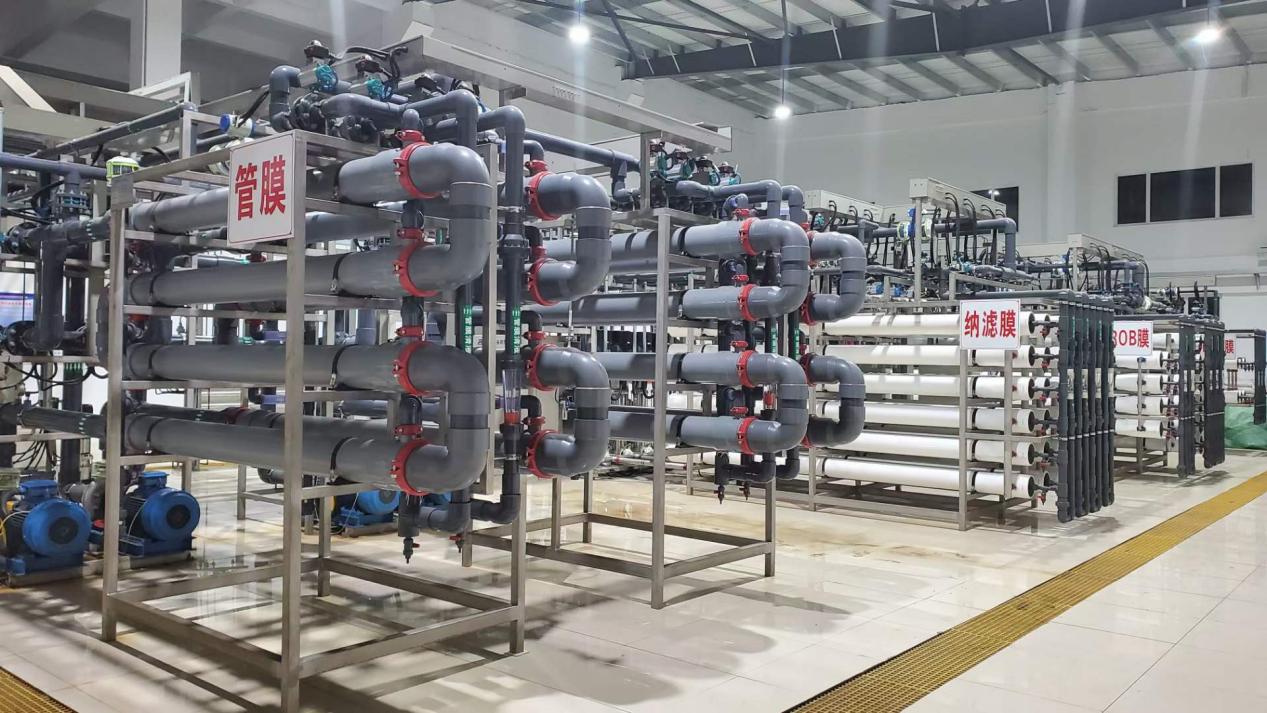
First verify whether upstream oil removal, biological treatment, or oxidation provides stable feed to the reuse-membrane section.
Define membrane sections around scaling control, reuse, salt fractionation, or concentration and minimization objectives.
Assess impurity accumulation, recycle feasibility, and final responsibility for salts, sludge, or solid waste.
SOURCE SEPARATION FIRST
Identify every wastewater source before discussing reuse or ZLD
A coal-chemical water network should not be represented by one mixed-water analysis. Review source, upstream process, flow variability, existing treatment performance, and final use for each stream.
Coal-to-liquids
Confirm the actual segregation of process water, cooling-system blowdown, desalination-system discharge, and high-salinity brine.
Coal-to-gas
Begin with the project-specific gas-cleaning, biological-treatment, and demineralized-water-station interfaces.
Coal-to-olefins
Assess discharge from each process unit, reuse-water demand, RO brine, and downstream thermal endpoints.
Integrated parks and related coking duties
Confirm the risks of every source before mixing. Assess high-silica, high-hardness coking wastewater as a separate related duty.
- 01Wastewater sourceProcess unit, discharge point, and whether streams are already mixed
- 02Upstream-treatment statusOil removal, biological treatment, oxidation, and existing polishing performance
- 03Fouling and scaling risksSolids, oil, organics, hardness, silica, and ionic composition
- 04Reuse objectiveCooling makeup, process water, or another project-defined use
- 05Brine and by-product endpointsMinimization, salt fractionation, evaporation, recycle, or final disposition
Segregation principleCombine two streams only when treatment objectives, contamination risks, and downstream endpoints are compatible. Recalculate the water and salt balance and impurity accumulation before combining them.
COMPOUND RISK MATRIX
Do not replace a full assessment with the label “high salinity and high organics”
The following risks require analysis and traceability during preliminary assessment. They do not imply that every coal chemical wastewater stream has the same constituents or concentrations.
- Organic-fouling risk
- AnalyzeOil, COD/TOC, ammonia nitrogen, and project-specific organic or inhibitory constituents.First establish the duty and effluent stability of upstream oil removal, biological treatment, or oxidation.
- Solids and membrane-fouling risk
- AnalyzeSS, turbidity, colloids, particle-size distribution, emulsified oil, and existing filter performance.Determine whether tubular membrane solids separation or another pretreatment step is required.
- Scaling and precipitation risk
- AnalyzeCa, Mg, total hardness, silica and its species, alkalinity, and other scaling ions.Define reaction and softening depth against RO, NF, concentration, or evaporator requirements.
- Ionic-composition and resource-recovery risk
- AnalyzeTDS, chloride, sulfate, target salts, and impurities affecting salt fractionation or concentration.Assess selective NF only where ionic composition, product objectives, and downstream endpoints are compatible.
- Operating-window and chemical risk
- ConfirmFlow variability, temperature, pH, oxidants, scale inhibitors, coagulation or softening chemicals, and cleaning history.Use these inputs to define membrane material, pretreatment, cleaning strategy, and continuous-operation boundaries.
- Downstream-interface and disposition risk
- DefineReuse point, brine volume, evaporation and crystallization, mother liquor, sludge, by-product salts, and solid-waste destinations.Do not define a project as ZLD from the front-end membrane section alone before the final endpoints are closed.
THREE-LANE ENGINEERING ROUTE
Define three water-line boundaries, then close the plant-wide water and salt balance
The following sections show what can be assessed; they are not a fixed process required for every project. Actual data determine membrane types, chemicals, recycle, concentration, and guarantee values.
High-organic process wastewater line
Prove upstream organic treatment and water-quality stability before evaluating reuse or desalination membranes.
- 01Classify sourcesProcess unit, discharge point, and variability
- 02Oil and solids controlSelect against actual contaminant forms
- 03Upstream biological / oxidation treatmentDefine against project water quality and responsibility split
- 04Solids separation and polishing as requiredProvide stable feed to downstream membranes
- 05Reuse-membrane interfaceProceed to UF/NF/RO only after feed suitability is established
Reclaimed-water & RO-brine line
Assess membrane sections against reuse-water stability, scaling risk, ionic composition, and the final brine endpoint.
- 01Reclaimed water / RO brineProvide separate data for both streams
- 02Targeted softening and conditioningDefined by downstream scaling risk
- 03PEK tubular membranePost-reaction solids separation and downstream protection
- 04NF / RO as requiredValidate selective salt fractionation or reuse desalination separately
- 05HRCC / other concentration and terminal interfacesConnect to evaporation, resource recovery, or the project-defined endpoint
Mother liquor & by-product streams
Recycle does not automatically mean resource recovery. Assess cyclic impurity accumulation, salt-quality responsibility, and final disposition.
- 01Mother liquor / concentrated by-productsConfirm actual source and composition
- 02Impurity and recycle-accumulation calculationTrack organics, silica, metals, and mixed salts
- 03Impurity control as requiredReaction, membrane separation, or another project process
- 04Recycle and economic assessmentBalance water, salts, chemicals, and energy boundaries
- 05Evaporation, salt, or solid-waste endpointConfirm equipment and disposition responsibilities per project
Not default sectionsSalt fractionation, HRCC, mother-liquor recycle, and evaporation or crystallization each require separate confirmation against water quality, objectives, validation data, and supply scope. Showing them on this page does not make them automatic project configurations.
TECHNOLOGY RESPONSIBILITIES
Separate the duties of organic treatment, solids separation, salt fractionation, and concentration
No single membrane section resolves all organics, solids, scaling ions, and dissolved salts in coal chemical wastewater. Every section requires a defined feed and output duty.
Upstream oil removal, biological treatment, and oxidation
Control project-defined oil, biodegradable organics, or specific refractory constituents. Process and performance responsibility follows the agreed upstream-system split.
Not replaced by the PEK tubular membrane by defaultSoftening reaction + PEK tubular membrane
The reaction changes the form of scaling constituents; the PEK tubular membrane separates post-reaction solids and protects downstream membrane sections.
View the PEK softening process solution → 03 · SALT FRACTIONATIONSelective nanofiltration
Assess salt fractionation or impurity control only where ionic composition, selectivity, target products, and the downstream route are compatible.
View selective nanofiltration technology → 04 · CONCENTRATIONHRCC continuous high-concentration RO
Assess further brine minimization and downstream integration where pretreatment, osmotic pressure, and fouling risks are suitable.
View HRCC concentration technology →The PEK tubular membrane does not directly remove TDS, chloride, or other dissolved salts, and it does not replace biological or oxidation treatment for organics by default. Its typical duty in these routes is solids separation for reaction solids, suspended solids, or other retainable constituents.
DESIGN INPUTS
Provide separate data for every stream to build a traceable water and salt balance
TDS and total flow for a mixed wastewater stream are insufficient for source-segregated reuse, salt-fractionation, or mother-liquor recycle decisions.
- Source and flow
- Discharge points, average and peak flow, continuity, mixing relationships, and the complete water balance for each process unit
- Basic conditions
- Temperature, pH, conductivity, TDS, SS, turbidity, and operating schedule
- Organics and oil
- COD/TOC, ammonia nitrogen, oil, existing biological or oxidation effluent, and known project-specific contaminants
- Scaling and ionic composition
- Ca, Mg, total hardness, silica, alkalinity, chloride, sulfate, and other key ions
- Existing systems
- Oil removal, biological treatment, filtration, UF/NF/RO, chemicals, cleaning, failure history, and reusable equipment
- Treatment objectives and endpoints
- Reuse purpose, brine-minimization or salt-fractionation objective, evaporation interface, and mother-liquor, sludge, salt, and solid-waste destinations
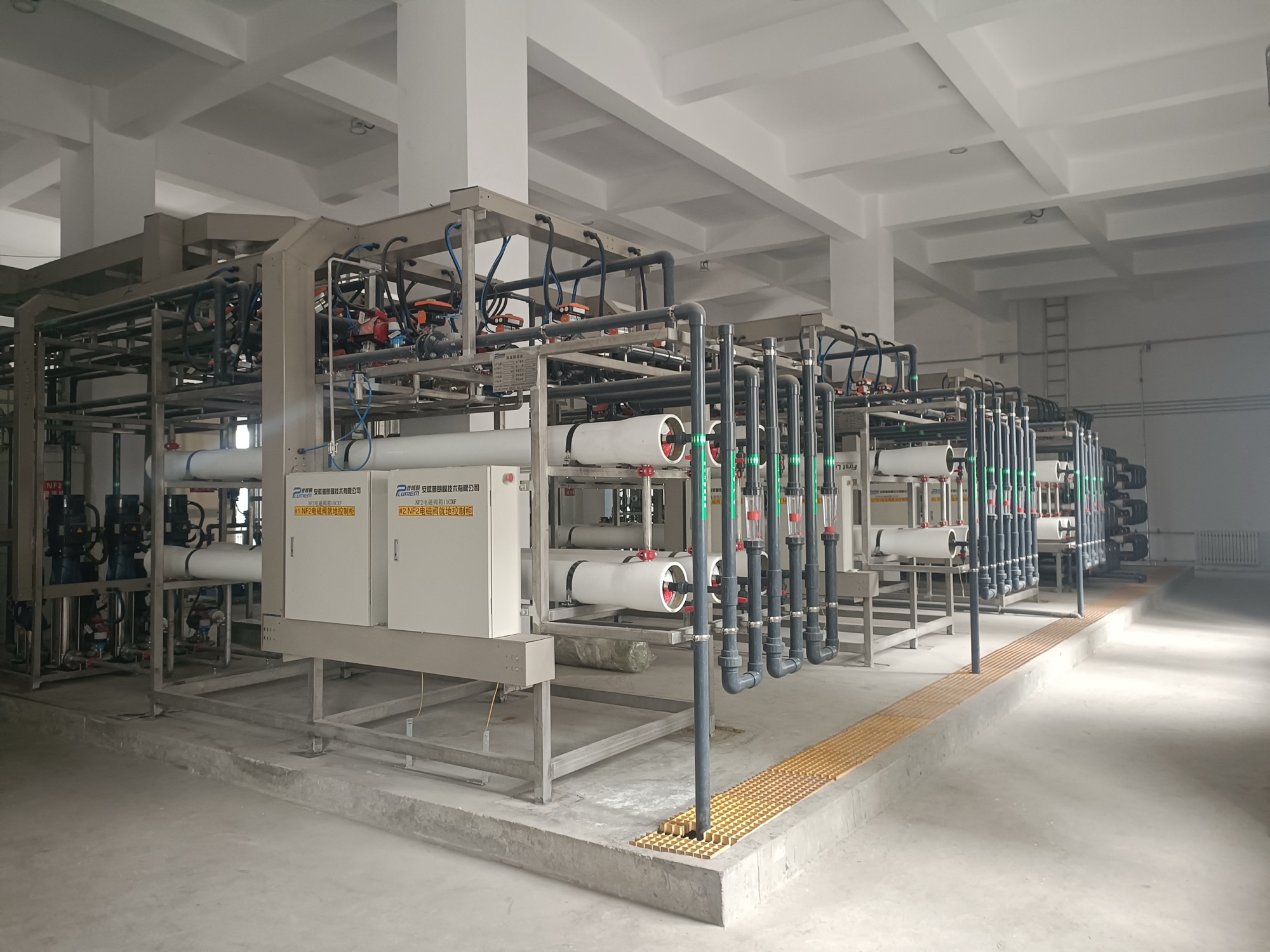
Historical project records, test data, and new-project guarantee values must remain separate evidence levels. Recovery, salt-fractionation ratios, effluent values, salt quality, energy use, or membrane flux from an existing project do not automatically apply to a new project.
ENGINEERING & SUPPLY BOUNDARY
The page shows the complete water network; supply and performance responsibilities still require item-by-item confirmation
Plum focuses on route definition, packaged membrane systems, and scale-up support for membrane-process sections. Upstream organic treatment, thermal endpoints, and final disposition are not automatically included in one contract because they appear on this page.
- Preliminary assessment of segregated water quality, water balance, and membrane-process routes
- Selection of softening, PEK tubular membrane, NF, RO/HRCC, and related membrane sections
- Packaged membrane systems, circulation, CIP, instrumentation, and controls
- Water-sample testing, pilot validation, and engineering scale-up support where required
- Membrane-section commissioning, training, and owner, engineering-institute, or EPC interface support
- Front-end oil removal, biological treatment, advanced oxidation, and related performance responsibility
- Civil works, buildings, power, steam, compressed air, and other utilities
- Evaporators, crystallizers, drying, packaging, and salt-product responsibility
- Final disposition of mother liquor, sludge, by-product salts, mixed salts, and solid waste
- Plant-wide performance, overall automation, EHS, and each contractor’s responsibilities
PROJECT EVIDENCE
Two existing records document experience in the relevant engineering sections
Customer names, years, and operating results are not published on this page. Only confirmed capacities, project directions, and relevant membrane-process sections are shown.
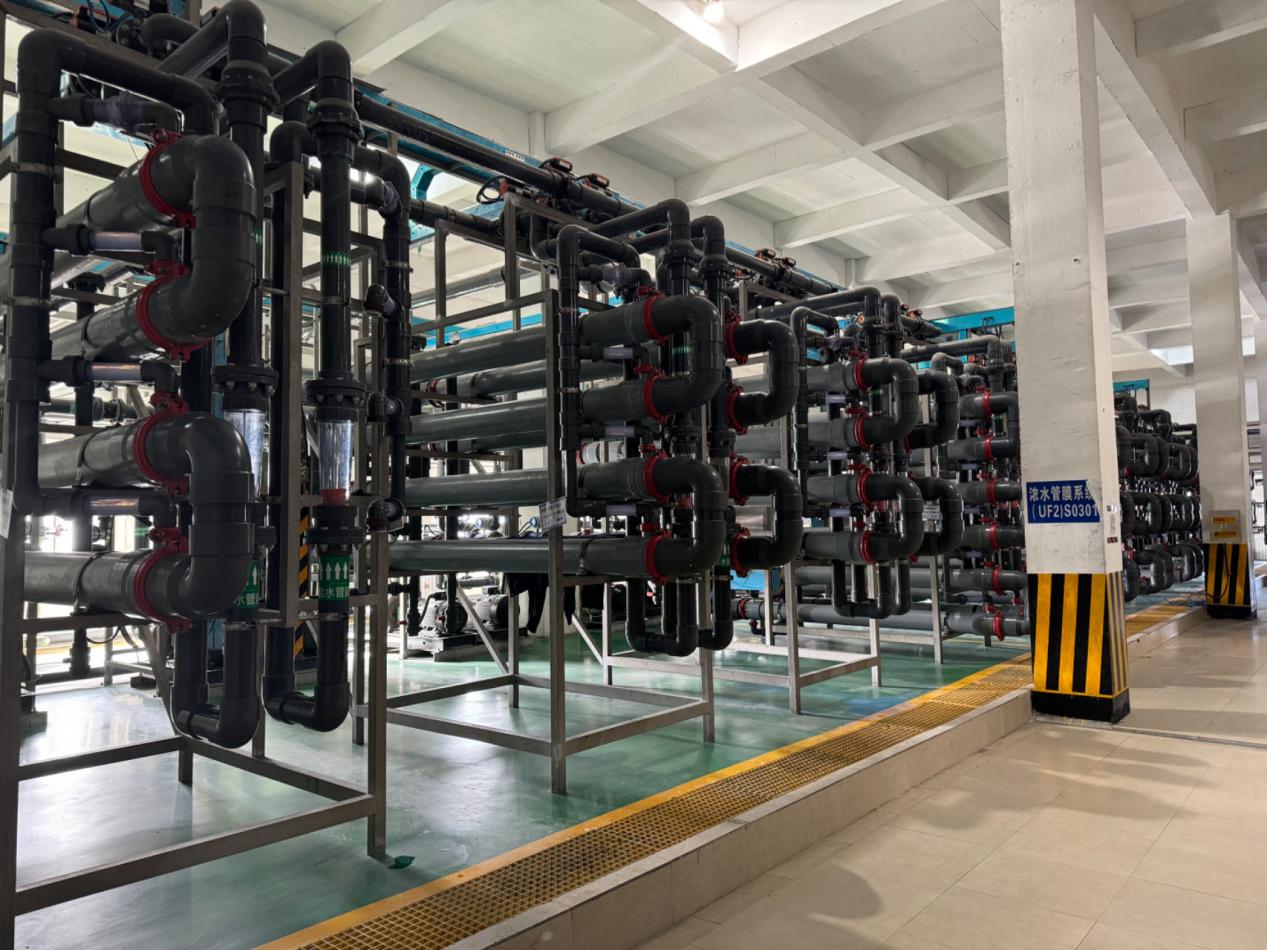
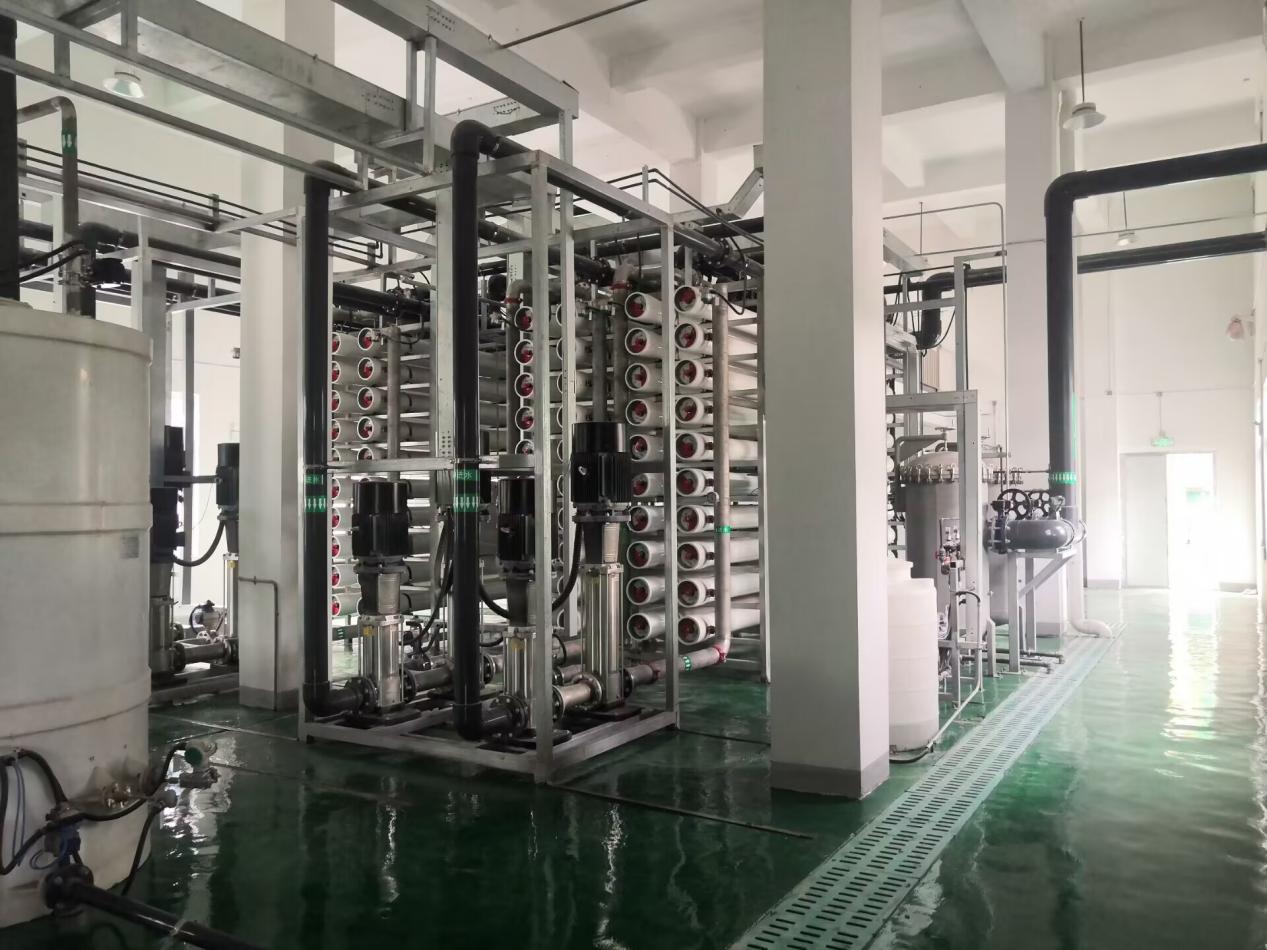
Reclaimed-water reuse + RO-brine treatment
The project record covers reclaimed-water reuse and RO-brine softening, PEK tubular membrane, and NF/RO engineering sections. This page does not extrapolate its recovery, salt-fractionation performance, salt quality, or supply scope.
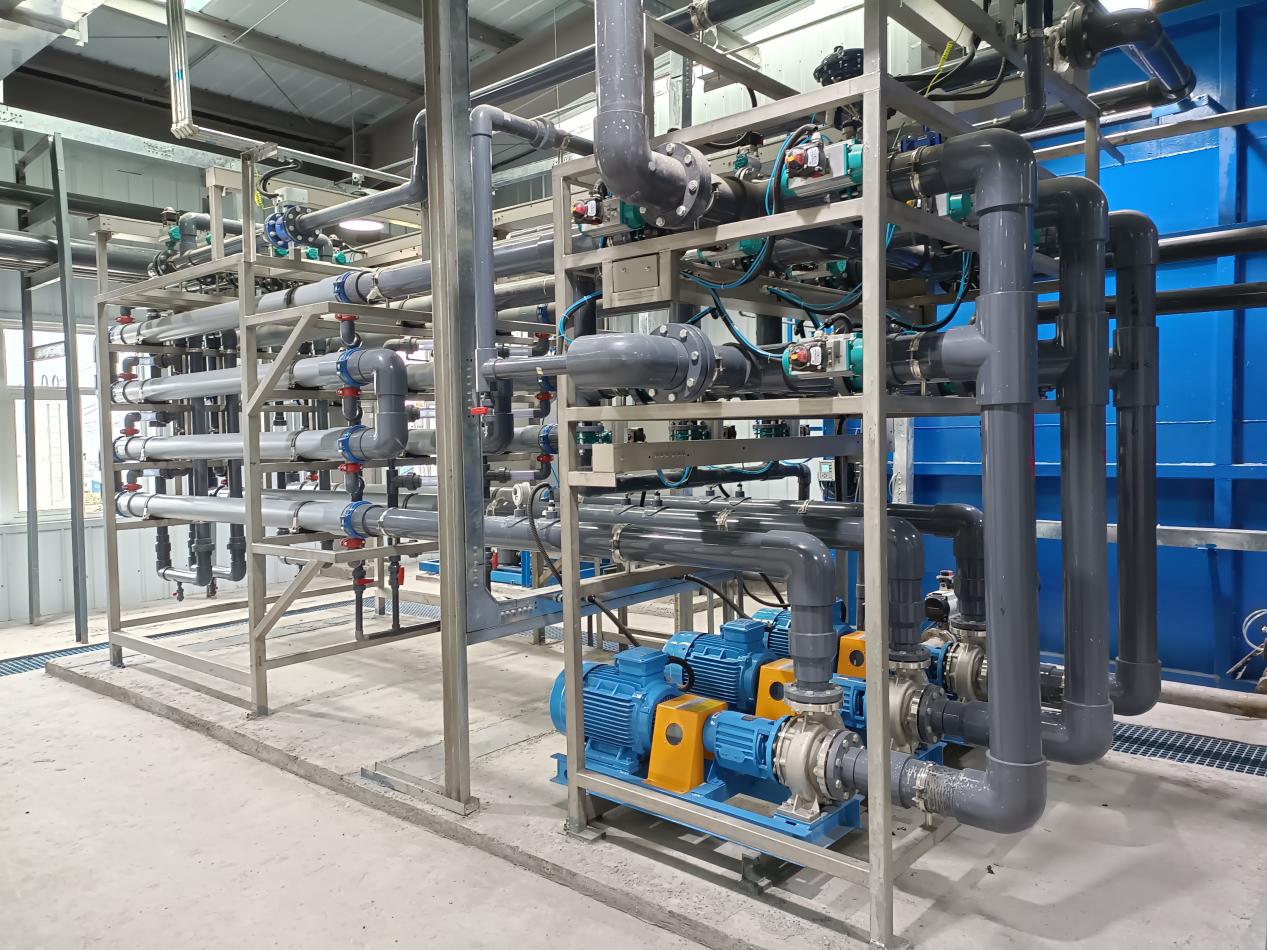
40 m³/h high-silica, high-hardness wastewater softening
The relevant sections are softening and silica-removal reactions followed by PEK tubular membrane solids separation, documenting front-end risk-control experience for a related coking high-silica, high-hardness water line.
These capacities document Plum’s experience with source-segregated coal-chemical water lines and coking-wastewater softening sections only. Every new project requires independent design against actual water quality, flow, endpoints, and the technical agreement.
SAMPLE & PILOT VALIDATION
Validate before scale-up when organics, ionic composition, or mother-liquor recycle boundaries are uncertain
PROJECT RESOURCES
Prepare coal chemical project information
Route overviewIndustrial wastewater reuse, minimization & ZLD
Related routeReclaimed-water reuse & RO-brine ZLD
Front-end processPEK softening & solids separation
Validation capabilityWater-sample testing & pilot validation
ENGINEERING FAQ
Coal chemical wastewater engineering FAQ
Why should coal chemical wastewater be segregated by source first?
Wastewater from different process units may differ substantially in organics, oil, hardness, silica, ionic composition, and final use. Premature mixing can lose an independently reusable source and transfer one stream’s risks into the complete line.
Can high-organic process wastewater feed NF or RO directly?
Do not assume so. First verify oil, COD/TOC, specific organics, SS, and the stability of existing biological or oxidation treatment. Evaluate reuse membranes only after feed suitability is established.
Does the PEK tubular membrane remove both COD and dissolved salts?
That is not a valid general statement. The PEK tubular membrane mainly separates reaction solids, suspended solids, and other retainable constituents. Dissolved organics and salts require suitable upstream treatment, NF, RO, or another process section.
Does every coal-chemical brine project require selective NF?
No. Assess selective NF only when ionic composition, target salts, membrane selectivity, and downstream crystallization or resource-recovery routes are compatible. Water analysis and necessary testing define the performance boundary.
Does every ZLD project require evaporation and crystallization?
It depends on the brine endpoint, project boundary, and final-disposition requirements. This page can show the engineering interface to evaporation and crystallization, but those systems are not a default supply item for every project.
When is water-sample testing or pilot validation recommended?
Testing is recommended when the form of organics or oil is unclear, silica and scaling-ion boundaries are complex, salt fractionation or high concentration requires validation, mother liquor is proposed for recycle, or comparable operating data are unavailable. Continue to a continuous pilot where required.
What information is required for preliminary assessment?
Provide each stream’s source, flow and variability, temperature, pH, SS, COD/TOC, oil, ammonia nitrogen, TDS, Ca, Mg, hardness, silica, alkalinity, chloride, and sulfate, plus the existing process, water balance, RO operating data, reuse requirements, and brine or salt endpoint.
Can old brochures or existing project data serve as guarantees for a new project?
No. Existing project records, test data, and new-project guarantee values have different conditions of applicability. Formal values require separate confirmation through data review, necessary validation, and the technical agreement.
SUBMIT COAL CHEMICAL WASTEWATER DUTY
Submit coal chemical wastewater duty for a preliminary source-segregation assessment
Where possible, provide the source, water quality, flow, existing treatment, reuse objective, and brine, mother-liquor, salt, or solid-waste endpoint for every stream. Plum will first assess information completeness and the membrane-process sections that can be evaluated.
Submitted information is used only for preliminary project assessment. It does not constitute a commitment on recovery, effluent quality, salt-fractionation ratio, salt quality, energy use, supply scope, or delivery schedule.