
Case study
1,200 m³/d Steel Pickling Wastewater Reuse and Resource Recovery Project
This project treats sulfuric-acid pickling wastewater from welding-wire production at a scale of 1,200 m³/d. It combines iron removal and softening, PEK tubular membranes, RO/NF, causticization, and evaporation and crystallization for water reuse and resource recovery.
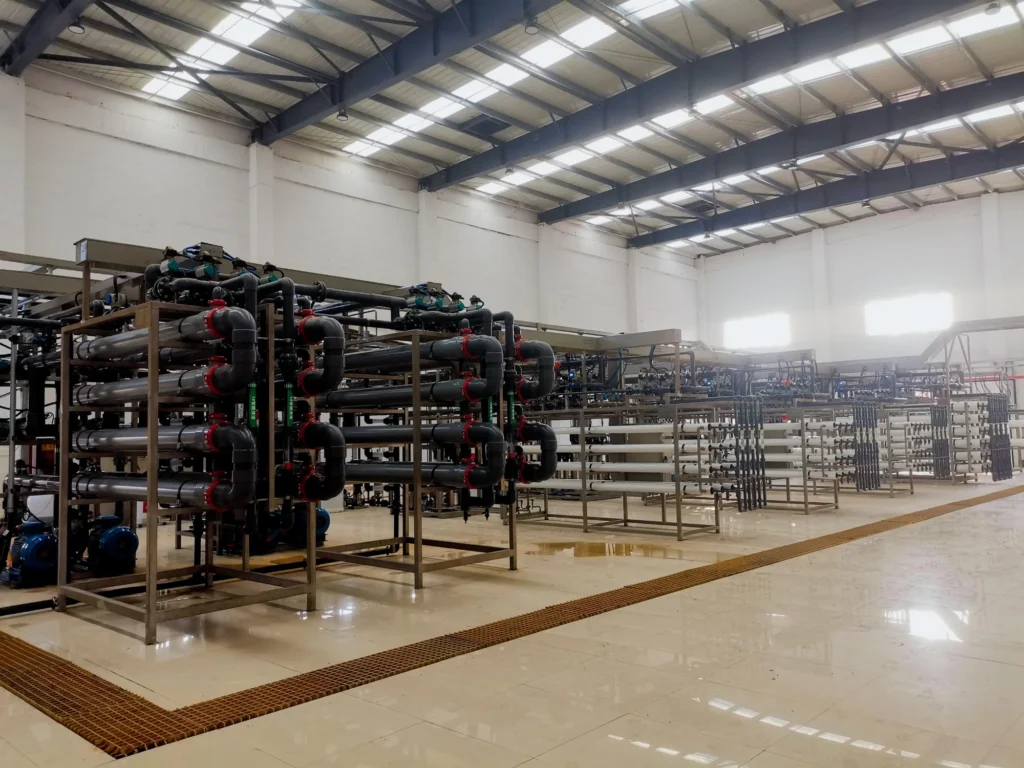
Project overview
This project treats sulfuric-acid pickling wastewater from welding-wire production at a scale of 1,200 m³/d. It combines iron removal and softening, PEK tubular membranes, RO/NF, causticization, and evaporation and crystallization for water reuse and resource recovery.
Plum supplied the pretreatment, PEK tubular membrane, RO/NF, causticization, and evaporation and crystallization systems for this project.
Process route
Iron-removal and softening pretreatment → PEK tubular membranes → RO concentration and NF salt separation → separate causticization and evaporation/crystallization streams
Upstream iron removal and membrane separation
Iron-removal and softening pretreatment forms precipitated solids. PEK tubular membranes separate these solids from the water before downstream membrane concentration and salt separation.
Salt separation, causticization and resource recovery
The RO/NF combination provides concentration and salt separation. Sulfate-rich NF concentrate goes to causticization to recover alkali for upstream treatment. NF permeate is further concentrated by RO, and the sodium-chloride-containing concentrate goes to evaporation and crystallization. RO permeate is reused, while the two concentrate streams follow their respective treatment routes.