Case study
10 m³/h FGD Wastewater ZLD Project
A 10 m³/h FGD wastewater ZLD project combining two-stage softening, PEK tubular membranes, NF salt separation and high-pressure RO. Plum supplied the process equipment except the evaporator.
Project overview
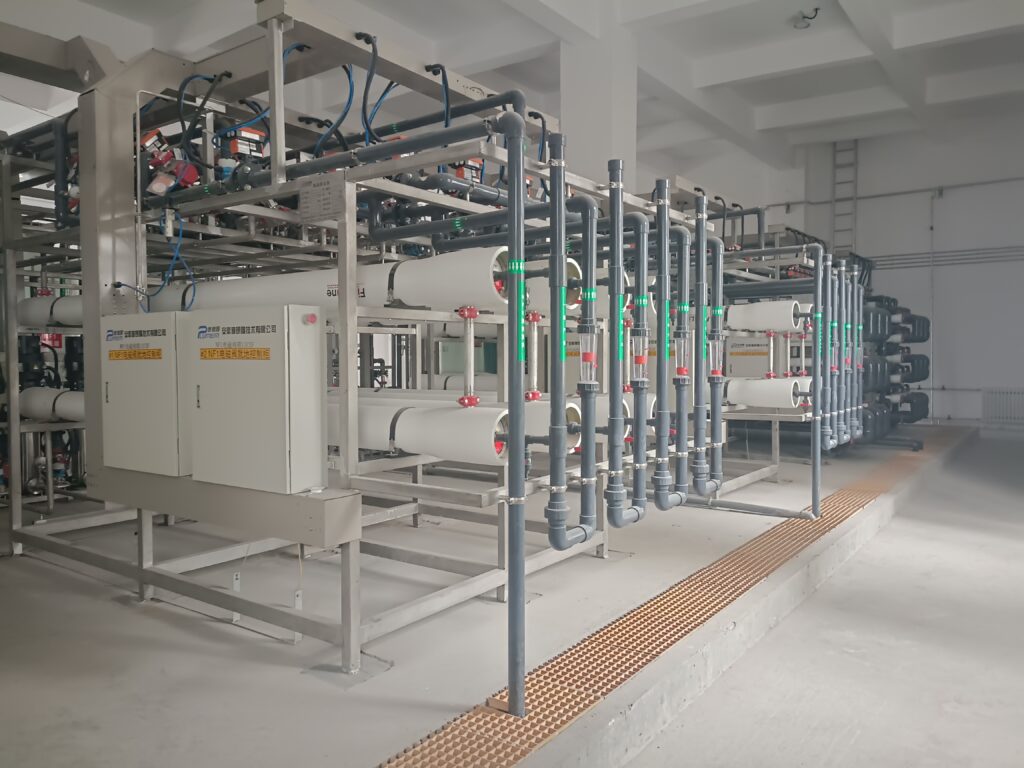
This project treats flue-gas desulfurization wastewater at a project scale of 10 m³/h. Its ZLD route connects softening and solid-liquid separation with nanofiltration salt separation, high-pressure reverse osmosis and the downstream evaporation interface.
Implemented process route
Two-stage softening and precipitation: FGD wastewater passes through the softening and precipitation section before entering the PEK tubular membrane system.
PEK tubular membrane system: solid-liquid separation of the reacted stream, with an associated plate-and-frame filter press.
Decarbonation unit: connects the tubular membrane permeate with the downstream hardness-removal section.
Resin hardness removal: additional hardness control before nanofiltration and reverse osmosis.
Two-stage NF salt separation: keeps NF permeate and concentrate as separate streams; concentrate returns to upstream softening.
High-pressure RO: treats NF permeate; RO permeate is reused and RO concentrate is routed to downstream evaporation.
Evaporation interface: receives RO concentrate, with condensate reused upstream. The evaporator is outside Plum's scope of supply for this project.
Water reuse and concentrate interfaces
NF concentrate returns to upstream softening, while NF permeate enters high-pressure RO. RO permeate is reused and RO concentrate feeds the evaporator. Evaporation condensate is reused upstream.
Plum scope of supply
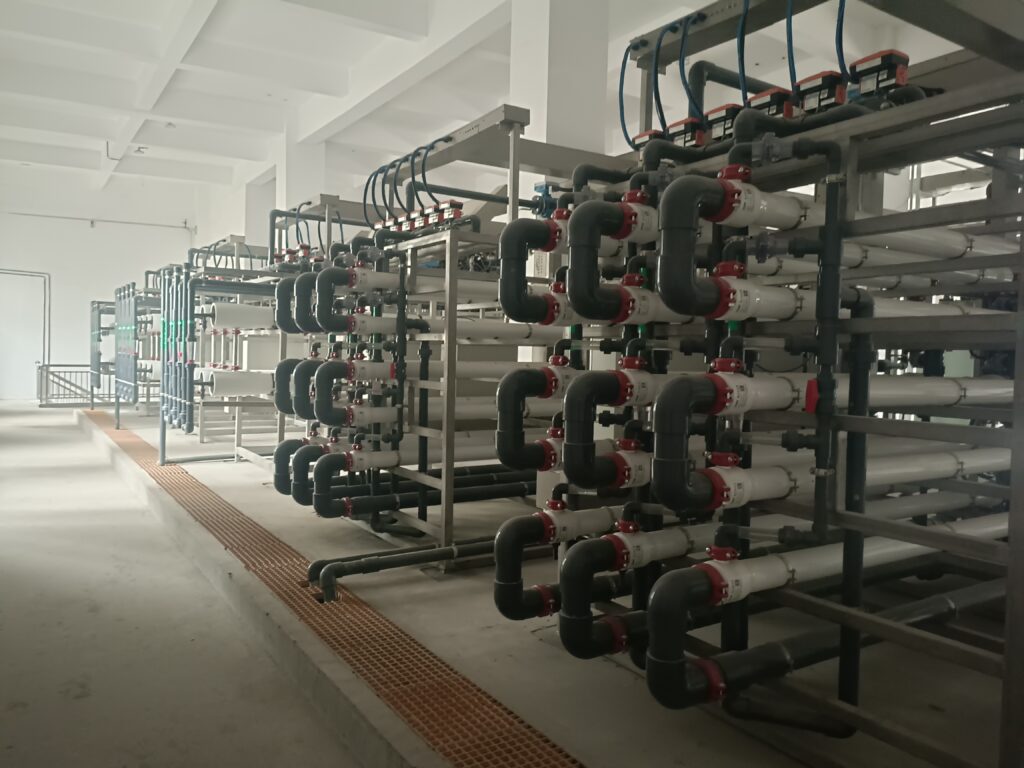
Plum supplied the softening and PEK tubular membrane equipment, the associated plate-and-frame filter press, decarbonation, resin hardness removal, two-stage NF salt separation and high-pressure RO. The evaporator connects through the process interface and is outside Plum's scope of supply for this project.