DILUTE SUGAR RECOVERY
Dilute Sugar Liquor Membrane Concentration & Recovery
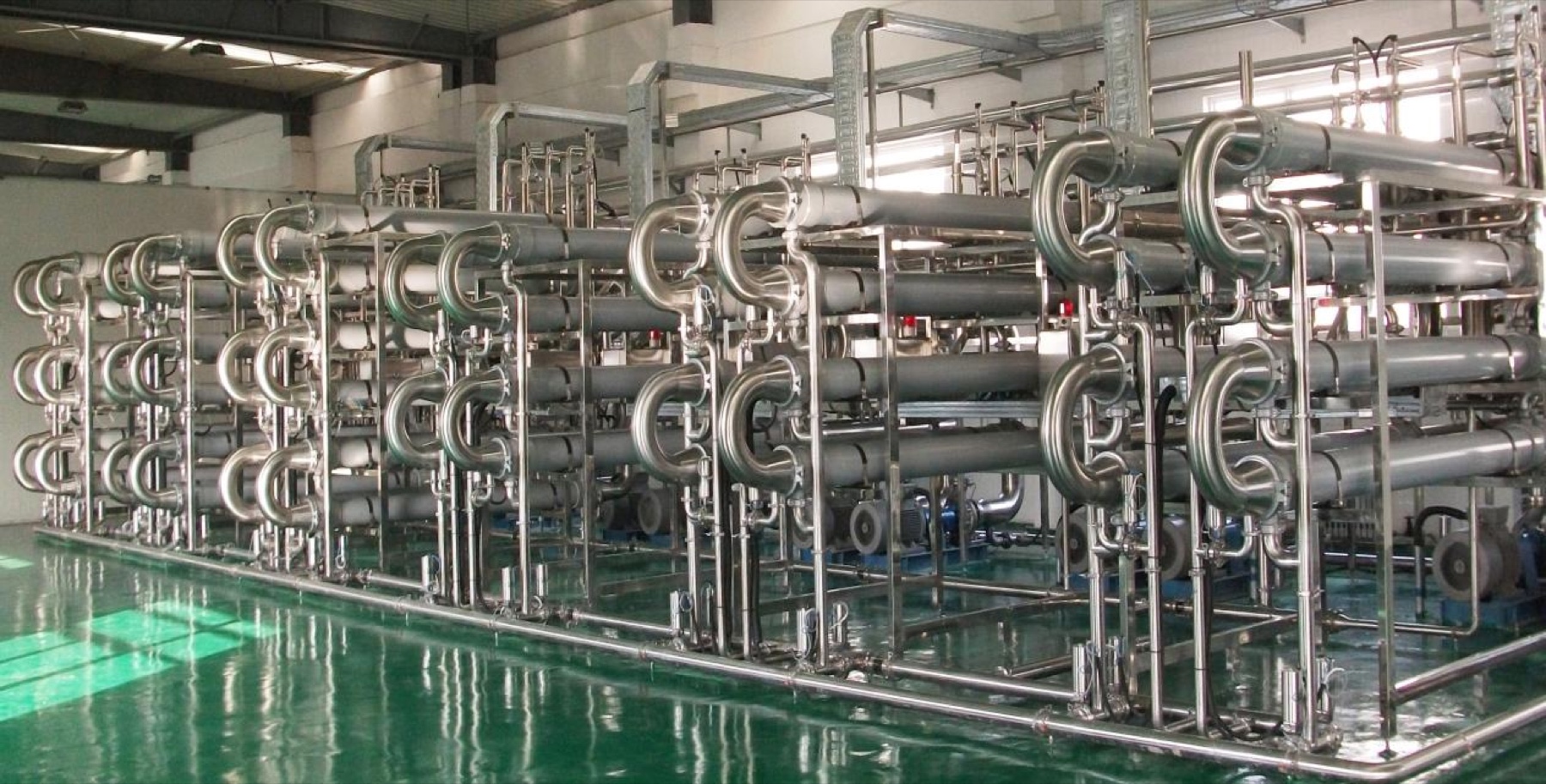
Start with the dilute-sugar stream source, sugar composition, and downstream value. Membrane screening, two-stream mass balance, and continuous pilot validation then define concentrate recovery, membrane-permeate reuse, and evaporation or crystallization interfaces.
This page covers recoverable dilute-sugar process side streams from functional-sugar and sugar production. Real samples and project objectives must jointly define membrane selection, concentration limits, stream destinations, and reuse conditions.
Confirm where the dilute-sugar stream originates before assessing it alongside the main product liquor or terminal wastewater.
Define the recovery location for the concentrate and the intended destination for the membrane permeate separately.
Use sugar profiles, mass balance, fouling behavior, and cleaning recovery to define the engineered membrane section.
DEFINE THE PROCESS STREAM
First confirm whether the dilute-sugar liquor remains a recoverable process side stream
Main product liquor, recoverable dilute-sugar side streams, and terminal wastewater have different objectives, analytical methods, and responsibility boundaries. This page does not place every sugar-bearing water stream on one membrane concentration route.
Clarification, purification & product fractionation
Organize membrane refining around target-sugar composition, proteins and colloids, color and ash, and product specifications.
Recoverable dilute-sugar process side stream
Define the route around sugar recovery, membrane pre-concentration, membrane-permeate use, and the existing evaporation-system interface.
Current engineering assessment entryReuse, minimization, or terminal treatment
If the stream has entered a mixed wastewater system, reassess it by contaminants, reuse objective, and concentrate endpoint.
Application boundary:Whether sugar-bearing wash water, separation mother liquor, eluate, or another side stream warrants recovery requires a separate assessment of sugar content, impurity accumulation, flow stability, product destination, and the complete economic boundary.
FEED & DUTY SCREENING
Six information groups determine whether a membrane concentration route fits
These are preliminary assessment dimensions, not universal feed conditions. Insufficient information cannot support a direct decision on membrane type, concentration factor, recovery, or membrane-permeate use.
Source & process position
Identify the related product, generation point, collection method, continuous or batch operation, and existing recycle relationship.
Sugar profile & concentration
Confirm target and coexisting sugars, dry matter or Brix, analytical methods, and allowable-loss boundaries.
Impurities & salts
Review proteins, colloids, color bodies, ash, major ions, suspended solids, and other potentially accumulating components.
Physical-property window
Confirm temperature, pH, viscosity, osmotic-pressure behavior, flow variation, and feed stability.
Recovery & reuse endpoints
Define where concentrate returns to the main line, evaporation, or crystallization and the intended membrane-permeate use.
CIP & contact boundaries
Confirm permitted cleaning agents, cleaning temperature, contact materials, cross-contamination controls, and product-quality responsibility.
TWO VALUE STREAMS
One concentration membrane section requires separate validation of both value streams
Sugar recovery and water reuse are not the same performance measure. Before either stream enters production, confirm its composition, quality, recycle risk, and interface conditions for the intended use.
Return to the product line or downstream concentration interface
Validate retention of the target sugar and coexisting impurities, concentration limits, recycle location, and effects on evaporation, crystallization, or refining.
Not automatically a qualified productNo membrane material, module configuration, or universal operating window is predetermined.
Assess production reuse or further treatment
Use residual sugar, organics, ions, and point-of-use requirements to assess cleaning, process makeup, or another reuse route.
Does not automatically meet production-water requirementsCRAWLABLE PROCESS ROUTE
Segregate and control impurities before concentration, then define both stream endpoints
This is an engineering discussion framework. It does not mean every project requires ion exchange, chromatography, every pretreatment step, or the same downstream operations. Feed properties, product objectives, and test results determine the actual configuration.
- 01Segregated collection & equalization
Separate sources and buffer variations in flow, sugar composition, temperature, and batch operation.
- 02Clarification & impurity control as required
Control particles, colloids, proteins, and components unsuitable for direct entry into the concentration section.
- 03Desalting or refining pretreatment as required
The product line and impurity profile jointly determine whether ion exchange, chromatography, or another unit remains.
- 04Concentration membrane section
Use sample screening to establish retention and passage relationships for target sugars, coexisting sugars, and major impurities.
Confirm sugar profile, impurity accumulation, recycle risk, and interface conditions before downstream transfer.
Residual sugar, ions, organics, and point-of-use requirements define the reuse location and any post-treatment.
STREAM & MASS BALANCE
Use a complete mass balance to assess recovery value, not feed concentration alone
Include streams from normal operation, changeover, flushing, and CIP. This page provides no universal concentration factor, sugar recovery, or water-reuse rate.
Feed dilute-sugar side stream
Record source, flow, sugar profile, dry matter, impurities, temperature, and collection method.
Concentrate
Confirm target-sugar and impurity accumulation, recycle location, and downstream evaporation or crystallization conditions.
Membrane permeate
Validate residual sugar, organics, ions, and other water-quality requirements for the intended use.
Cleaning & displacement side streams
Include the actual endpoints for CIP, flushing, startup and shutdown displacement liquids, and non-recoverable streams.
Concentrate is not automatically a qualified sugar product, and membrane permeate does not automatically meet food, fermentation, cleaning, or other production-water requirements. Formal stream values require sample testing, pilot validation, and the technical agreement.
SAMPLE TESTING & PILOT VALIDATION
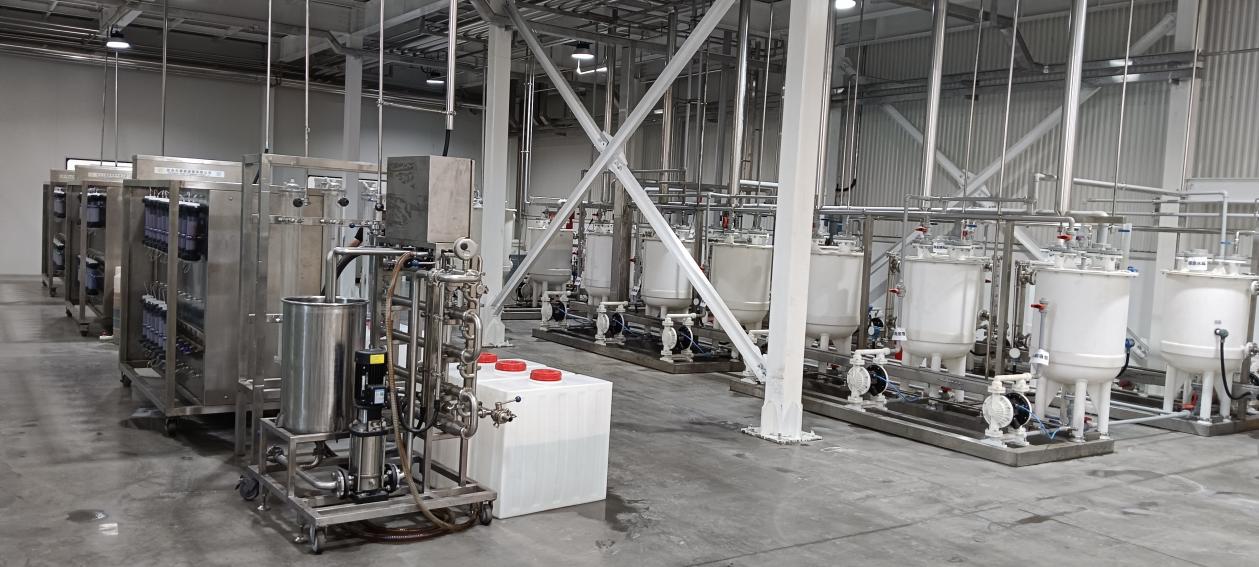
Use real dilute sugar liquor to validate membrane selection, concentration limits, and continuous operation
Validation focuses on the actual destinations of target sugars, coexisting sugars, impurities, and water across membrane types and concentration stages rather than applying results from another project.
- 01Information review
Confirm the dilute-sugar side-stream source, main sugar-product line, existing process, and objectives for both streams.
- 02Sample analysis
Confirm sugar profile, dry matter, impurities, ions, physical properties, and available analytical methods.
- 03Membrane screening
Compare retention and passage relationships for the target sugar, coexisting sugars, and major impurities.
- 04Concentration testing
Build staged mass balances and records of viscosity, osmotic-pressure change, and membrane-permeate quality.
- 05Continuous pilot validation
Observe the effects of feed variation, fouling, cleaning recovery, and component accumulation on operation.
- 06Engineering scale-up
Develop inputs for membrane area, CIP, control logic, evaporation, recycle, and water-reuse interfaces.
Retention and passage relationships for target sugars, coexisting sugars, and major impurities under the agreed conditions.
Quantity and composition of feed, concentrate, membrane permeate, and cleaning side streams.
Flux trends, fouling behavior, cleaning compatibility, and continuous operating window.
Inputs for concentrate recycle, evaporation and crystallization, permeate reuse, and necessary post-treatment.
DESIGN INPUTS
A traceable dilute-sugar and downstream data set is required before preliminary assessment
Project records, test results, and guarantee values for a new project must remain separate. Provide representative data for normal, variable, startup, shutdown, and cleaning conditions where possible.
- Source & product line
- Related product, generation step, collection method, batch or continuous operation, and existing recycle relationship
- Capacity & variation
- Hourly flow, batch volume, peak and low variation, operating cycle, shutdowns, and buffer conditions
- Sugar composition
- Target and coexisting sugars, Brix or dry matter, analytical method, and allowable-loss boundary
- Impurities & physical properties
- Proteins, colloids, color bodies, ash, major ions, pH, temperature, viscosity, and turbidity
- Existing system
- Clarification, ion exchange, chromatography, tanks, heat exchange, evaporation, crystallization, and existing membrane systems
- Concentrate endpoint
- Feed and quality requirements for return to the main line, evaporation, crystallization, refining, or another operation
- Membrane-permeate use
- Water-quality requirements for cleaning, process makeup, other production reuse, or post-treatment
- Validation conditions
- Available sample volume, storage and transport, SDS, CIP requirements, test period, and pilot conditions
This page publishes no universal feed concentration, concentration factor, sugar recovery, membrane-permeate standard, steam saving, energy use, cost, or product quality. Formal values require sample testing, pilot validation, and the technical agreement.
PROJECT EVIDENCE
Confirmed functional-sugar membrane concentration records
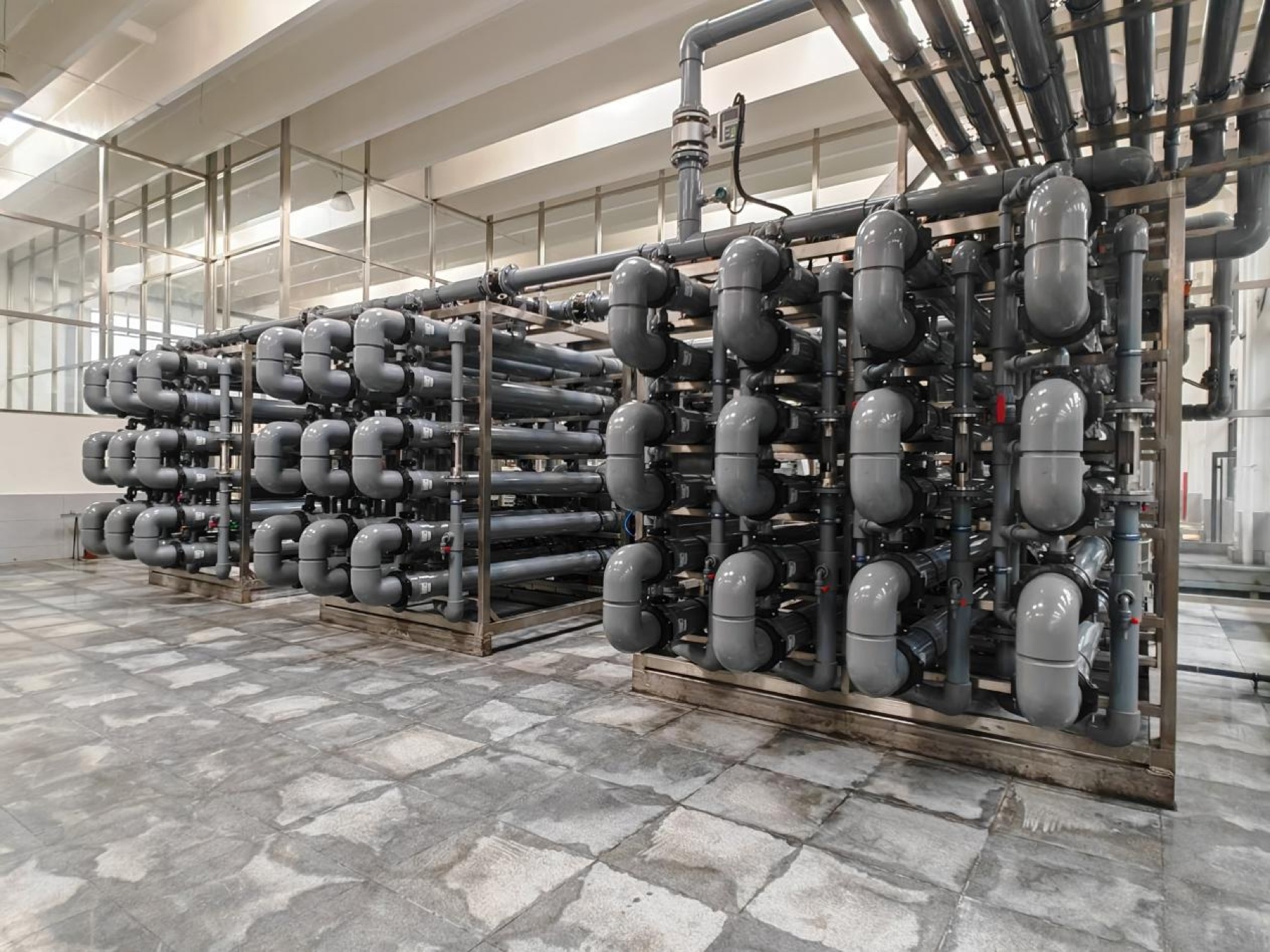
The capacities below document implementation experience with concentration membrane sections for sugar-process fluids only. They do not define membrane type, concentration factor, recovery, energy use, or product quality for a new project.
Anonymous industrial projects · functional-sugar process fluids
Use two project-capacity records to support testing and scale-up assessment
Public information covers capacity, feed type, and the related concentration membrane section only. Client, year, concentration results, recovery, energy use, cost, and product quality are not published on this page.
ENGINEERING BOUNDARY
Confirm the concentration membrane section within the complete sugar-production process
Plum develops validation, integrated systems, and engineering interfaces around the membrane section. Upstream sugar production, refining units, product specifications, and final water-reuse responsibility require project-by-project confirmation.
PLUM can support
- Preliminary review of dilute-sugar data, sugar profile, impurities, and two-stream objectives
- Concentration-membrane screening, sample testing, and continuous pilot validation
- Mass balance, membrane section, CIP, and control-system design
- Integrated membrane-system equipment, commissioning, training, and operating support
- Engineering-interface support for recycle, evaporation, crystallization, and water-reuse systems
Confirm separately by project
- Saccharification, isomerization, fermentation, and other upstream production processes
- Ion exchange, chromatography, decolorization, evaporation, crystallization, and the complete product line
- Product formulation, quality standards, yield, and analytical acceptance responsibility
- Food contact, production water, and other regulatory compliance
- Cleaning waste, non-recoverable streams, and final disposal endpoints
RELATED ROUTES
Continue reviewing functional-sugar routes and validation conditions
Business overviewProcess Fluid Membrane Separation
Functional-sugar purificationAllulose membrane separation & purification
Upstream clarificationStarch-sugar hydrolysate tubular membrane clarification
ENGINEERING FAQ
Dilute sugar liquor concentration and recovery FAQ
Which sugar-bearing streams should be assessed first for membrane concentration and recovery?
Prioritize side streams that remain within production, have a known source and analyzable sugar composition, have manageable flow, and have a defined concentrate-recovery endpoint. Streams already mixed into complex terminal wastewater require reassessment on a wastewater route.
Is the concentration membrane section a fixed RO or tubular-membrane configuration?
No. Sugar profile, impurities, Brix, viscosity, osmotic pressure, temperature, cleaning requirements, and sample tests jointly determine membrane material, membrane type, module configuration, and operating method.
How do membrane concentration, evaporation, and crystallization divide their duties?
Under suitable conditions, membranes may provide pre-concentration or resource recovery. Product route, mass balance, and project validation determine whether evaporation or crystallization remains and how the units connect.
Can concentrate return directly to the main product line?
Not automatically. Validate accumulation of target sugars, coexisting sugars, impurities, and ions, then confirm recycle location, product specifications, and downstream process tolerance.
Can membrane permeate be used directly as production water?
A membrane name cannot answer this. Test residual sugar, organics, ions, and other relevant parameters for the intended use, add post-treatment where required, and have the project owner confirm production-water and regulatory requirements.
Why are sample testing and continuous pilot validation required?
Sample testing screens membrane types and establishes initial component destinations and concentration limits. Continuous pilot validation observes feed variation, fouling, viscosity change, cleaning recovery, and component accumulation to support engineering scale-up.
Can the 45 m³/h and 5 m³/h records serve as guarantees for a new project?
No. These figures are anonymous functional-sugar membrane concentration project-capacity records only. Membrane selection, stream quality, concentration limits, and system capability for a new project require new validation and confirmation in the technical agreement.
What information is required for preliminary assessment?
Provide the dilute-sugar source, flow and variation, sugar profile, Brix or dry matter, proteins and colloids, color, ash and major ions, pH, temperature, viscosity, current process, concentrate endpoint, membrane-permeate use, CIP requirements, SDS, and available sample volume.
REQUEST DILUTE SUGAR VALIDATION
Submit dilute-sugar dataRequest sample testing & pilot validation
Provide as much detail as possible on stream source, sugar profile, impurities and physical properties, current process, concentrate endpoint, membrane-permeate use, and available sample volume. Plum will review the information before confirming membrane screening, test scope, and whether pilot validation is required.
Submitted information is used only for preliminary project assessment. It does not constitute a commitment on test scheduling, sugar recovery, concentration factor, permeate quality, engineering performance, regulatory compliance, or scope of supply.