FERMENTATION BROTH CLARIFICATION
Fermentation Broth & Hydrolysate Tubular Membrane Clarification
Start with the target component and the state of cells and solids. Use tubular membrane cross-flow clarification, stream mass balance, and continuous pilot validation to establish a scalable separation route for amino-acid fermentation broths, enzymatic hydrolysates, and other process fluids.
This page focuses on tubular membrane clarification. Whether NF, RO, resin, evaporation, or crystallization is used, and the actual destinations of permeate and retentate, must be determined through real-feed validation.
First confirm the component to retain, its physical state, and the analytical method.
Define the separation boundary for cells, solids, colloids, and macromolecular impurities.
Define the conditions for routing the clarified stream and retentate to recovery, refining, or disposal operations.
DISTINGUISH THE FEED
Distinguish fermentation broth from enzymatic hydrolysate before defining the clarification duty
The same label, process-fluid clarification, may describe very different target components, solid structures, viscosities, and cleaning boundaries. The feed name alone does not determine membrane material, pore size, or stream direction.
Fermentation broth
Review cells and cell debris, proteins, polysaccharides, colloids, residual culture medium, viscosity, and batch variation, and confirm whether the target component is dissolved, bound, or distributed with the solids.
Enzymatic hydrolysate
Review undissolved residue, fibers, proteins, colloids, particle-size distribution, hydrolysis conditions, and heat sensitivity, and define the clarified-stream quality required for downstream purification or product recovery.
Terminology boundary:Cell or microorganism control on this page means a project-defined separation duty. It is not equivalent to aseptic production, sterilization validation, or a regulatory sterility guarantee.
CLARIFICATION DUTY
Six information groups determine whether tubular membrane clarification is suitable
These inputs establish the test hypothesis and preliminary membrane screening; they are not universal feed conditions. Do not scale directly to an engineering system without target-component analysis and cleaning boundaries.
Cells & solids
Cell morphology, cell debris, suspended solids, particle size, colloids, and settling behavior.
Target component
Product component, physical state, analytical method, and acceptable loss boundary.
Proteins & impurity profile
Proteins, polysaccharides, nucleic acids, color bodies, salts, and other components requiring control.
Operating window
Temperature, pH, viscosity, density, heat sensitivity, and batch variation.
Membrane material & separation grade
PVDF, PES, or PEK and the pore-size or MWCO range require compatibility screening.
Cleaning & downstream process
CIP conditions, product-contact requirements, and feed boundaries for downstream refining.
CROSS-FLOW CLARIFICATION
Establish a stable process-fluid separation section with cross-flow clarification
Tubular membranes use recirculating cross-flow to control solids accumulation at the membrane surface and continuously separate the clarified permeate from the retentate. Membrane material, separation grade, circulation mode, and cleaning strategy are defined with the real feed.
- 01Screening & equalization
Remove particles unsuitable for the recirculating membrane section and review batch or continuous-feed variation.
- 02Temperature adjustment or conditioning as required
Adjust temperature, pH, or other membrane-inlet conditions within the allowable product-stability range.
- 03Tubular membrane cross-flow clarification
Separate cells, suspended solids, colloids, and macromolecular impurities compatible with the selected membrane.
- 04Clarified stream to downstream processing
Route to resin, NF, RO, concentration, crystallization, or another project-defined refining operation.
- 05Define the retentate endpoint
Assess recycle, target-component recovery, further treatment, or the project-defined disposal route.
STREAM RELATIONSHIP
Do not preset the permeate as product or the retentate as waste
The target component may be in the clarified stream or the retentate. Actual stream identity depends on its physical state, membrane selection, and the project mass balance.Validate the actual distribution of the target component, proteins, polysaccharides, color bodies, and other impurities.
Any recycle route must assess continuous accumulation of cells, impurities, and irreversible fouling components.
Rejection and passage relationships require sample testing.
Limited by osmotic pressure, product stability, and upstream clarified-stream quality.
The complete product process determines whether these operations remain and how they operate.
Membrane separation does not replace thermal processing, crystallization, or drying by default.
SAMPLE TESTING & PILOT VALIDATION
Confirm stream behavior with the real feed before continuous piloting and engineering scale-up
Testing determines target-component and impurity destinations, fouling trends, and cleaning recovery. It does not apply one fixed flux, yield, or product purity to different fermentation broths.
- 01Data review
Confirm feed origin, target component, impurity profile, SDS, product specification, and current process.
- 02Membrane material & pore-size screening
Compare component distribution and compatibility for PVDF, PES, or PEK across different separation grades.
- 03Bench-scale mass balance
Review composition, volume change, and target-component destination across the clarified stream, retentate, and recovery streams.
- 04Continuous pilot validation
Observe flux trends, fouling behavior, cleaning recovery, batch variation, and continuous-operation boundaries.
- 05Engineering scale-up
Develop design inputs for membrane area, circulation, CIP, instrumentation and controls, and upstream or downstream interfaces.
Actual distribution of the target component and major impurities across each stream.
Test basis for clarified stream, retentate, recovery streams, and makeup liquid.
Flux trends, fouling characteristics, cleaning compatibility, and recovery behavior.
Recommendations for the membrane section, circulation, control logic, CIP, and downstream interfaces.
DESIGN INPUTS
A traceable feed and product data set is required before preliminary assessment
Project records demonstrate relevant engineering experience only. Membrane selection, stream destinations, and operating conditions for a new project require its own data, sample testing, and technical agreement.
- Feed origin
- Fermentation, hydrolysis, or another production stage; batch or continuous mode; and current process position
- Target component
- Name, physical state, concentration, analytical method, and acceptable loss boundary
- Cells & solid phase
- Cells, cell debris, suspended solids, particle size, colloids, and settling behavior
- Proteins & polysaccharides
- Proteins, polysaccharides, nucleic acids, color bodies, salts, and other major impurities
- Physical properties
- Temperature, pH, viscosity, density, heat sensitivity, and batch variation
- Current & downstream process
- Centrifugation, filter press, resin, NF, RO, evaporation, crystallization, or drying interfaces
- Cleaning & compliance boundaries
- Permitted cleaning agents, CIP temperature, contact materials, and food or pharmaceutical requirements
- Validation conditions
- Available sample volume, storage and transport, SDS, test duration, and continuous-pilot conditions
This page does not present historical project conditions as universal flux, recovery, product yield, purity, energy use, operating cost, or membrane life. Formal values require sample testing, pilot validation, and the project technical agreement.
PROJECT EVIDENCE
Confirmed fermentation-broth tubular membrane engineering records
The capacities below apply only to anonymous project records and demonstrate engineering implementation of tubular membrane clarification. They do not become design values, performance values, or product guarantees for a new project.
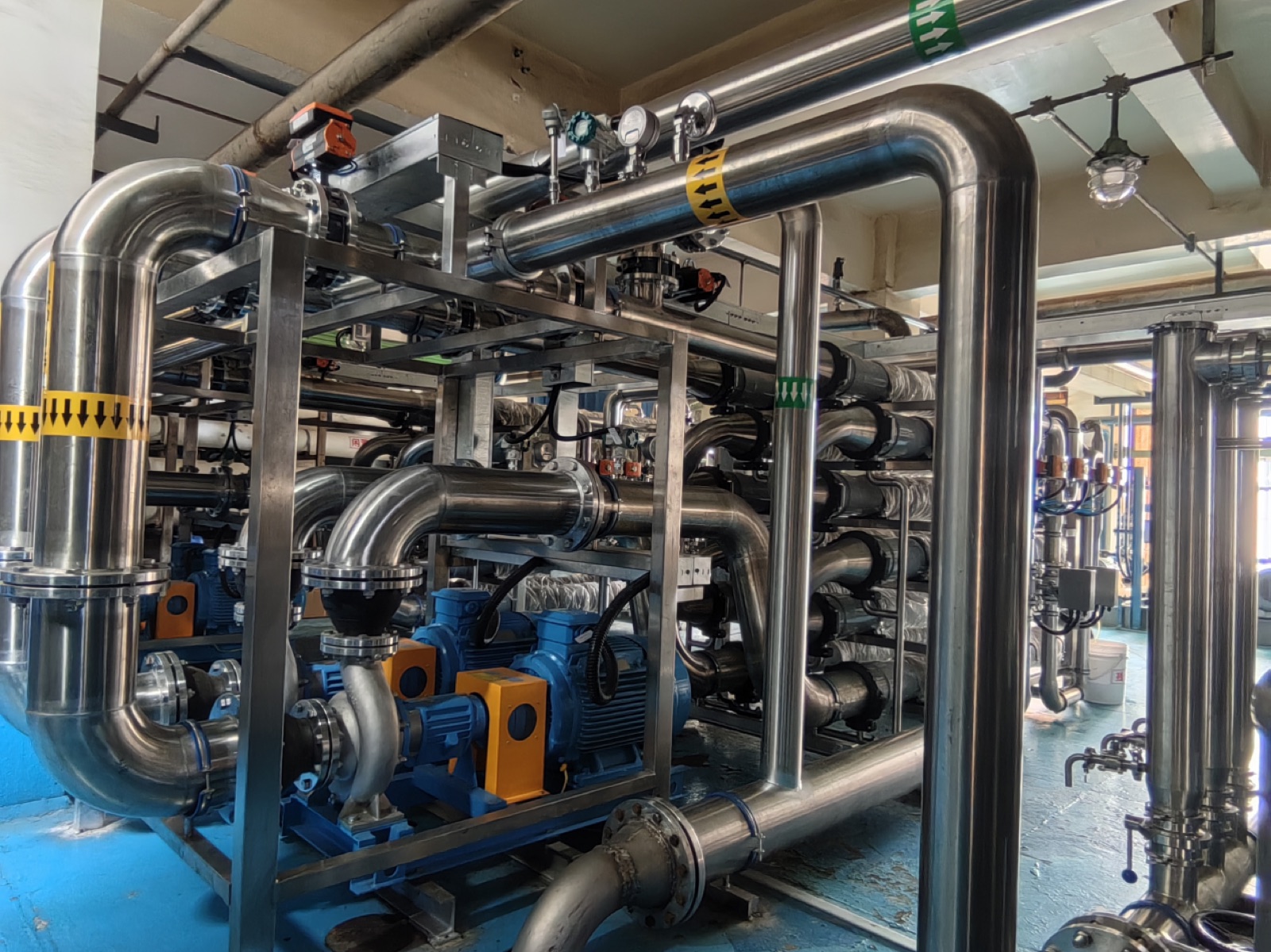
Anonymous biological-fermentation project
40 m³/h Fermentation-broth tubular membrane cross-flow clarificationTubular ultrafiltration provides front-end clarification for a high-solids process fluid
Public information is limited to project capacity, feed type, and the tubular membrane clarification section. Customer identity, performance, yield, energy use, and operating cost are not published.
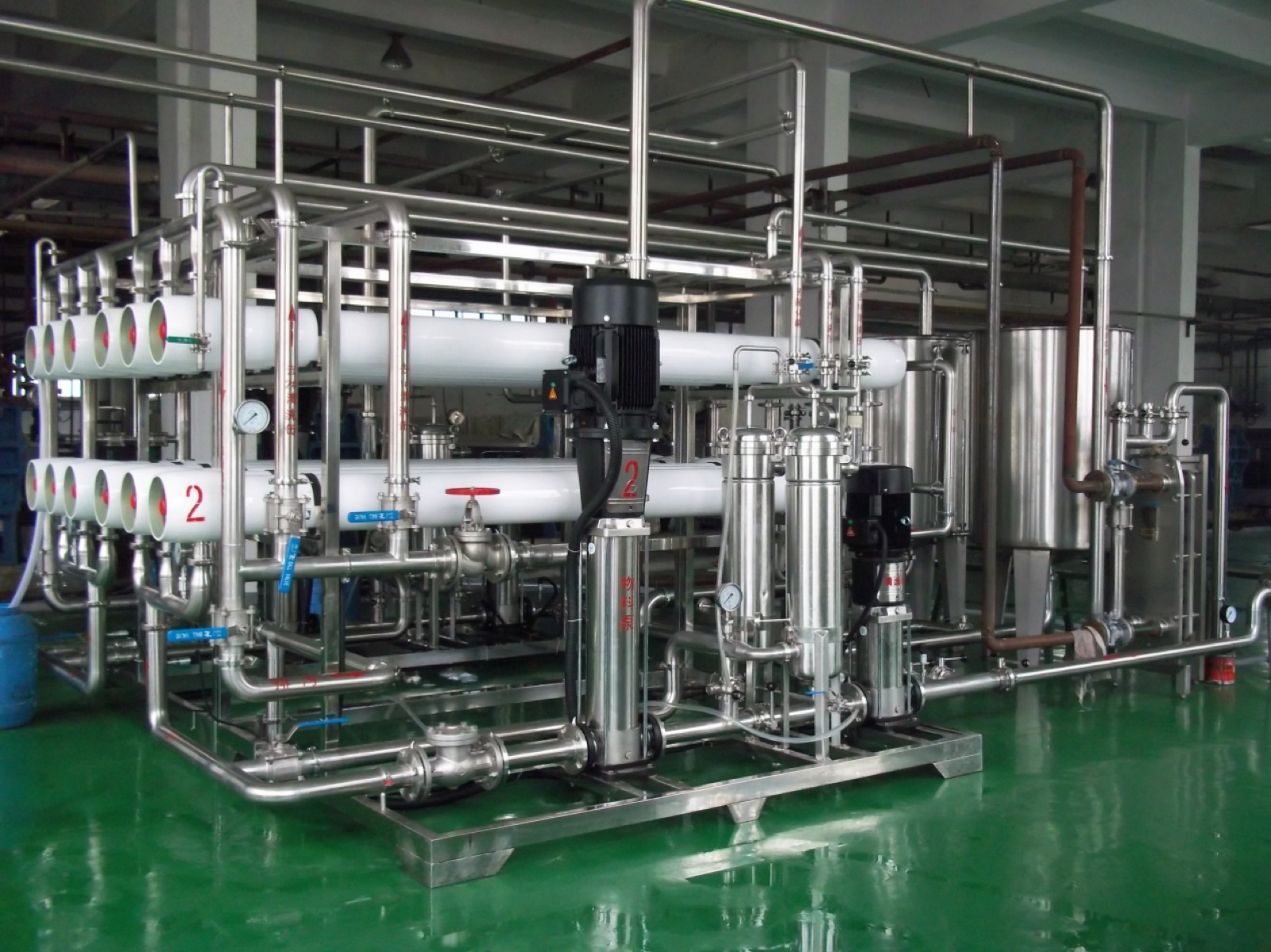
Anonymous vitamin C intermediate project
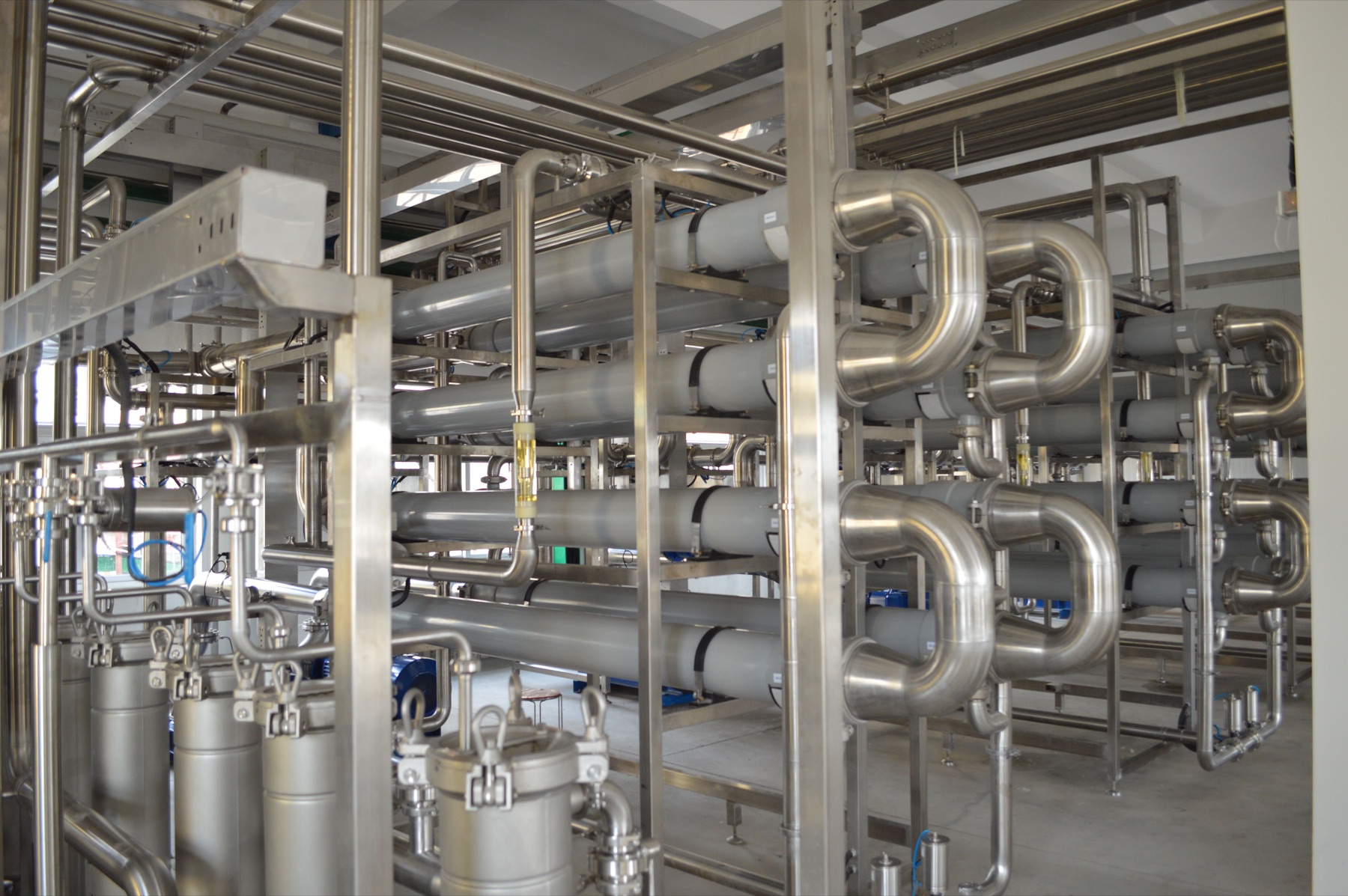
500 m³/d Sodium 2-keto-L-gulonate fermentation-broth tubular ultrafiltration clarificationEstablish continuous membrane solids separation ahead of downstream refining
Public information is limited to project capacity, feed type, and the tubular ultrafiltration section. The image illustrates an anonymous engineering setting and is not attributed to a customer site.
ENGINEERING BOUNDARY
Confirm the tubular membrane clarification section within the complete product process
Plum establishes testing, integrated systems, and engineering interfaces around membrane separation. Product processing, non-membrane operations, aseptic systems, and regulatory responsibilities require item-by-item confirmation in the project scope.
PLUM may provide
- Preliminary analysis of feed, target component, and clarification duty
- Membrane material and pore-size or MWCO screening with sample testing
- Continuous pilot validation, mass balance, and engineering scale-up
- Integrated tubular membrane circulation, CIP, instrumentation, and controls
- Installation, commissioning, training, and downstream-interface support
Confirm by project
- Fermentation or hydrolysis formulation, enzymes, and chemical system
- Non-membrane pretreatment, resin, chromatography, and thermal processing
- Product specifications, analytical methods, and quality responsibility
- Sterility validation, food-contact requirements, and regulatory compliance
- Retentate, waste, utilities, and plant-wide boundaries
RELATED RESOURCES
Continue reviewing clarification routes and validation conditions
Business overviewProcess fluid membrane separation
Validation capabilitySample testing & pilot validation
Membrane modulesPVDF & PEK tubular membrane selection
Downstream routeLactic-acid NF purification route
Functional-sugar routeAllulose membrane separation & purification
ENGINEERING FAQ
Fermentation-broth and hydrolysate tubular membrane clarification FAQ
Can fermentation broth and hydrolysate use the same membrane directly?
The feed name alone is not sufficient. Cells, solids, proteins, polysaccharides, viscosity, temperature, pH, target component, and cleaning boundaries all affect PVDF, PES, or PEK selection and the pore-size or MWCO range. Screen with the real feed.
How is the target component located in the clarified stream or retentate?
Confirm the molecular state of the target component and whether it is associated with cells or colloids. Compare its actual distribution under different membrane conditions, then use the mass balance to define product, recovery, and side streams.
Does microbial-cell removal by tubular membrane equal a sterility guarantee?
No. Cell or microorganism control on this page is a project-defined membrane separation duty. Aseptic production, sterilization validation, and regulatory compliance require separate system design, validation, and responsibility confirmation.
Is NF or RO always required after clarification?
No. NF may provide decolorization, impurity control, or fractionation as required, while RO may provide concentration or recovery where suitable. Selection depends on the target product, impurity profile, downstream process, and test results.
Why are sample testing and continuous pilot validation required?
Sample testing determines membrane material, separation grade, and target-component destination. Continuous pilot validation examines fouling, cleaning recovery, stream accumulation, and batch variation to support engineering scale-up.
Can the 40 m³/h and 500 m³/d records serve as guarantees for a new project?
No. Both figures are anonymous project-capacity records only. Membrane selection, flux, product yield, clarified-stream quality, and system capacity for a new project require new validation and confirmation in the technical agreement.
What information and samples are required for preliminary assessment?
Provide feed origin, target component, cells or SS, proteins, polysaccharides, major impurities, temperature, pH, viscosity, current process, product specification, CIP conditions, SDS, available sample volume, and existing test records.
REQUEST FERMENTATION BROTH VALIDATION
Submit feed composition & clarification objectivesRequest sample testing & pilot validation
Provide as much detail as possible on the target component, cells and solids, proteins and polysaccharides, physical properties, current process, downstream objective, and available sample volume. Plum will first review the information, then confirm membrane screening, test scope, and whether pilot validation is required.
Submitted information is used only for preliminary project assessment. It does not constitute a commitment on test scheduling, product quality, engineering performance, sterility validation, regulatory compliance, or scope of supply.