
MINE WATER REUSE & ZLD
Mine Water Reuse & ZLD Engineering Routes
Start with the mine-water source, seasonal variability, and critical contaminants, then define pretreatment, softening, tubular membrane separation, desalination, salt fractionation, and concentration interfaces for reuse, minimization, or ZLD objectives.
Mine water is not one uniform water quality. This page presents an engineering assessment framework; not every project requires the full route, and the framework is not a universal performance or supply-scope commitment.
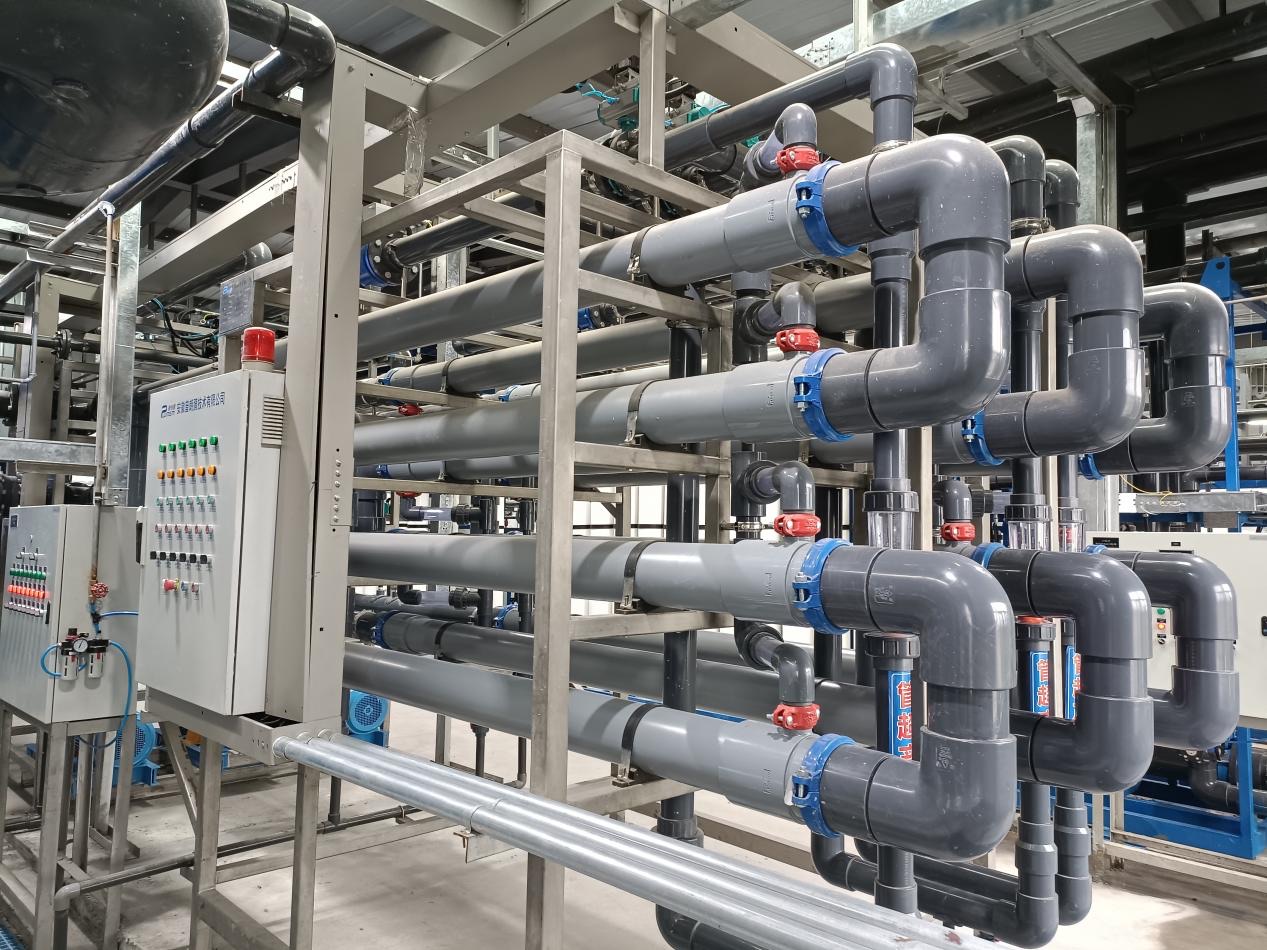
The reuse destination and water-quality requirement determine desalination depth and stability targets.
Select a concentration route against scaling, fouling, and osmotic-pressure boundaries.
Connect membrane sections with evaporation, crystallization, resource recovery, or final disposition boundaries.
FEED WATER RISK PROFILE
Identify the mine-water source before defining what must be controlled
Mine type, mining method, geology, underground operations, wet and dry seasons, and existing treatment all affect mine-water composition. The following risks must be checked against actual analytical results.
Assess suspended solids, hardness, salinity, and process-reuse requirements.
In addition to salinity and scaling risk, test for potentially present metal ions.
Assess hardness, silica, and specific ionic risks against the mineral composition.
Confirm mixing ratios, seasonal change, and peak-load shocks.
- Suspended solids and turbidity
- Measure SS, particle size, and variability to assess plugging, abrasion, and membrane-preclarification needs.
- Hardness and silica
- Confirm Ca, Mg, total hardness, silica species, and alkalinity to define softening and concentration-scaling boundaries.
- Ionic composition
- Measure TDS, chloride, sulfate, and other major ions rather than relying on one total-salinity value.
- Metal ions
- Test for Fe, Mn, and other metals relevant to the mine type, then assess species conversion and solids-separation routes.
- Oil and organics
- Where underground equipment, chemicals, or mixed sources may contribute contamination, add oil, COD/TOC, and fouling-behavior analyses.
- Flow and seasonal variability
- Average values are insufficient for design; peak flow, continuous operating schedule, and wet- and dry-season variation are also required.
Assessment principleThese constituents do not occur together in every mine water. The page provides a screening framework only; the actual route must follow analytical reports, the existing process, and project objectives.
ROUTE DECISION
Source, risks, and final destinations determine route length
Establish complete water and salt boundaries before deciding which membrane sections the project actually requires. ZLD must not be treated as one fixed equipment list.
- 01Source and variabilityMine type, source composition, seasons, and peak flow
- 02Critical contaminantsParticles, scaling species, salts, and organic fouling
- 03Reuse destinationMine-site process use, cooling makeup, or another interface
- 04Concentrate endpointMinimization, salt fractionation, resource recovery, or evaporation
- 05Engineering boundariesMembrane sections, civil works, utilities, and division of responsibility
Source type
Raw mine water, existing RO concentrate, and mixed-source water begin at different points and require different treatment duties.
Limiting factors
Hardness, silica, suspended solids, organic fouling, ionic composition, and osmotic pressure define membrane-section feasibility.
Final destination
Reuse requirements, concentrate disposition, and by-product responsibility define the system endpoint; it cannot be inferred from one device.
Where water quality and project objectives do not require salt fractionation, HRCC, or evaporation and crystallization, those sections should not be added simply to create a seemingly complete ZLD route.
MODULAR PROCESS ROUTE
Assess the reuse-water and concentrate routes separately
The two routes are coordinated within one water balance, but their treatment objectives, critical risks, and downstream interfaces differ.
Mine-water reuse route
The objective is stable water for the project-defined reuse destination while managing the concentrate generated by desalination.
- 01Mine waterConfirm source, flow, and variability
- 02Equalization and pretreatmentConfigure against particle, oil, and metal risks
- 03Softening where requiredTarget hardness, silica, and other scaling species
- 04PEK tubular membranePost-reaction solids separation and downstream protection
- 05RO / desalination sectionDefine treatment depth against the reuse destination
- 06Reuse interfaceProject-defined process-water or mine-site use point
RO-concentrate minimization & ZLD route
Confirm ionic composition and scaling boundaries before assessing salt fractionation, concentration, and final-disposition interfaces.
- 01RO concentrateProvide concentrate quality and flow separately
- 02Targeted conditioningSoftening, silica control, or another reaction where required
- 03PEK tubular membraneReaction-solids separation and concentration-section protection
- 04Selective NF where requiredUse only where ionic composition and objectives are compatible
- 05Concentration sectionHRCC or another assessed concentration route
- 06Project endpointEvaporation, crystallization, resource recovery, or disposition interface
Mother-liquor recovery or recycle requires separate assessment of impurity accumulation, water and salt balance, and economics. It is not a default mine-water configuration.
Combination boundaryPretreatment, softening, tubular membrane, NF, RO, HRCC, and evaporation or crystallization do not automatically appear together. Membrane type, chemicals, recycle, concentration endpoint, and project guarantees are confirmed after technical assessment.
TECHNOLOGY RESPONSIBILITIES
Each process section addresses a different risk and cannot replace the others
Separate reaction, solids separation, desalination, salt fractionation, and concentration duties to define operating conditions, equipment interfaces, and supply boundaries.
Softening & water conditioning
Use the project-defined reaction route to convert hardness, silica, or other target species into forms suitable for solids separation.
View PEK softening process solution → 02 · SOLID-LIQUID SEPARATIONPEK tubular membrane
Provide cross-flow separation of reaction solids, suspended solids, and particles to protect RO, NF, or downstream concentration.
View PEK tubular membrane →RO & reuse-water section
Provide desalination against the reuse destination and feed conditions; recovery, membrane type, and staging are calculated for the project.
Confirm against the reuse targetSelective nanofiltration
Use for salt fractionation or impurity control only where ionic composition, target salts, and downstream routes are compatible, with selectivity boundaries separately confirmed.
View selective nanofiltration technology → 05 · CONCENTRATIONHRCC / other concentration sections
Further reduce concentrate volume where pretreatment, water quality, and osmotic pressure are suitable, then connect to evaporation or resource recovery.
View HRCC technology →Evaporation, crystallization & final disposition
Evaporators, crystallizers, by-product salts, mother liquor, sludge, and solid waste are plant-wide interfaces whose responsibilities require item-by-item confirmation.
Not a default turnkey commitmentDESIGN INPUTS
Mine-water screening requires complete quality, flow, and endpoint data
Provide separate analytical data for raw water and each concentrate stage. Raw-water TDS and average flow alone cannot support a complete route assessment.
- Source and operating schedule
- Mine type, source composition, average and peak flow, continuous operating hours, and seasonal variation
- Basic water quality
- Temperature, pH, SS, turbidity, conductivity, TDS, COD/TOC, and oil
- Scaling and ionic composition
- Ca, Mg, total hardness, silica, alkalinity, chloride, sulfate, and the major-ion balance
- Mine-specific risks
- Test Fe, Mn, other metals, and potential effects of underground chemicals according to mine type
- Existing system
- Settling, filtration, UF/NF/RO, chemicals, cleaning, failure records, and equipment available for reuse
- Objectives and endpoints
- Reuse destination, concentrate-minimization target, salt-fractionation or recovery objective, evaporation, and solid-waste interfaces
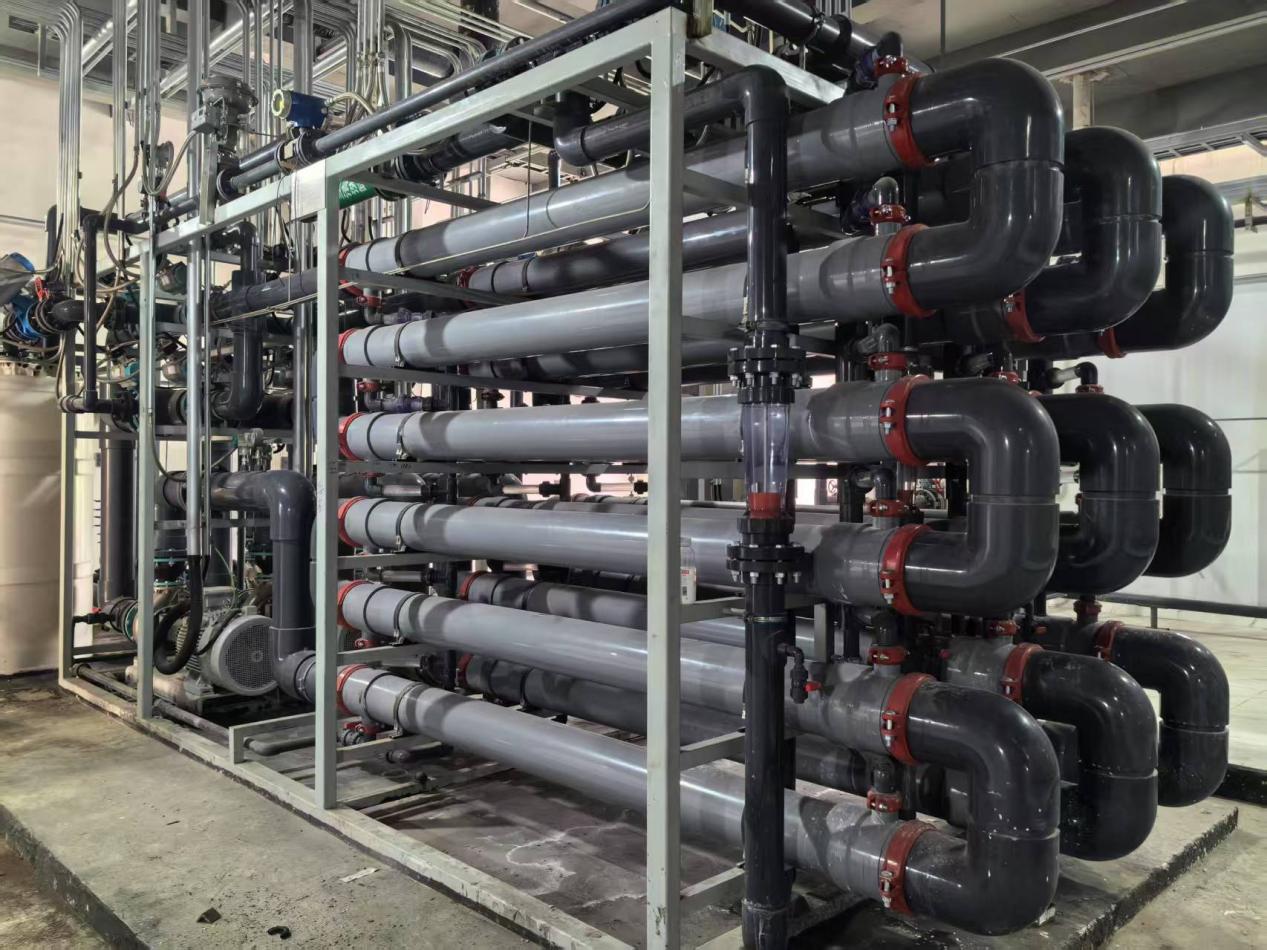
Existing project records, test data, and new-project guarantee values cannot replace one another. Flux, recovery, water quality, salt-fractionation performance, energy use, salt quality, and membrane life must be reassessed against the new-project duty.
ENGINEERING & SUPPLY BOUNDARY
The complete route can be discussed; responsibilities must be fixed item by item
Plum focuses on analysis, design, packaged systems, and commissioning support for membrane-process sections. Plant-wide facilities and final disposition follow the contract and project interfaces.
- Water analysis and preliminary route assessment for mine water and each concentrate stage
- Selection of softening, tubular membrane, NF, RO, and concentration sections
- Packaged membrane systems, circulation, CIP, instrumentation, and controls
- Sample testing, pilot validation, and scale-up support where required
- Membrane-section commissioning, training, and owner or EPC interface support
- Civil works, buildings, electrical supply, steam, compressed air, and utilities
- Evaporators, crystallizers, drying, packaging, and salt-product responsibility
- Mother liquor, sludge, by-product salts, solid waste, and final disposition route
- Plant-wide water and salt balance, total-system performance, and line-wide automation interfaces
- Division of work among the owner, engineering institute, EPC, and other equipment suppliers
PROJECT EVIDENCE
Use a real project record to demonstrate relevant membrane-section experience
This page publishes only the confirmed project capacity and application direction. Customer name, year, operating results, and salt-product data are not public. The photographs show related mine-water membrane systems and are not assigned to this 150 m³/h project record.
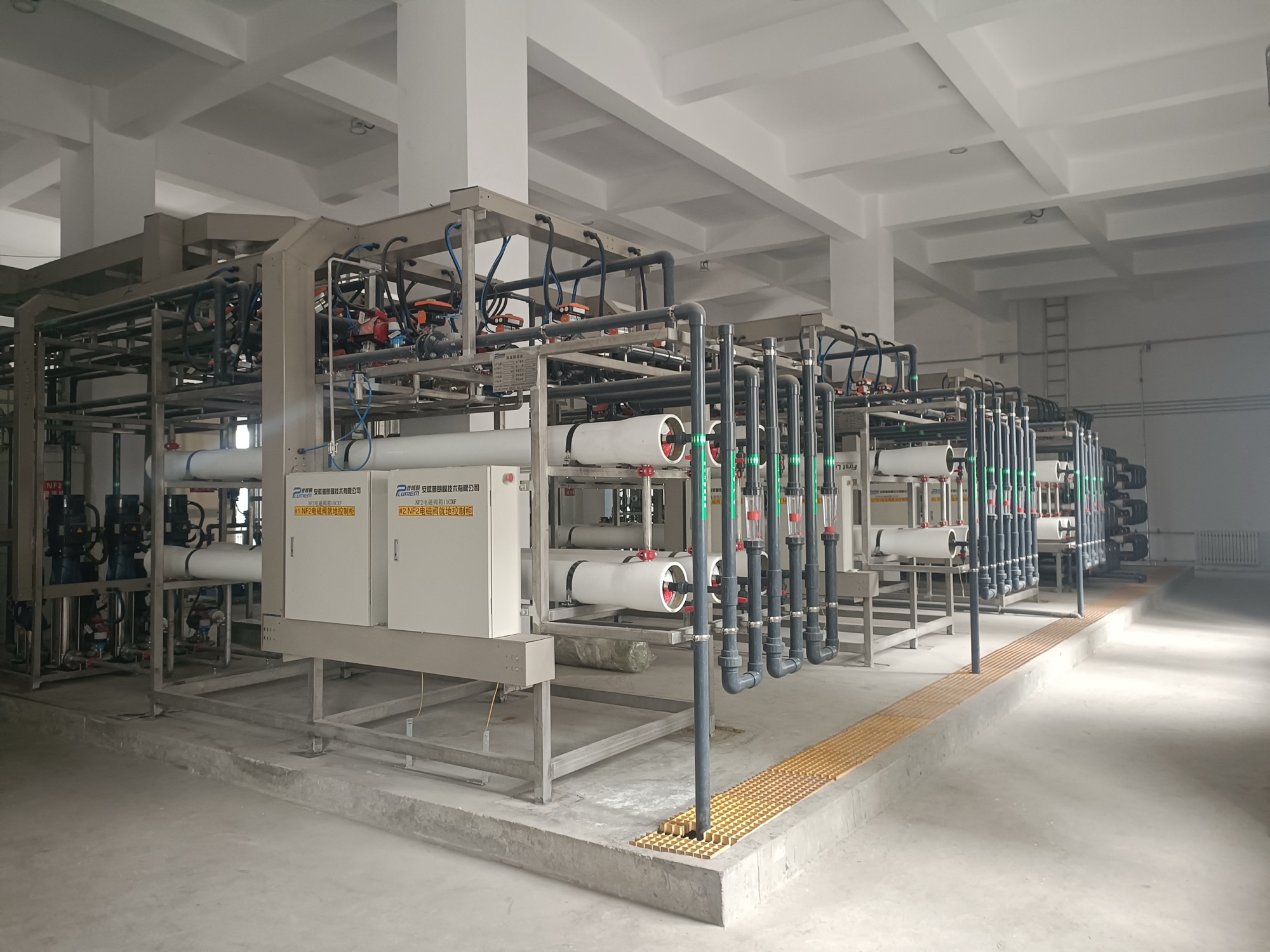
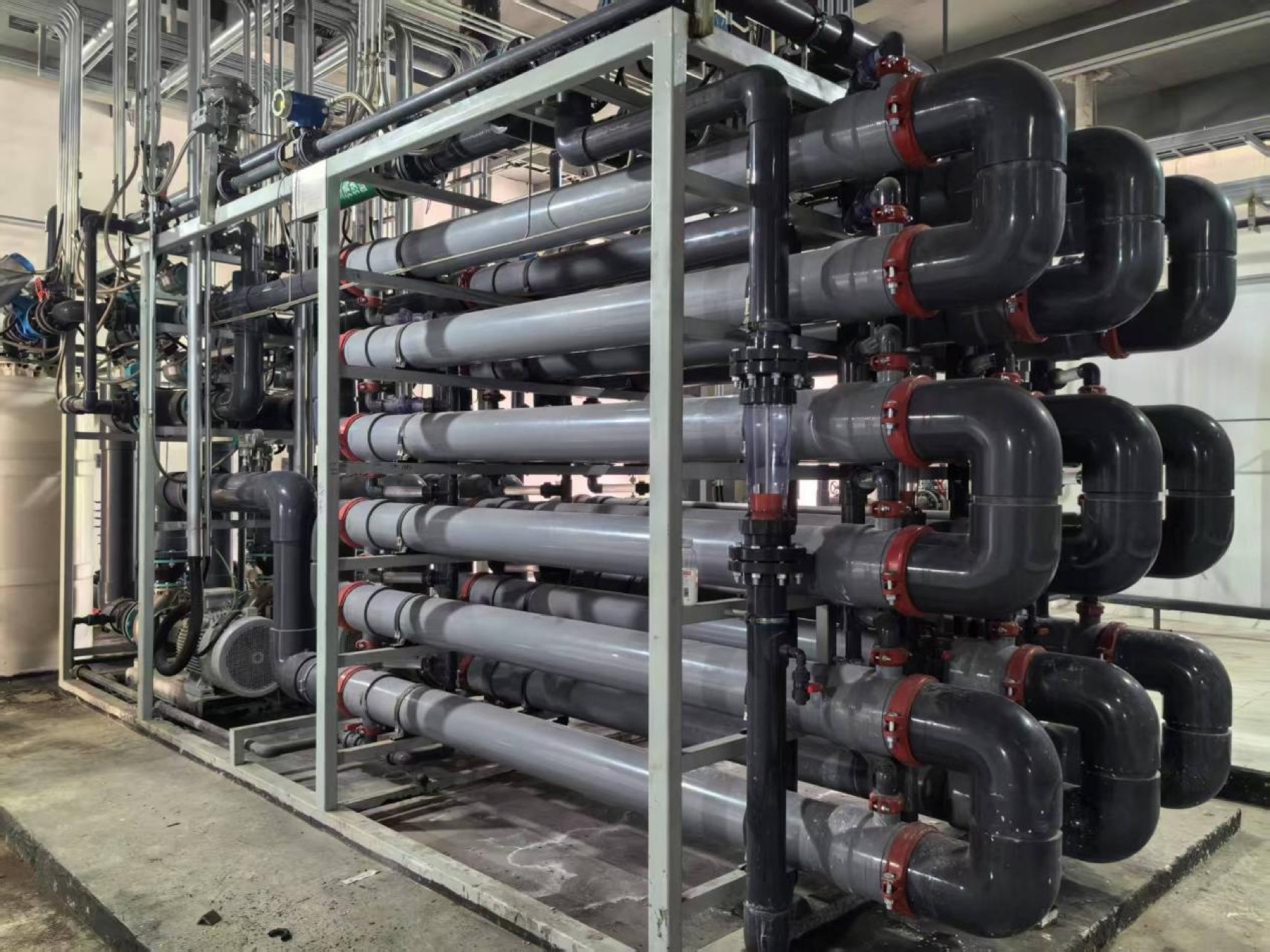
Mine-water reuse & ZLD project record
The project record documents Plum experience in mine-water reuse, softening and tubular membrane solids separation, and downstream desalination, salt-fractionation, and concentration interfaces. Equipment scope and operating performance are not expanded on this page.
This project capacity cannot be converted directly into membrane flux, recovery, water-quality, or supply guarantees for a new project. Each new project requires independent design against its water quality, flow, site conditions, and formal technical agreement.
PROJECT RESOURCES
Prepare mine-water project information
Route overviewIndustrial wastewater reuse, minimization & ZLD
Upstream processPEK softening process solution
ENGINEERING FAQ
Mine-water route frequently asked questions
Can mine water from different mining areas use the same treatment route?
No. Mine type, geology, source-mixing ratio, season, and existing treatment all affect suspended solids, hardness, silica, ionic composition, metals, and organic-fouling risks. Route screening must begin with actual analytical results.
Does every mine-water project require softening and a PEK tubular membrane?
No. Assess softening or other conditioning with tubular membrane separation only where hardness, silica, metal precipitates, or other reaction solids require control and downstream membrane sections need stable solids separation.
Does every mine-water ZLD project require selective NF for salt fractionation?
No. Selective NF depends on ionic composition, target salts, downstream crystallization or resource-recovery routes, and validated membrane selectivity. Salt fractionation is not a default configuration.
Does ZLD always require evaporation and crystallization?
It depends on the concentrate endpoint, regulations, resource-recovery conditions, and external disposition interfaces. Evaporation and crystallization may be one endpoint, but equipment scope and final responsibility require separate confirmation with the owner or EPC.
When is sample testing or pilot validation recommended?
Start with sample testing where the salt system is complex, silica or organic species are unclear, metal control, selective salt fractionation, or mother-liquor recovery is involved, or comparable project data are unavailable. Use pilot validation when continuous-operation and scale-up inputs are required.
Does Plum provide a complete turnkey mine-water ZLD plant by default?
No. Plum can support water analysis, route design, membrane-section selection, packaged systems, validation, commissioning, and engineering interfaces. Civil works, utilities, evaporation and crystallization, salt disposition, and total-system responsibility are confirmed per project.
Can data from the 150 m³/h project be used directly for a new project?
No. The capacity demonstrates experience with relevant process sections only. Existing project records, test data, and new-project guarantees have different conditions of applicability, and each new project must be redesigned against its own water quality, flow, objectives, and site boundaries.
SUBMIT MINE WATER DUTY
Submit mine-water duty for a preliminary route assessment
Provide raw-water and concentrate analyses, flow variability, the existing process, reuse destination, and concentrate endpoint. Plum will first review data completeness, then identify the membrane sections that can be assessed and the next step.
Submitted information is used only for preliminary project assessment. It does not constitute a commitment on treatment performance, recovery, salt-fractionation performance, salt quality, energy use, scope of supply, or delivery schedule.