
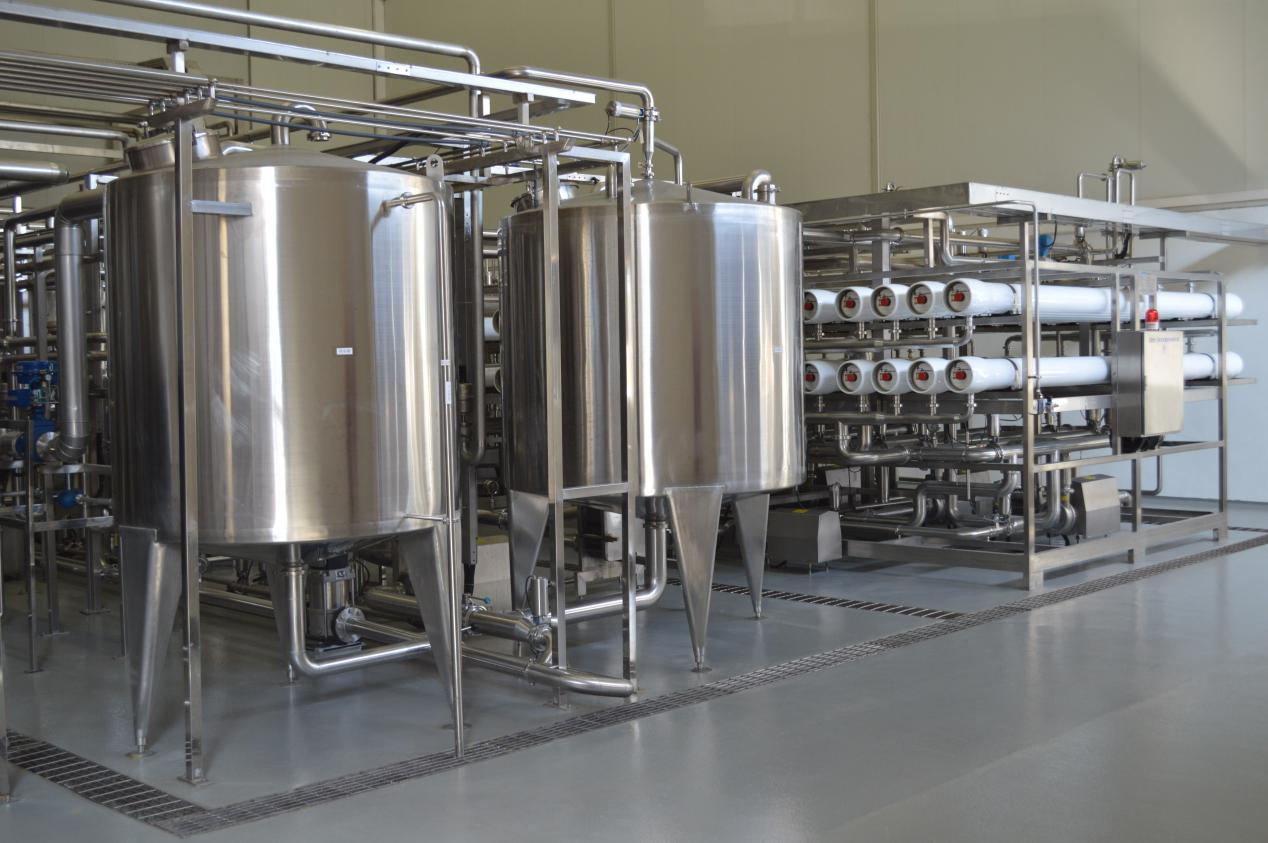
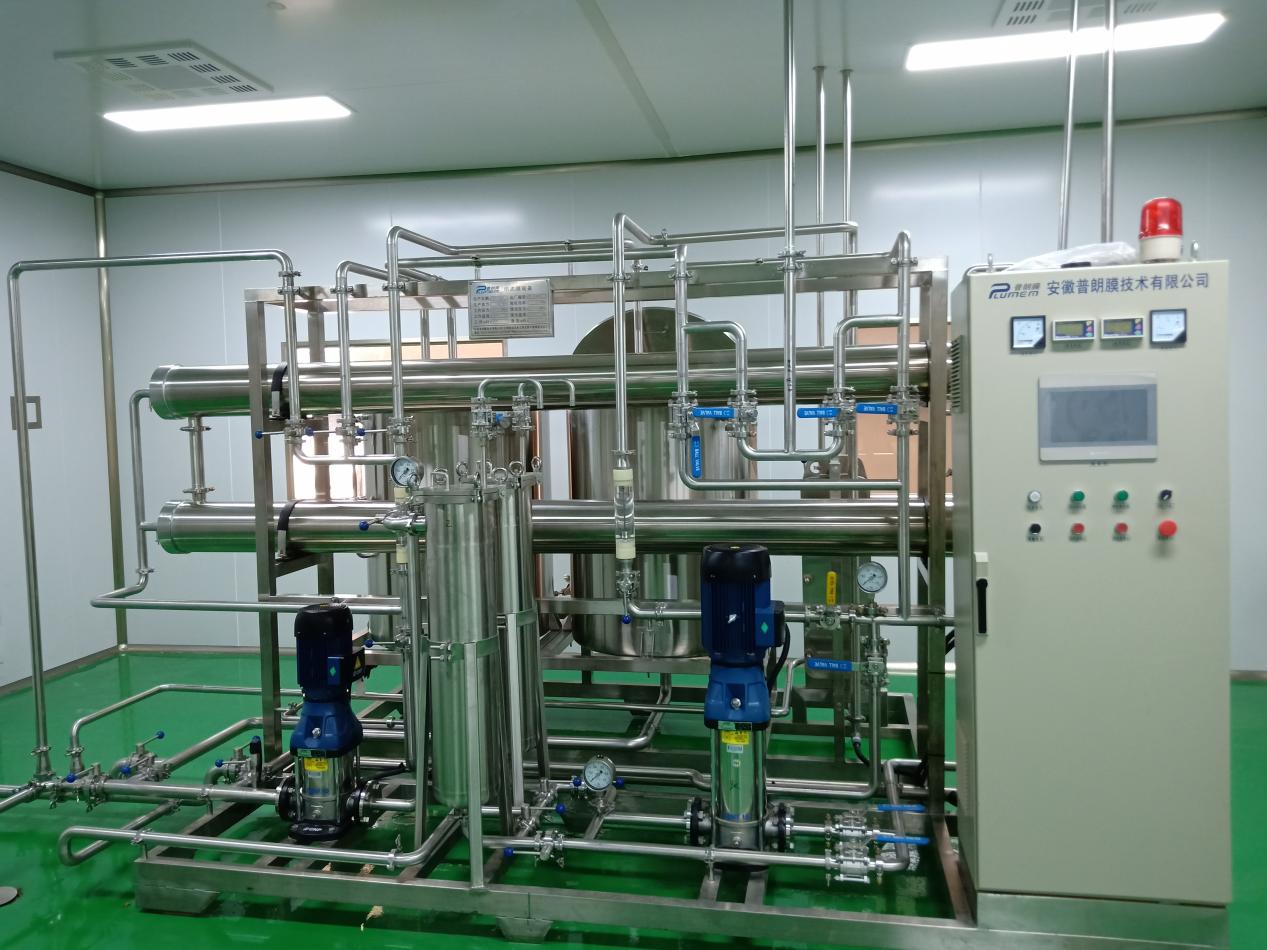
APPLICATION FIT
Define the feed and clear-juice target before selecting a tubular membrane clarification route
Juice clarification is more than lowering turbidity. Feed variety, ripeness, season, pectin and starch content, and product color and flavor targets all affect pretreatment, membrane retention grade, operating window, and cleaning method.
Suitable for initial assessment
Further confirmation required
- Fruit variety, ripeness, batch and seasonal variation, Brix, viscosity, pH, and temperature
- Pulp, pectin, starch, protein, turbidity, particle-size distribution, and whether enzymatic treatment or depectinization is required
- Targets and analytical methods for color, aroma, polyphenols, nutritional components, microorganisms, and clear-juice yield
- Concentrate use, product-loss boundary, food-contact requirements, CIP, and downstream process responsibilities
- Feed information
- Fruit variety, extraction method, ripeness, season, batch, and raw-juice photographs
- Feed data
- Brix, viscosity, pH, temperature, pulp, pectin, starch, protein, and turbidity
- Product targets
- Transmittance, turbidity, color, aroma, clear-juice yield, microorganisms, and downstream use
- Engineering boundary
- Throughput, operating hours, CIP, food-contact requirements, utilities, and concentrate destination
PROCESS ROUTE
Connect raw-juice preparation, cross-flow clarification, and downstream product sections in one route
The following is a base engineering logic for juice clarification. Enzymatic treatment is not a fixed step for every feed. Screen size, residence time, membrane concentration factor, and downstream treatment must be confirmed against the feed and product target.
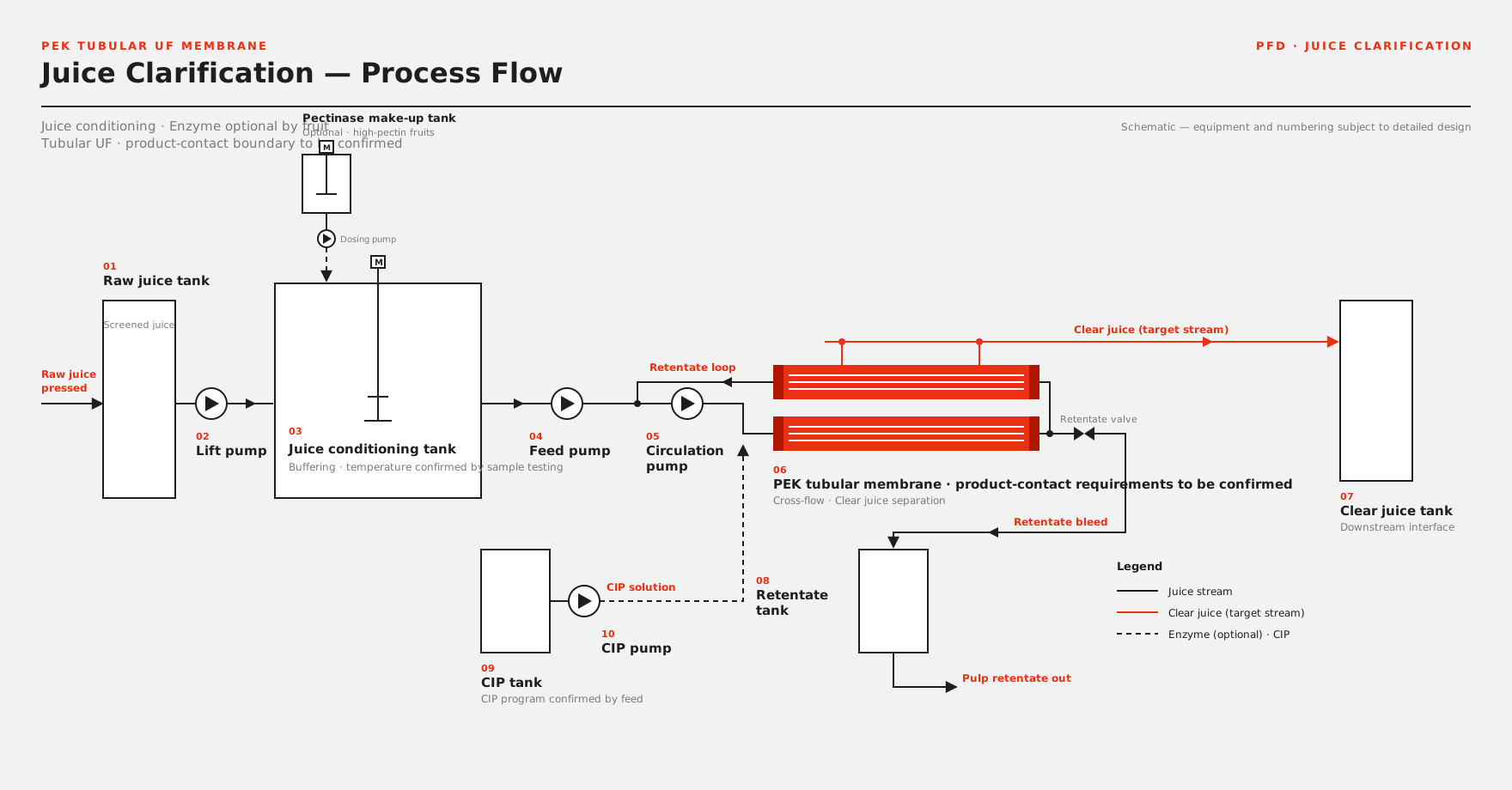
View the crawlable text process route
- 01 – Raw-juice screening and equalization – Remove seeds, peel, and abnormally large particles; stabilize batch, temperature, and feed conditions; and retain traceable feed and product samples.
- 02 – Enzymatic treatment or depectinization as required – Determine whether enzymatic treatment, depectinization, temperature adjustment, or other pretreatment is needed from pectin, starch, viscosity, and product requirements; no universal recipe is stated.
- 03 – Tubular membrane cross-flow clarification – Raw juice circulates through the membrane channels. The membrane section retains pulp, fiber, colloids, and macromolecular components matching the MWCO, while the permeate becomes clear juice.
- 04 – Route clear juice to downstream processing – According to the product route, clear juice enters concentration, pasteurization, fermentation, blending, filling, or further purification. Ultrafiltration is not assumed to perform every treatment duty.
- 05 – Close the concentrate and cleaning loop – Recycle the retained phase to the project-defined concentration endpoint, then recover, reuse, or dispose of it. Include CIP waste and product losses in the mass balance.
Core engineering principle:Tubular ultrafiltration performs clarification and macromolecule or particle separation. Concentration to increase sugar content, microbial inactivation, and small-molecule purification are different process duties and must be defined separately in the flowsheet and guarantee conditions.
SEPARATION DUTIES
Separate clarification, concentration, and sterilization duties
Whether a membrane can meet the product target depends on component size, membrane retention grade, and actual feed behavior. Possible retention must not be represented as absolute retention or removal for every juice.
- Primary retained components
- Macromolecular or particulate components such as pulp, fiber, pectin, starch, colloids, and some proteins can enter clarification assessment against MWCO and actual particle size.
- Components that may permeate
- Sugars, organic acids, and other small molecules normally pass with the clear juice. Distribution of pigments, aroma compounds, polyphenols, and nutritional components requires analytical confirmation and must not be described broadly as complete retention.
- Microbial boundary
- Suitable ultrafiltration can reduce microbial load matching the membrane retention boundary, but it must not be described as sterilization without challenge testing, integrity control, and process validation.
- Concentration boundary
- Ultrafiltration concentrates retained pulp and macromolecules; this is not the same as increasing product Brix. Sugar concentration requires evaporation, RO/NF, or another appropriate unit.
For new feeds with product-quality sensitivity, analyze raw juice, clear juice, and concentrate together to establish a closed data set for color, aroma, key components, clear-juice yield, and cleaning recovery.
PRODUCT TARGET & DATA BOUNDARY
Use public references for screening; validate product quality with samples
Existing tubular membrane material for juice provides transmittance and turbidity references for deciding whether further testing is justified. Clear-juice yield, flavor, color, nutritional components, microorganisms, and stability still require confirmation against the specific feed, analytical method, and product standard.
QUALITY SIGN-OFF
What this page can state and what the project must confirm
The page provides route screening and public screening references only. A formal proposal must define sampling points, analytical methods, stable operating period, product batches, and guarantee conditions.
- Clarity
- Public reference425 nm transmittance and turbidity can be used as preliminary screening references
- Clear-juice yield
- Public referenceNo universal recovery or product-loss commitment
- Color and flavor
- Public referenceLow-temperature physical separation can reduce additional heat exposure
- Microorganisms
- Public referenceAssess microbial-load reduction against the membrane retention boundary
- Operation and cleaning
- Public referenceCross-flow filtration with CIP configured for the feed
The “>98%” and “<0.6 NTU” values come from existing published material. They do not automatically become design values, guarantee values, or results applicable to every fruit variety.
MODULE SELECTION
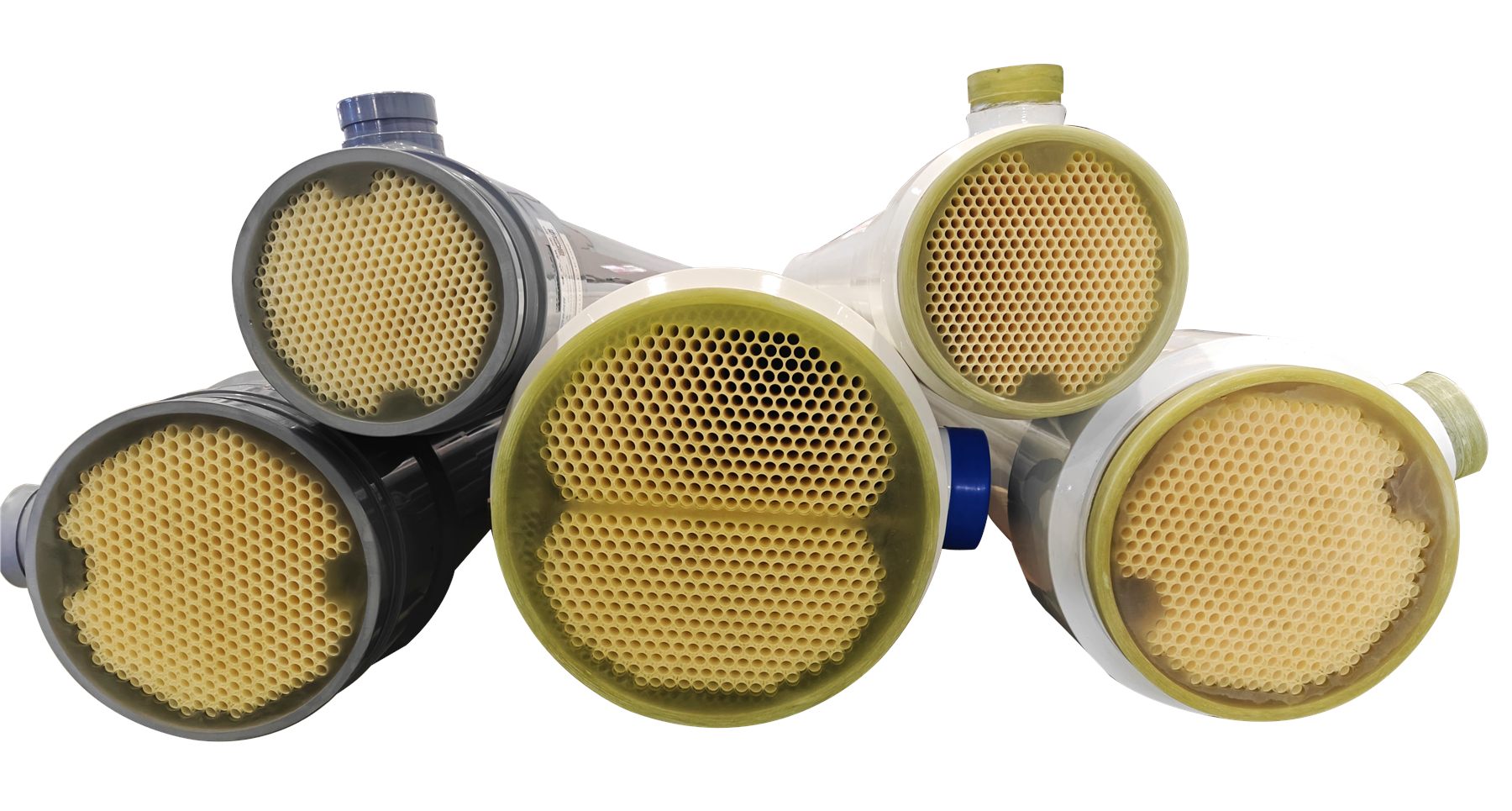
Start module selection with MWCO, channel, and product throughput
The following module and operating examples come from existing tubular membrane material for juice and are provided to help structure the design page. Final materials, membrane area, module quantity, hygienic configuration, and operating boundaries require confirmation in technical documents.
| Published model example | Channel | Module diameter | Module length | Nominal membrane area |
|---|---|---|---|---|
| PL-G-12.5103 | 12.5 mm | 3 inch / 76 mm | 10 ft / 3.05 m | 2.23 m² |
| PL-G-12.5123 | 12.5 mm | 3 inch / 76 mm | 12 ft / 3.66 m | 2.68 m² |
| PL-G-12.5124 | 12.5 mm | 4 inch / 101 mm | 12 ft / 3.66 m | 5.20 m² |
Models and membrane areas are examples from existing material and may change with tooling and product versions. Before formal publication, the technical team should verify model rules, module drawings, material lists, and public food-contact documentation.
PROCESS ROUTE SELECTION
One tubular membrane platform supports different product duties and validation priorities
Juice, fruit wine, condiments, and clarification-before-concentration can share a cross-flow separation concept, but they cannot share unvalidated flux, product quality, cleaning cycle, or guarantee values.
Fruit and vegetable juice tubular ultrafiltration clarification
- Applicable feed
- Apple, pear, grape, berry, tropical-fruit, citrus, and other raw juices containing pulp, pectin, and colloids.
- Primary objective
- Produce project-defined clear juice and provide stable feed to downstream concentration, sterilization, fermentation, or filling.
- Validation priorities
- Clarity, clear-juice yield, key quality parameters, flux decline, and cleaning recovery.
Fruit wine, vinegar, and soy-sauce clarification
- Applicable feed
- Fruit wine, fermented vinegar, soy sauce, and other food-process fluids requiring removal of colloids, particles, and macromolecular impurities.
- Key differences
- Alcohol, salinity, protein, pigment, aroma, and microbial objectives differ, so materials and product quality require separate confirmation.
- Validation priorities
- Sensory properties and key components, product loss, hygienic design, CIP, and downstream stabilization responsibility.
Clarification + concentration / purification
- Applicable feed
- Projects that require higher Brix, small-molecule separation, or a high-purity product route after clear-juice clarification.
- Key differences
- Tubular ultrafiltration first removes particles and macromolecules; downstream NF, RO, evaporation, or other units then perform the remaining duty.
- Validation priorities
- Line-wide mass balance, product quality, membrane-section interfaces, concentration endpoint, energy use, and by-product destinations.
For a new fruit, formulation, or high-value product, begin with bench testing to establish retention curves and quality comparisons before deciding whether to proceed to continuous pilot validation and engineering scale-up.
SOLUTION SCOPE
Define the membrane section, food-process interfaces, and owner responsibilities separately
The juice clarification process solution does not automatically include the complete beverage production line. Pretreatment, sterilization, concentration, aseptic filling, product formulation, and food-regulatory responsibilities must be allocated item by item in the formal proposal.
Core tubular membrane section
- Membrane-feed conditions, tubular membrane modules, rack, and cross-flow circulation pumps
- Clear juice, concentrate, CIP, pressure, flow, temperature, and level controls
- Sampling points, cleaning interfaces, basic automation, and internal equipment piping
Optional engineering scope
- Screening, equalization, enzymatic treatment, depectinization, temperature adjustment, and raw-juice storage
- Clear-juice tank, concentrate recovery, NF/RO, evaporation, pasteurization, or other downstream units
- Hygienic material upgrades, cleaning in place, hot-water or chemical sanitization, and validation equipment
Owner / EPC interfaces
- Feed and product standards, food-contact and local regulations, laboratory analysis, and product approval
- Building, drainage, utilities, upstream juice extraction, and downstream blending, filling, or storage
- Enzyme and cleaning-agent selection, waste-liquid destination, line-wide interlocks, and production validation
Final scope, product-contact materials, clear-juice parameters, testing responsibilities, product loss, CIP, sterilization, and downstream interfaces follow the mutually approved technical and commercial documents.
FEED APPLICATIONS
Define applicable feeds from fruit composition and product route
The applications below can enter sample screening, but different fruits, ripeness levels, enzymatic treatments, and product standards cannot share one MWCO, operating flux, cleaning cycle, or clear-juice quality commitment.
Apple and pear juice
Review pectin, starch, enzymatic-treatment conditions, browning control, transmittance, and downstream concentration or filling objectives.
Grape and hawthorn juice
Assess colloids, pigments, polyphenols, aroma, wine-base or beverage use, and the product value of both clear juice and concentrate.
Strawberry and berry juice
Assess pulp, seeds, pectin, natural pigments, and heat-sensitive components, using tests to balance clarity and product quality.
Pineapple, mango, and passion fruit
For higher pulp loading, fiber, viscosity, and aroma targets, review screening, enzymatic treatment, channel size, and concentrate destination.
Citrus juice
Assess clarification against pulp, pectin, bitterness-related components, and product route. Debittering or small-molecule separation requires a matching process.
Fruit wine and condiment fluids
Fruit wine, vinegar, and soy sauce can enter assessment as adjacent food-process fluids, but salinity, alcohol, color, flavor, and microbial boundaries require separate confirmation.
PROJECT EVIDENCE
Support route screening with direct juice and adjacent food-process references
Customer names remain anonymous. The grape-juice project is the direct juice reference on this page; fruit-wine and condiment projects are shown as adjacent food-process experience. Product-quality and cost conclusions not approved in the existing material are not extended on the page.
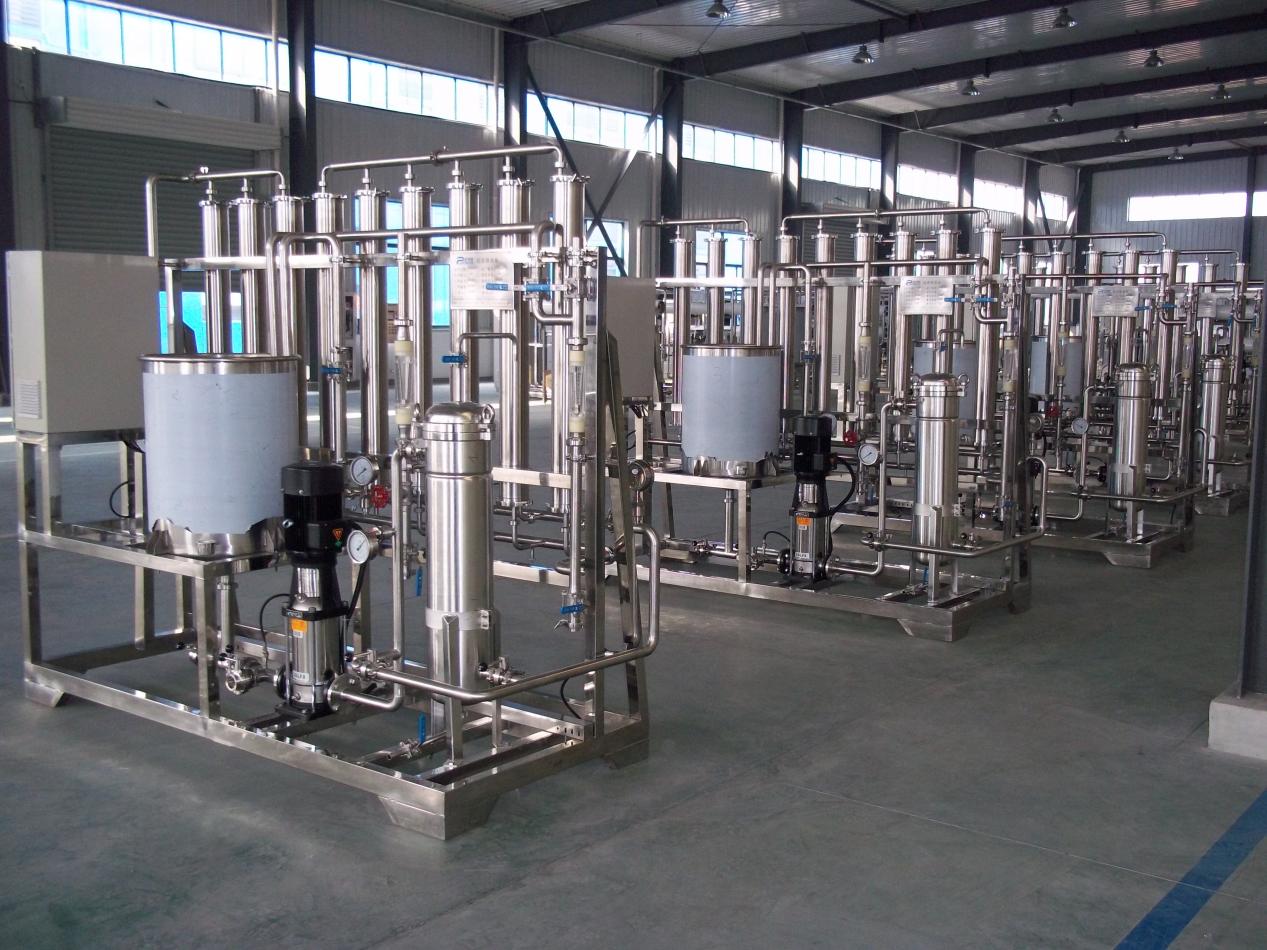
GRAPE JUICE · DIRECT PROJECT RECORD
0.5 m³/h grape-juice ultrafiltration clarification project
- Feed
- Grape juice
- Process
- Ultrafiltration clarification
- Throughput
- 0.5 m³/h
- Year
- Completion record: 2014

FRUIT WINE · ADJACENT FOOD-PROCESS RECORD
3 m³/h jujube-wine ultrafiltration clarification project
- Feed
- The public record identifies jujube wine; the project title also references pomegranate wine
- Process
- Ultrafiltration clarification
- Throughput
- 3 m³/h
- Year
- Completion record: 2010

CONDIMENTS · ADJACENT FOOD-PROCESS RECORD
≥120 m³/h soy-sauce / vinegar ultrafiltration clarification project
- Feed
- Soy sauce and vinegar
- Process
- Continuous ultrafiltration clarification
- Throughput
- Total throughput at least 120 m³/h
- Year
- Completion record: 2012
Before formal external use, verify the relationship between the three images and project records, public image rights, and disclosure scope. Throughput and year apply only to the respective projects.
RELATED RESOURCES
Selection and validation resources
PRODUCTView PEK tubular membrane details
VALIDATIONView sample testing and pilot-validation capability
FAQ
Juice clarification frequently asked questions
Can juice clarification be designed using one fixed flux?
No. Fruit variety, ripeness, Brix, viscosity, pulp, pectin, temperature, pretreatment, and product target all affect flux and cleaning recovery. A new feed should first establish an operating window through sample testing before engineering scale-up.
Can tubular membranes directly eliminate diatomaceous earth, filter presses, or chemical clarification?
Replacement or simplification can be assessed for suitable feeds, but it is not a universal conclusion. Compare the existing process, product quality, clear-juice yield, consumables and waste, hygienic requirements, operating stability, and total cost before deciding.
How do juice clarification, concentration, and purification differ?
Tubular ultrafiltration primarily removes particles, colloids, and some macromolecules to produce clear juice. Concentration to increase Brix is normally performed by evaporation, RO/NF, or another process. Small-molecule separation or a high-purity product route requires appropriate purification units.
Is ultrafiltration clarification equivalent to sterilization?
No. A membrane can reduce microbial load matching its retention boundary, but a formal sterilization or aseptic claim requires challenge testing, integrity control, hygienic design, and complete process validation, with downstream sterilization and filling responsibilities defined.
Are transmittance >98% and turbidity <0.6 NTU guarantee values?
No. These are public screening references from existing material and do not automatically become guarantees for a new project. Formal values require confirmation against raw juice, pretreatment, membrane specification, sampling point, analytical method, stable operating period, and sample tests.
What information is required for a preliminary assessment?
Provide the fruit variety, raw-juice photographs and sample, throughput, Brix, viscosity, pH, temperature, pulp, pectin, starch, protein, turbidity, existing process, clear-juice quality target, downstream use, CIP conditions, and food-contact requirements.
FRUIT JUICE PROJECT EVALUATION
Submit juice-feed information for a preliminary clarification route
Provide the fruit variety, Brix, viscosity, pH, temperature, pulp or pectin, turbidity, existing process, target clear-juice values, and downstream use where possible. Raw-juice analysis, process diagrams, and product standards can be uploaded.
Submitted information is used only for preliminary project assessment. Final membrane selection, operating parameters, product quality, food-contact requirements, scope, and guarantee conditions require sample validation and formal technical documents.