
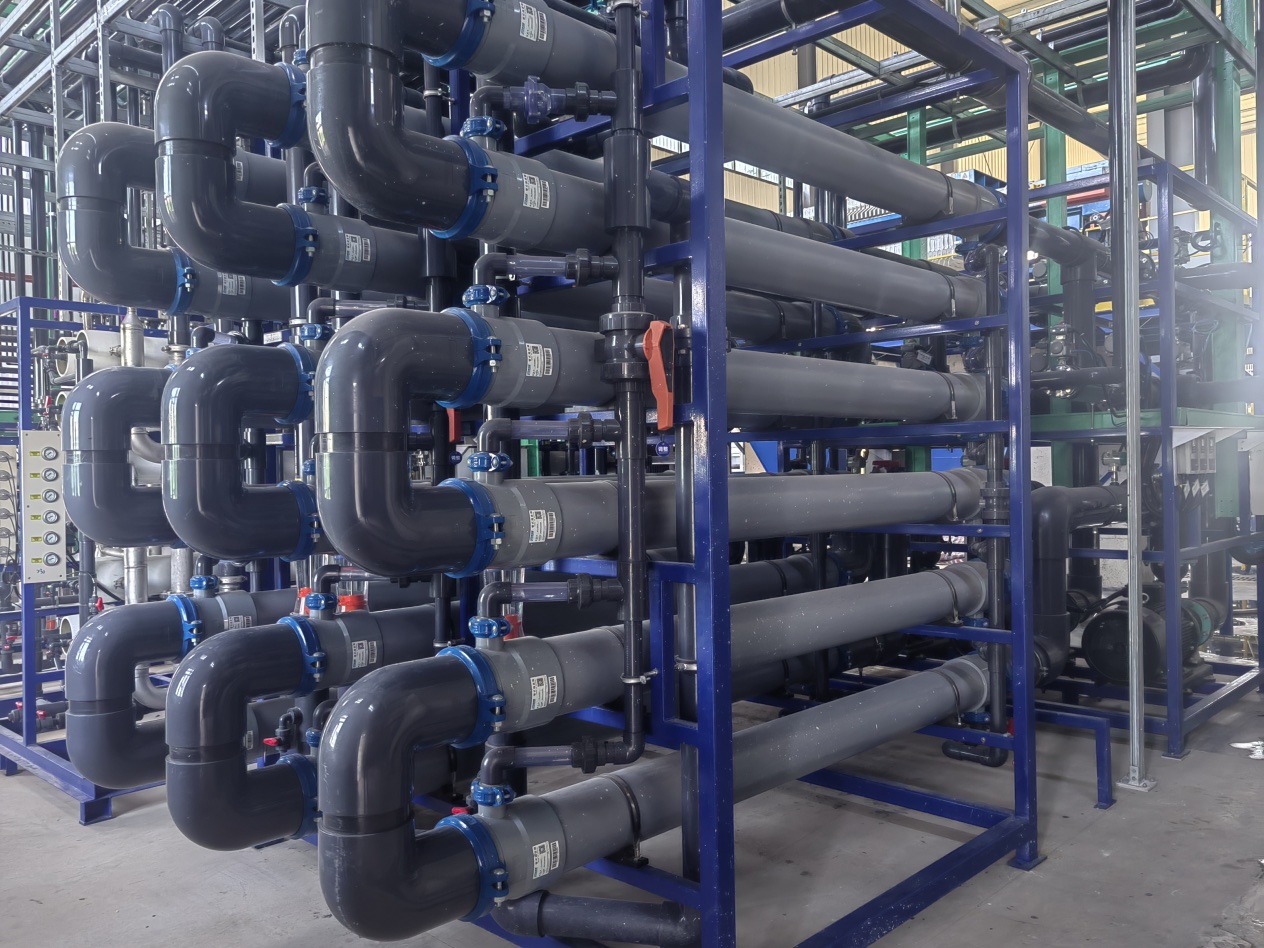
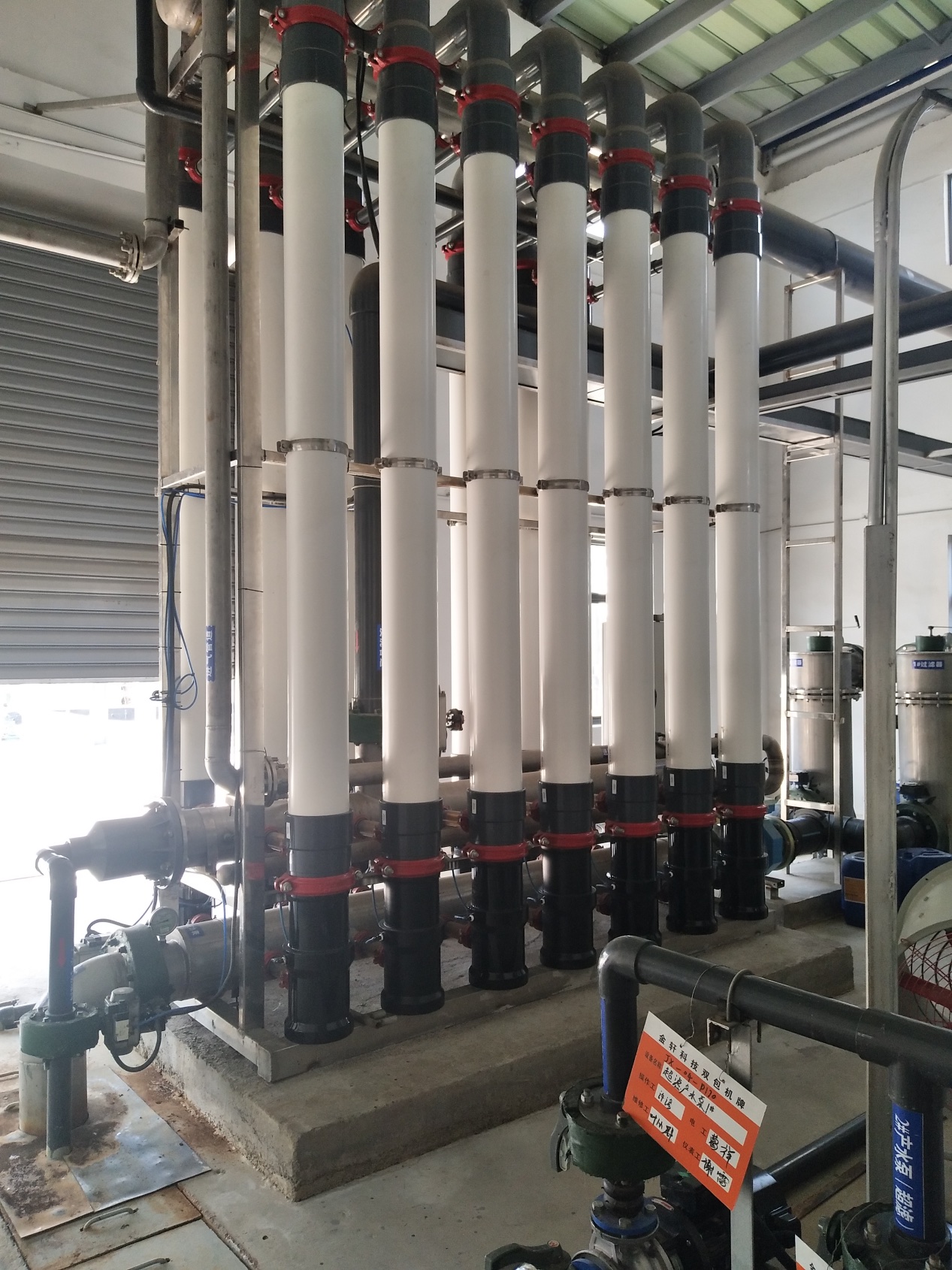
APPLICATION FIT
Confirm anaerobic conversion before assessing membrane separation and resource recovery
Anaerobic Tubular MBR (AnMBR) combines anaerobic biological reaction with external tubular membrane solids separation. It is a candidate for high-strength wastewater with biodegradable organic loading, but not every high-COD wastewater will produce usable biogas or meet final discharge requirements directly.
Suitable for initial assessment
Further confirmation required
- Total COD, soluble COD, biodegradable fraction, VFA, alkalinity, and potential toxic inhibitors
- Temperature, pH, ammonia nitrogen, sulfate, salinity, fats and oil, suspended solids, and load variation
- Reactor type, sludge activity and filterability, startup conditions, recycle, and sludge-wasting strategy
- Biogas desulfurization, storage, flare or use plus explosion protection, ventilation, and local safety requirements
- Organic loading
- Flow, total/soluble COD, BOD, VFA, variability, and biodegradability
- Anaerobic conditions
- Temperature, pH, alkalinity, ammonia nitrogen, sulfate, salinity, and inhibitors
- Sludge and membrane section
- MLSS, particle properties, viscosity, filterability, circulation, and cleaning conditions
- Resources and effluent
- Biogas use, nitrogen removal, polishing, discharge, or reuse objectives
PROCESS ROUTE
Anaerobic conversion, external membrane separation, and sludge return form a continuous system
This is the basic engineering route. Reactor type, pretreatment, membrane trains, circulation pumps, recycle location, gas treatment, and downstream process require detailed design against water quality, capacity, energy conditions, and safety requirements.
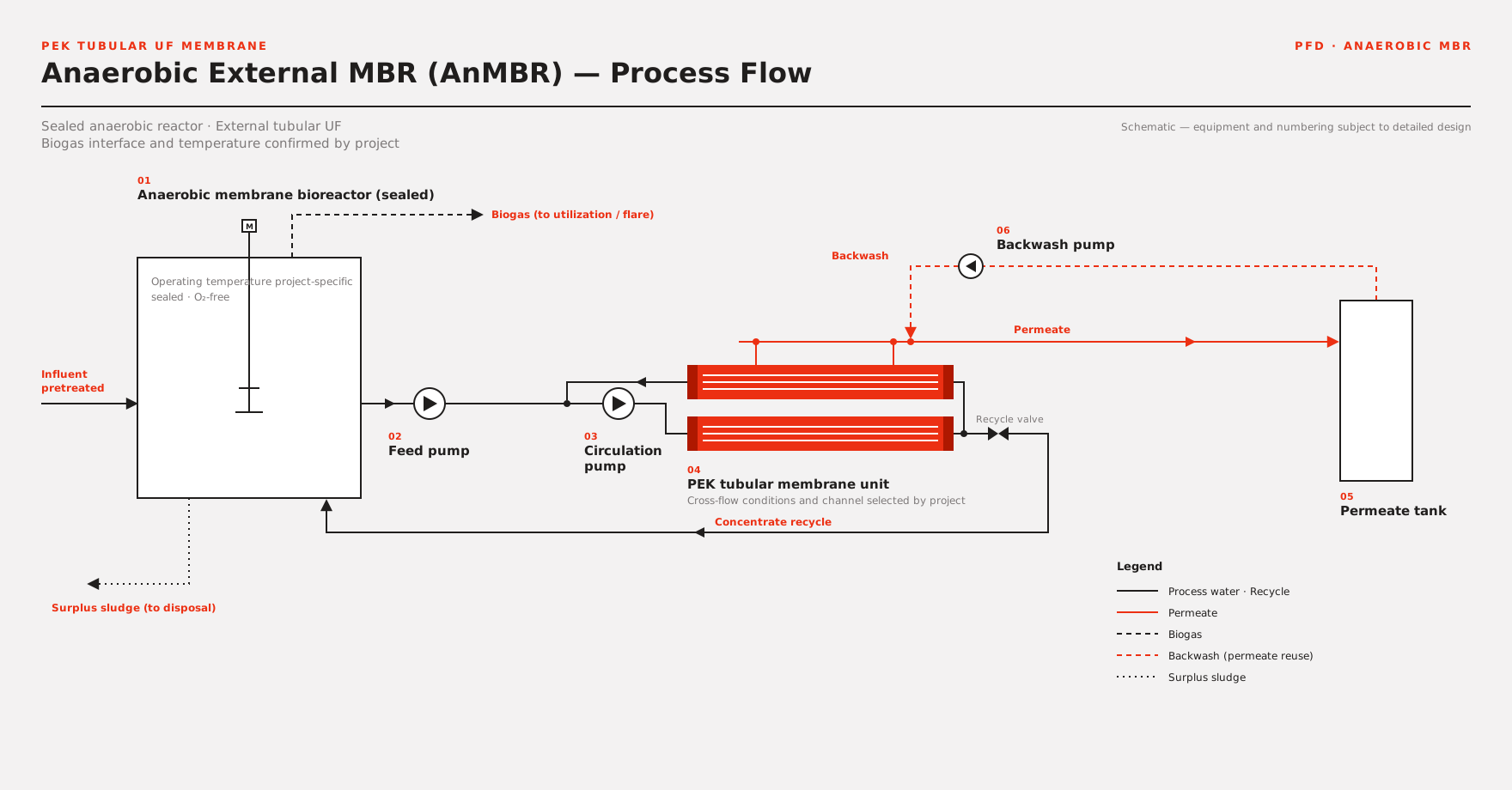
View the crawlable text process route
- 01 – Equalization and required pretreatment – Buffer flow and load variation and provide upstream measures for fats, fibers, coarse particles, temperature, or inhibitors as required.
- 02 – Anaerobic biological reaction – Convert biodegradable organics under suitable temperature, pH, alkalinity, and organic loading and generate collectable biogas.
- 03 – External membrane circulation – Reactor mixed liquor enters the tubular membrane loop. Circulation conditions depend on sludge properties, channel, hydraulic loss, and membrane-train configuration.
- 04 – Membrane solids separation – The tubular membrane retains anaerobic sludge, suspended solids, and particles. Permeate enters downstream treatment or the project-defined effluent route.
- 05 – Sludge and resource loop – Return concentrated sludge to the anaerobic reactor. Route biogas to desulfurization, storage, flare, or utilization and waste excess sludge according to mass balance.
Core engineering principle:The anaerobic reactor determines organic conversion and biogas generation; the tubular membrane separates biomass from membrane permeate. Compliance for ammonia nitrogen, salinity, and refractory COD still depends on the complete process and downstream treatment.

REACTION, SEPARATION & RESOURCE
Define anaerobic reaction, membrane separation, and biogas use separately
AnMBR performance comes from coordination among biological reaction, membrane circulation, and the resource loop. Separate responsibilities are necessary to interpret COD removal, sludge concentration, membrane flux, biogas production, and final effluent correctly.
- Anaerobic reaction
- Anaerobic microorganisms convert biodegradable organics. Organic loading, temperature, pH, alkalinity, inhibitors, and sludge activity define the reaction boundary.
- Membrane separation
- External tubular membranes retain anaerobic sludge, suspended solids, and particles, supporting biomass retention and independent HRT and SRT management.
- Resource loop
- Determine biogas quantity and methane quality from biodegradable COD, reactor condition, and measured gas data before designing desulfurization, storage, or utilization.
- Downstream treatment
- Ammonia nitrogen, total nitrogen, salts, color, and refractory organics may require aerobic, membrane, or other polishing treatment.
The tubular membrane does not generate biogas by itself and does not automatically remove all soluble COD, ammonia nitrogen, or salts. Final performance responsibility must be defined across the complete process boundary.
ENGINEERING BOUNDARY
Public data supports engineering screening and is not a new-project guarantee
General brochure references, existing project operating data, and new-project guarantee values are different evidence levels. This page retains approved public references while stating all applicability conditions and project-specific items.
| Engineering item | Current public reference | Project-specific confirmation |
|---|---|---|
| Organic loading | 15–30 kg COD/m³·d Public reference | Determine from reactor type, temperature, biodegradable fraction, sludge activity, inhibitors, residence time, and startup conditions |
| COD removal | Public reference above 98% in applicable designs | Define total/soluble COD, influent and effluent sampling points, analytical methods, stable period, and complete process boundary |
| Membrane operating flux | No universal design value | Recorded flux applies only to the corresponding project; establish new-project values from sludge, temperature, viscosity, filterability, circulation, and validation results |
| Biogas and methane | No universal gas-production guarantee | Calculate mass and energy balances from biodegradable COD, BMP or measured data, reactor condition, gas losses, and methane quality |
| Membrane permeate and downstream treatment | No universal ammonia, salinity, or final-compliance commitment | Configure nitrogen removal, aerobic treatment, NF/RO, oxidation, or other polishing according to anaerobic-effluent characteristics |
| Energy use, sludge, and membrane life | No universal commitment | Affected by system scale, circulation, temperature control, gas use, fouling load, cleaning, and O&M conditions |
Formal technical documents must list design conditions, design values, guarantee values, analytical methods, sampling locations, assessment period, biogas-system boundaries, and exclusions separately.
MBR ROUTE SELECTION
Select the biological process before the membrane circulation route
Cross-flow, air-lift, and anaerobic MBR differ by more than circulation. AnMBR first requires wastewater suitable for anaerobic conversion plus viable biogas, safety, and downstream-treatment conditions.
External Cross-Flow Tubular MBR
- Biological process
- Primarily aerobic or project-defined biological treatment with external pump-driven cross-flow circulation.
- Screening profile
- High MLSS, high load, high suspended solids, or significant feed variability.
- Public reference
- MLSS 12–40 g/L; other parameters are project-specific.
Air-Lift Tubular MBR
- Biological process
- Aerobic biological treatment combined with external tubular membrane separation driven by gas-liquid lift.
- Screening profile
- Moderate MLSS where air-lift circulation may match system hydraulics and sludge conditions.
- Public reference
- MLSS 8–12 g/L; aeration, circulation, and membrane area are project-specific.
Anaerobic Tubular MBR (AnMBR)
- Biological process
- Anaerobic biological reaction combined with external tubular membrane solids separation.
- Screening profile
- High-strength biodegradable organic wastewater with conditions for biogas recovery or safe handling.
- Public reference
- Organic loading 15–30 kg COD/m³·d; COD removal above 98% in applicable designs.
Final route selection may require biodegradability, BMP, sludge activity, filterability, or pilot validation and cannot rely only on total COD and industry name.
SOLUTION SCOPE
Define anaerobic reaction, membrane circulation, biogas system, and site interfaces separately
The following supports preliminary assessment and detailed design. It does not mean every project automatically includes all reactors, gas utilization, safety facilities, civil works, installation, or plant-wide performance responsibility.
Core membrane-circulation section
- Tubular membrane modules, racks, feed, and cross-flow circulation pump sets
- Permeate, concentrated-sludge return, discharge, and CIP circuits
- Pressure, flow, temperature, level, and other instrumentation and control interfaces
Optional engineering scope
- Anaerobic-reactor review, equalization, pretreatment, and temperature control
- Biogas collection, desulfurization, storage, flare, or utilization interfaces
- Downstream aerobic, nitrogen-removal, NF/RO, or polishing interfaces
Owner / EPC interfaces
- Civil tanks, buildings, site piping, and utilities
- Hazardous-area classification, ventilation, fire protection, gas detection, and local permits
- Sludge and CIP-waste routing, installation, and plant-wide interlocks
Final scope, anaerobic-performance responsibility, membrane-separation guarantee, biogas-system boundary, safety responsibility, design responsibilities, and interface conditions follow mutually approved technical and commercial documents.
APPLICATION ROUTES
Define applications around biodegradable organic loading and resource objectives
The industries below can enter preliminary assessment, but cannot share one organic loading, COD removal, flux, gas production, startup period, or downstream route.
Dairy and food processing
Assess proteins, fats, temperature, cleaning wastewater, and biodegradable organic loading and review fat or fiber pretreatment.
Alcohol distillation and brewing
Configure anaerobic and membrane-separation routes around concentrated biodegradable organics, temperature, nutrients, and biogas-use conditions.
Sugar, fruit and vegetable, and high-sugar wastewater
Address rapid acidification, VFA, alkalinity, load variation, and particulates instead of selecting a reactor by total COD alone.
Biological fermentation and enzyme production
Review complex organics, salinity, inhibitors, batch discharge, and sludge filterability; validate where required.
Pharmaceutical and API wastewater
Identify inhibitors such as toxicity, antibiotics, or solvents before assessing anaerobic biodegradability and downstream polishing.
Digestate and suitable high-COD industrial streams
Includes livestock digestate and validated anaerobically treatable streams such as pulp and paper fluids, with focus on ammonia nitrogen, color, salinity, and refractory components.
PROJECT EVIDENCE
Support preliminary screening with real capacities, influent/effluent data, and resource records
Customer names remain anonymous. Recorded COD, ammonia nitrogen, color, membrane flux, and biogas production apply only to the corresponding project and do not establish new-project design or guarantee values.
Site image for this project is not public
ANAEROBIC DIGESTATE · PUBLIC PROJECT RECORD
500 m³/d AnMBR for anonymous livestock digestate in Henan
- Influent
- COD 15,000–20,000 mg/L; NH₃-N 1,200 mg/L; MLSS 12,000–16,000 mg/L
- Effluent
- COD below 250 mg/L; NH₃-N below 40 mg/L
- Membrane section
- Cross-flow approximately 2.0 m/s; recorded flux 35–45 LMH
- Resource record
- Biogas approximately 0.8 Nm³/m³ wastewater; this project record only
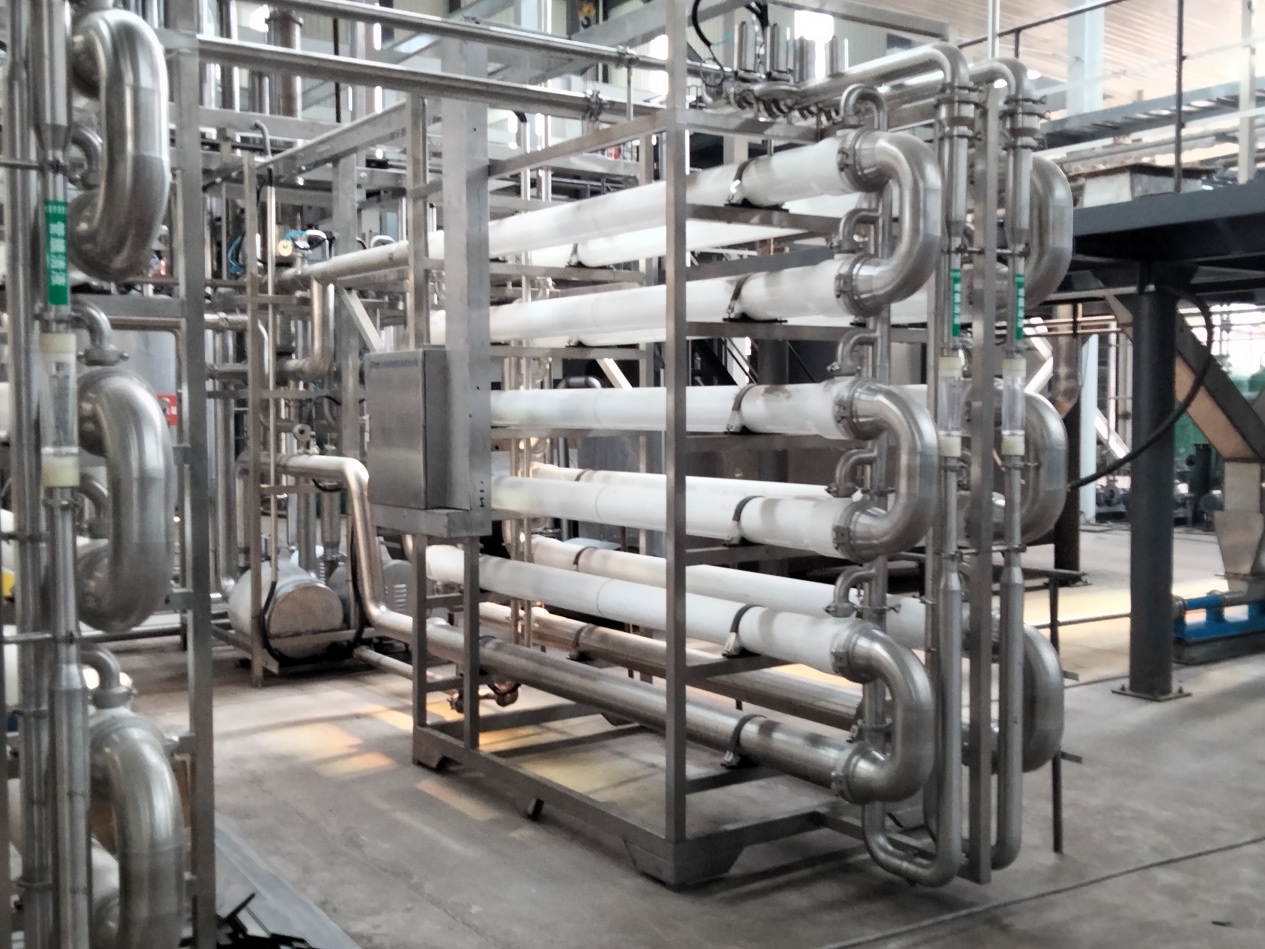
PULPING BLACK LIQUOR · PUBLIC PROJECT RECORD
700 m³/d AnMBR for black liquor at an anonymous paper mill
- Influent
- COD 30,000–35,000 mg/L; pH approximately 9.5; MLSS 10,000–14,000 mg/L
- Effluent
- COD below 300 mg/L; color removal above 80%
- Membrane section
- Cross-flow approximately 1.8 m/s; recorded flux 28–38 LMH
- Resource record
- Biogas approximately 0.7 Nm³/m³ wastewater with CH₄ above 60%; this project record only
Project data comes from existing public material. Complete process boundaries, sampling points, analytical methods, image rights, and quantitative values require review before formal publication. Recorded gas production or flux must not be applied to other projects.
RESOURCES
Selection resources and next steps
ProductPEK tubular membrane details
Public resourceTubular membrane brochure
Project preparationProject evaluation worksheet
TECHNICAL FAQ
Anaerobic Tubular MBR frequently asked questions
What do the anaerobic reactor and tubular membrane each do?
The anaerobic reactor converts biodegradable organics and generates biogas under suitable conditions. The tubular membrane retains anaerobic sludge, suspended solids, and particles and produces membrane permeate. The membrane element does not perform the anaerobic reaction or generate biogas by itself.
Can 15–30 kg COD/m³·d and COD removal above 98% be used directly as design guarantees?
No. They are public brochure screening references. Actual organic loading and removal require reactor type, temperature, biodegradable fraction, inhibitors, sludge activity, residence time, sampling, and analytical boundaries.
Can AnMBR permeate meet discharge or reuse requirements directly?
Not by default. Ammonia nitrogen, total nitrogen, salts, color, and refractory soluble COD in anaerobic effluent may still require aerobic treatment, nitrogen removal, NF/RO, oxidation, or other polishing.
Can biogas production be committed directly from influent COD?
No. Biogas quantity and methane quality depend on biodegradable COD, BMP or measured data, reactor condition, temperature, inhibitors, gas dissolution, and losses. Recorded gas production applies only to the corresponding project.
When should AnMBR be selected instead of cross-flow or air-lift MBR?
AnMBR is assessed first for high-strength biodegradable organic wastewater and resource-recovery objectives. Cross-flow and air-lift routes mainly address aerobic biology with different MLSS and circulation conditions. Selection begins with the biological process, not membrane circulation alone.
What data is required and what does the process solution typically include?
Provide at least flow and variation, total/soluble COD, BOD, VFA, alkalinity, temperature, pH, ammonia nitrogen, sulfate, salinity, fats, SS, inhibitors, existing anaerobic system, sludge, and biogas-use objective. The solution scope first defines tubular membrane circulation, permeate, recycle, CIP, instrumentation, and controls; reactor and gas-system scope is project-specific.
ANMBR PROJECT EVALUATION
Submit organic loading, anaerobic conditions, and resource objectives for preliminary AnMBR assessment
Upload water analysis, existing flowsheet, anaerobic operating records, and biogas-use requirements where possible. The engineering team will assess biodegradability, anaerobic-reaction boundaries, membrane-loop suitability, downstream-treatment needs, and whether BMP, sludge testing, or pilot validation is recommended.
Submitted information is used only for preliminary project assessment. Final anaerobic route, membrane area, flux, biogas production, energy use, treatment performance, scope, and guarantee conditions are defined in the formal technical documents.