PEK PRETREATMENT TECHNOLOGY
PEK Tubular Membrane Pretreatment & Solid-Liquid Separation
Combine project-specific chemical conditioning, cross-flow circulation, and fouling-tolerant solids separation to remove reaction solids, suspended matter, and compatible foulants from complex water or process fluids, establishing a stable interface for downstream NF, RO, MBR, or resource-recovery operations.
This page explains technology duties and engineering interfaces. PEK product specifications remain on the product page, while softening, oil removal, and heavy-metals removal are defined in their respective process solutions.
APPLICATION FIT
Six risk groups warrant early PEK pretreatment screening
These are engineering screening dimensions, not one feed-water definition. Suitability still requires review of contaminant form, conditioning reactions, temperature, pH, cleaning, and downstream objectives.
REACTION + CROSS-FLOW SEPARATION
Separate contaminant transformation from stable solids separation
Chemical conditioning converts target contaminants into separable solids; the PEK tubular membrane continuously separates those solids and suspended matter from the liquid phase.
- 01Feed equalization & risk assessment
Confirm contaminant form, variation, and downstream treatment objectives.
- 02Reaction conditioning where required
Use project-specific chemistry to change the form of hardness, silica, metals, oil, or other target contaminants.
- 03PEK cross-flow circulation
Use controlled channel flow to manage membrane-surface deposition and maintain solids separation.
- 04Clarified stream to downstream
Route the clarified stream to NF, RO, biological treatment, reuse, or another project-defined operation.
- 05Concentrated-phase management
Define sludge, oily sludge, solids recovery, recycle, or disposal interfaces.
Solid-liquid separation of reaction solids, suspended matter, colloids, and compatible foulants.
Dissolved-salt removal, complete COD removal, evaporation and crystallization, or final solids disposal.
THREE APPLICATION MODES
One solids-separation principle, three engineering modes
The application mode defines reaction, circulation, the concentrated phase, and downstream interfaces. A complete route cannot be inferred merely from the use of a PEK membrane.
Reaction precipitation + tubular membrane
For project-specific softening, silica removal, heavy-metals control, or other reaction-solid separation.
Direct cross-flow clarification
For continuous solids separation from high-SS, oil-bearing, or complex particulate feeds.
Biological solids separation
Separate biological sludge from permeate in an external tubular MBR.
DESIGN INPUTS & VALIDATION
Define contaminant form, reaction conditions, and the solids-separation boundary first
Product parameters do not replace process validation. For complex feeds, jar tests, membrane-fit testing, or continuous pilot validation should confirm that reaction and filtration can operate as one stable route.
- Feed & flow
- Source, average and peak flow, continuous or batch mode, temperature, and seasonal variation
- Contaminant form
- Total and dissolved fractions, particles, colloids, oil, complexation, and emulsification
- Feed chemistry
- pH, hardness, silica, metals, SS, COD/TOC, salts, and process chemicals
- Reaction conditions
- Current dosing, pH/ORP, reaction time, seeding, and solids properties
- Operating boundaries
- Membrane material, temperature, cleaning agents, CIP cycle, and continuous-operation requirements
- Engineering endpoints
- Clarified-stream destination, retentate recycle/recovery/disposal, and system interfaces
PROJECT EVIDENCE
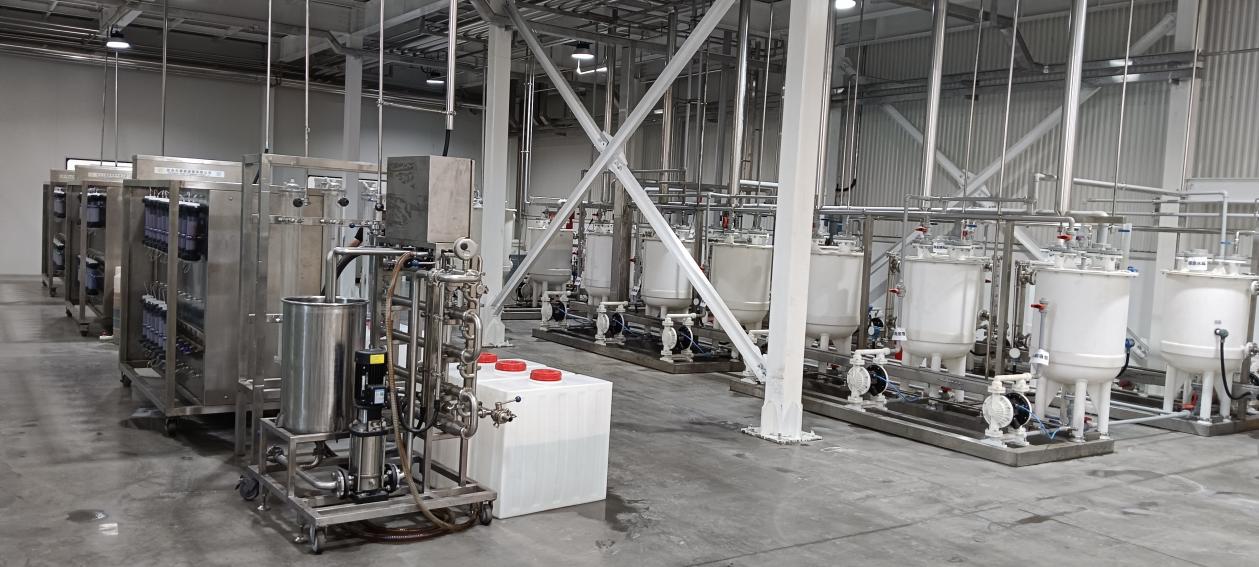
Three anonymous records show three technology duties
Capacity applies only to the referenced project and does not become design flux, treatment performance, or a guarantee for a new project.
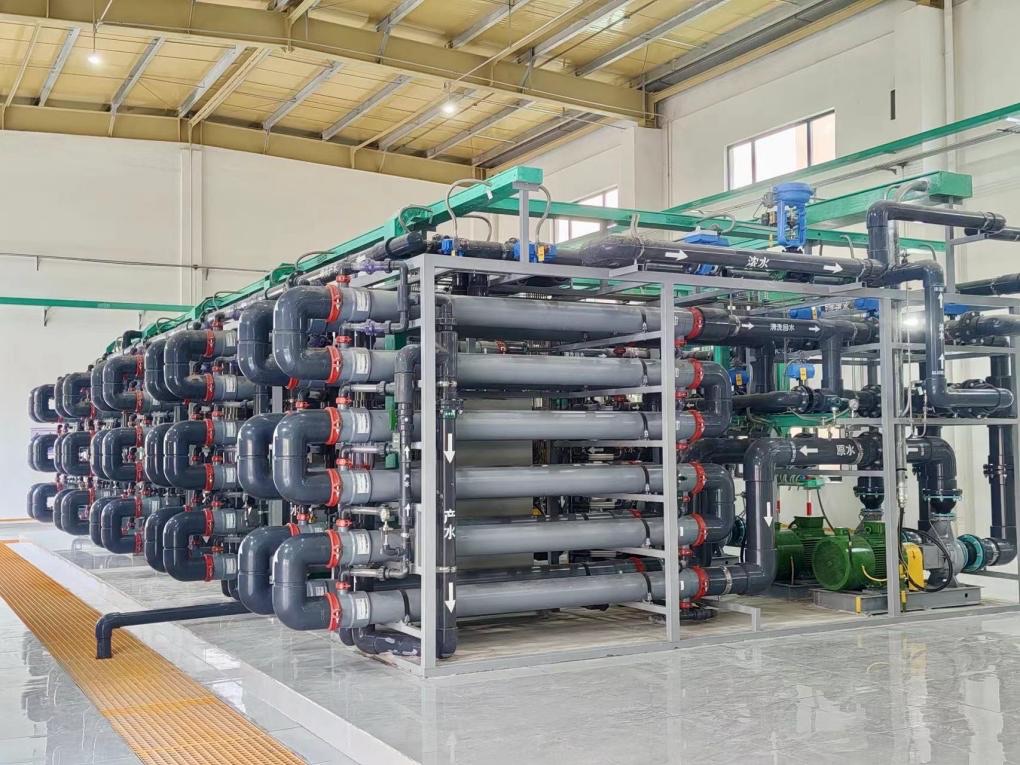
Chemical conditioning and PEK tubular membrane softening solids separation.
PEK pretreatment connected to an HRCC RO section.
Tubular cross-flow circulation separates biological sludge from permeate.
ENGINEERING BOUNDARY
Confirm the membrane product, reaction process, and project interfaces separately
Plum can support membrane selection, process validation, and integrated membrane systems. Upstream chemistry, civil works, utilities, and final by-product responsibilities are confirmed in the project scope.
PLUM can support
- Feed analysis and preliminary solids-separation route review
- Reaction-condition and membrane-fit testing and pilot validation
- PEK membrane section, circulation, CIP, instrumentation, and control design
- System integration, commissioning, training, and engineering interface support
Confirmed per project
- Complete chemical program and upstream reaction responsibility
- Biological treatment, NF, RO, evaporation and crystallization, and other sections
- Sludge, oily sludge, solid-waste, or recovered-product endpoints
- Civil works, utilities, and plant-wide performance boundaries
ENGINEERING FAQ
PEK pretreatment and solids-separation frequently asked questions
This technology page explains engineering duties. Selecting a membrane product still requires the PEK product page for specifications and material boundaries.
Does a PEK tubular membrane directly remove hardness, silica, or heavy metals?
Project-specific chemical conditioning must first convert target contaminants into separable solids; the PEK tubular membrane then performs solids separation. It does not directly remove dissolved ions.
How does PEK pretreatment differ from the PEK product page?
The product page defines membrane material, separation grade, channel, and module specifications. This page explains how PEK membranes combine with reactions, circulation, the concentrated phase, and downstream operations.
Can every high-SS wastewater feed enter a PEK tubular membrane directly?
No. Particle behavior, oil, viscosity, temperature, chemical compatibility, cleaning, circulation, and the retentate endpoint still require review.
Can a PEK tubular membrane replace NF or RO?
No. PEK primarily performs solids separation; NF and RO separate dissolved components or salts at different levels. Their duties are distinct.
Why validate reaction and membrane separation together?
Particle size, structure, settling, and adhesion of reaction solids affect membrane fouling and cleaning. Combined validation confirms whether reaction conditions and cross-flow filtration can operate together.
Can an existing project capacity be used directly to design a new project?
No. Capacity documents implementation experience only. Membrane area, operating window, and cleaning strategy for a new project must be confirmed from the current feed.
What information is required for a preliminary assessment?
Provide complete water or feed analysis, flow variation, contaminant form, current dosing and process, temperature and pH, cleaning conditions, downstream requirements, and the retentate endpoint.
PEK PRETREATMENT EVALUATION
Submit feed, reaction conditions, and downstream objectives
Provide contaminant form, current chemicals and process, and the clarified and concentrated stream endpoints where possible. Plum will first screen the PEK solids-separation duty, then define the testing or pilot scope.
Submitted information is used only for preliminary route assessment and does not constitute a commitment on treatment performance, flux, membrane life, chemical consumption, or scope of supply.